Size does matter!

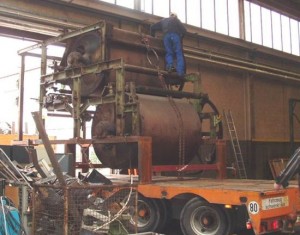
This paper machine was measured a few times before being transported.

If you want to hear museum people moan, just say “measuring”. Everybody has a story about it. Murphy of Murphy’s Law seems to linger around our tape measures, folding rules and distance meters. Not all stories are as extreme as the story shown in the pictures. The paper machine was measured again and again because it was obvious it was the most difficult thing to move in the great storage relocation. We had a technical documentation. We had specialists in heavy loads for this, experienced in much more problematic cases than our “little” paper machine. We had confidence in our abilities as professionals when we supervised this part of the machine being craned on the low-bed trailer. It was not until then we realized the machine didn’t fit through the gate when standing on the low-bed trailer. It wasn’t much, maybe a few inches. It seemed that the inaccurancies in measurements (height of the machine part, height of the trailer, height of the gate) just added up to the worst case. There was no denying – we had a problem.
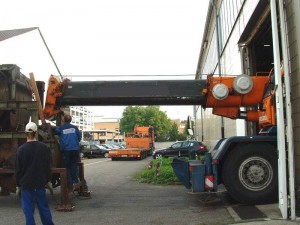
On the flat-bed trailer the machine didn't fit through our gate. The riggers had to be creative...
On the flat-bed trailer the machine didn’t fit through our gate. The riggers had to be creative…

Fortunately, we had experienced heavy load riggers. After a few discussions we decided to crane the machine on wheel boards and push it carefully through the gate. It worked. After passing the gate the paper machine was craned back on the low-bed trailer and moved to its new home.
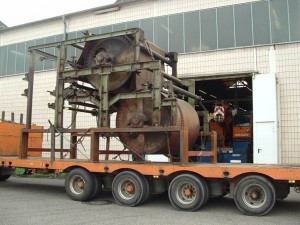
Don't let your eyes fool you: Now it seems obvious that it doesn't fit through the gate, but that's only due to perspective. In reality it were only about 4 cm missing.
Don’t let your eyes fool you: Now it seems obvious that it doesn’t fit through the gate, but that’s only due to perspective. In reality it were only about 4 cm missing.

Other cases in wrong measurements are less spectacular, but the problems caused are sometimes bigger. I don’t know why, but some people tend to round down when it comes to measuring. Not particulary helpful, especially if you have a crate builder or a showcase designer who has the same tendency…

A special problem appears when you work with international partners. In the European Union, measuring in the metric system is common practice, whereas the UK and the USA use their own system (Imperial units and United States customary units, which vary in some cases). You normally keep this in mind as a registrar but misunderstandings are bound to happen anyway. I remember one case when a hardly readable fax with object data reached us. Looking back it sounds weird but for a long time we planned that something will arrive in a small box of approximately 50 x 20 x 21 centimetres (20 x 8 x 8 inches). When the estimated shipping costs were faxed we were shocked by the amount given. It was then that we re-read the fax, realizing that we misinterpreted it. Yeah, the sign behind the measures was NOT a double prime (“) it was just a normal prime (‘). The small sign that seperates the inch (1” = 2.54 cm) from the foot (1′ = 30.48 cm). We were not going to receive a neat little crate, we were going to receive a veritable 20’ container…

Angela
Digital Media, University Didactics and Cultural Cannibalism: Reflections of an exiled Latin professor

January 2013

“If you don’t know the answer, argue the question” (Clifford Geertz)

In anthropological language the “native” is a local being, the one who belongs to the land and is the first inhabitant of a place, whereas an “immigrant” is a stranger or foreigner who comes from the outside to take the place of the native or to occupy his territory. It’s like a Hollywood cowboys and indians movie, in which the indian is played by Elvis Presley and his indigenous mother by a latin as Dolores de los Rios!

It is interesting to note that the language of the cyberculture or the cyberspace employs, thus, the reificated concepts by occidental culture about colonialism and imperialism: in this new cybercontext, the “native” is that who was born inside a digital order and therefore reasons according to that logic, whilst the “immigrant” is being displaced from the bookish medieval-renaissance culture to the cyberculture still keeping one foot here and another there.

How this culture stays on cyberspace if we think about the large number of grammar and digital illiterate people of Latin America? Néstor García Canclini, in books such as Diferentes, Desiguais e Desconectados, Editora UFRJ, 2005, explores the contradictions of South American indigenous populations using the internet without at least being taught to read and write! As an anthropologist and educator, this seems a relevant question to be discussed: how to enter in the digital era, of global or international character, without losing regional references of Brazilian culture, inspiring me here on the stance of “cultural cannibalism” of Oswald Andrade?
As a way to stimulate my students to develop a critical sense -the goal of every college education- I’ve been developing a product of visual creation in Art-Education, in which I deal with the importance of devouring the cyberculture in a critical way and return it re-changed, according to a local “native” language. It seems to me that this remarkable question is never emphasized when it comes to speak about cyberculture: could it be possible that all the cultural statutes represented there, apparently in a democratic way obtain the same socioeconomic preponderance when swallowed?
Then, how to introduce a context of “critical cannibalism” along with the students? That is, how to awaken on them an aesthetic sense (in a platonic way) of concepts? How to make them separate the wheat from the chaff amidst the digital media crowded chaos, which is inevitably surpassed by the capitalist, imperialist and colonialist logic of the European and North American first world?
Philosophical and humanisitic questions of first order, partners: would it be possible that what a typical “digital native” thinks is relevant, pertinent, politically and ethically correct and can make the world change for best? Or, still more important, which is the real didactic contribution that the teacher’s erudite knowledge can make in relation to the majority of the sub -information transmitted by the digital media in today world?
Dinah Papi Guimaraens – PhD in Architecture and Urbanism by Universidade Federal Fluminense and Director and Associate Founder of Museu de Arte e Origens, NYC (PhD by Post graduate program in Social Anthropology -Museu Nacional- UFRJ and New York University – Museum Studies Program /Fullbright Scholar; PhD, Department of Anthropology, University of New Mexico, USA)
Translated by Araceli Galán

FAUX Real: On the Trail of an Art Forger Part 1

When I’m thinking about remarkable registrar’s stories one story immediately comes to my mind: The story of the art forger Mark Landis. Registrar Matthew C. Leininger discovered his forgery and tries to keep track on him ever since. I’m really happy that he agreed to contribute his story. We will do this as a follow-up real life detective story, so stay tuned! You can watch some of the forgeries that were done by Landis in this youtube video. Landis is still around doing his forgery, so you will always find his picture and known aliases in every story. It’s our goal to keep museum people around the world informed about this art forger and how he acts. If you recognize him: inform Matt Leininger about it. Thanks! – Angela

What I am about to share with you is the insight of my personal encounters with what the New York Times has called ‘the most prolific art forger of our time’.
I was a registrar and department head at the Oklahoma City Museum of Art in 2008 when this all began.

picture: LSU University Art Museum
Mark Landis
Also known Aliases:
2009 – Steven Gardiner
2010 – Father Arthur Scott
2011 – Father James Brantley
2012 – Mark Lanois

Registrars are the true caretakers of collections and overtime their experience becomes second nature when reviewing collections, especially when they come from a donor that seems obscure. August 7, 2008 my due diligence and discerning eye paid off in a way that I could not even fathom when I uncovered Mark Augustus Landis of Laurel, Mississippi. Landis earlier in 2008 had gifted a water color ‘by’ Louis Valtat to OKC. We were so excited about this rare work that without doing any research we matted, framed and installed the work in our gallery. We were not only excited about this gift, but the promised gift of more art work and money for an endowment that Landis told us about. This was in May of 2008 when we received the Valtat. July of 2008 Landis arrived at the museum during one of the most difficult installations the museum had taken on. I was called to drop everything I was doing and cater Landis along with the Chief Curator and Director. It was a grueling two and a half days to say the least. The staff considered Landis not only obscure, but there was something just not right about him, not a good feeling you know? We have him carte blanche in our store and fed him lunch, which he never ate. The chief curator took him to the airport for his return to Laurel (did I mention Landis paid his own airfare, hotels and meals?). Landis fell asleep at the gate and someone stole all his store goods! We had to return to the airport and help him rebook so he could make it home.
I mentioned August 7 and I remember it well. We were getting ready to take the five newly gifted works to our committee for accessioning. I did my research on the pieces and low and behold the Savannah College of Art and Design had received the same Paul Signac watercolor gifted from Landis around the same time he was in OKC. Then came an oil on panel by Stanislas Lepine. This piece showed up in a press release on the website at the St. Louis University Museum of Art. Hmm, yes gifted by Landis. I was onto something. I researched the remaining three and also found them in other collections throughout the United States. After tracking Landis movements over the last five years, I have uncovered well over one hundred forgeries gifted by Landis in twenty states and over fifty institutions… and I am the sole individual that found Landis and revealed his scam nationally and internationally.
This is just the beginning and I have only scratched the surface with this blog. I thank Angela Kipp for inviting me to participate and I hope you enjoy as I continue to share with you my dossier and the complete story on Mark Landis.

Stay tuned,

Matt

This text is also available in French translated by Kelsey Brow.

Read more:

Cotton gloves? White or blue jeans gloves?

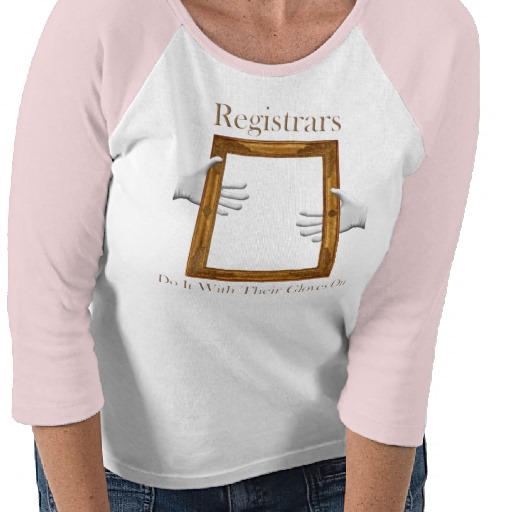
Why do registrars use white gloves? Well, so you can see when they are dirty! “Registrars do it with gloves on”, this is almost a slogan.

designall
“Registrars do it with their gloves on”
taken from here

All collection objects pass through the hands of the registrar and his / her team of assistants, from the very day of accessioning until they leave for exhibition or lent. And a good registrar never allows anyone to touch the objects without very clean white gloves or gloves with nonslip rubber bullets, also very clean, if the objects are heavy or slippery.
UPDATE 2013/01/15: Forget about the rubber bullets. As you can see in the comments section that’s not best practice. Use of nitrile gloves – or nylon gloves with nitrile palms for the heavy artifacts – is much better.

They are white cotton gloves, they are not blue jeans!

I remember about 20 years ago I gave several pairs of clean white gloves to a new apprentice of mine, explaining how to use them and why, and so on. The next day the assistant came with gloves dyed dark green; this apprentice said to me: “well, this way one doesn’t see the dirt on them.” Please… that’s mentally having blue jeans

All of us know we can wear a blue jeans several days (Oh, c’mon, who doesn’t?), you won’t see much dirt… (as they are dark blue). But the white gloves used to handle objects are white for exactly that reason: to see when they are dirty and so one can exchange them immediately for clean ones and don’t handle the next object with dirty gloves. Imagine to handle objects in the collection with dark gloves “one doesn’t see the dirt on” and the damage and stains that occur to the objects handled.

We can say that if there is a symbol for museums registrars worldwide it’s a pair of white gloves! This holds especially true to registrars who handle art, documents or archaeological artifacts. It is not just a smart advertising idea of the company that sell those shirts. The Mid-Atlantic Association of Museums in the USA have a project called the “White Gloves Gang”, where registrars, collection managers, arcivists, museum studies students… help one day voluntarily in a chosen museum with a collections project.

The “White Gloves Gang” would be a suitable name for registrars and collection managers worldwide…

Fernando Almarza Rísquez

This text is also available in French translated by Kelsey Brow.

Serious business

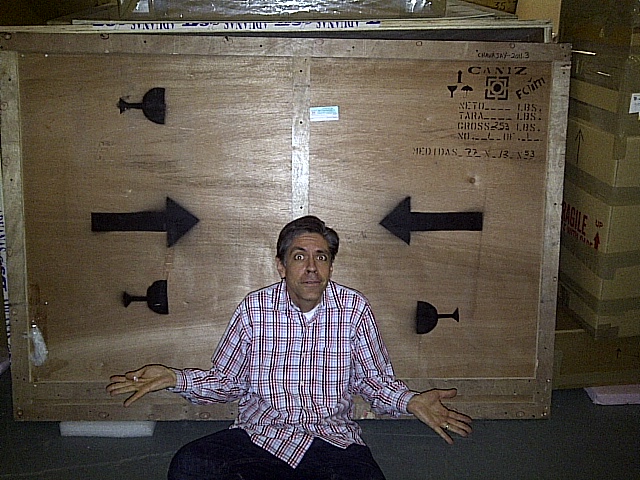
Which way is up? No way to get it right with these signs…

Yes, a registrar’s work is serious business. All those valuable objects in our collection, all those tasks in documenting, we registrars are very serious and no-nonsense, right? Right! Why is it then that sometimes at a meeting you see the registrar’s team caught in helpless giggling? Because our job is crammed with unintended humor!

I remember that one day a crate for an exhibition arrived that said “This side up” on two totally different sides. Unfortunately, I haven’t taken a picture. You can imagine how happy I was to receive the picture on the left hand side taken by Noel Valentin of El Museo del Barrio, New York.

Not to mention the humor you can take out of data base entries. How about “Knife with missing blade and missing haft”? I guess it’s a smart way to tell us that this object was a total loss. Or a note I found in the “condition” field of our data base saying “needs vacuuming”. We have the vacuum cleaner always at hand so I guess it took more time making the entry than actually vacuuming the object… And then there are condition reports. I remember a colleague mailed she actually found “ugly, but durable” in one report.

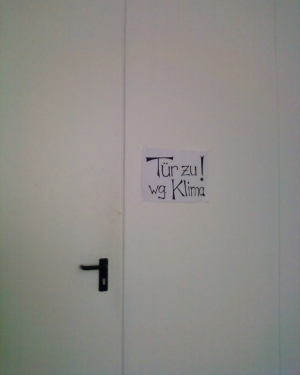
"Close door! Because of climate" Registrar's do something against climate change!
“Close door! Because of climate” Registrar’s do something against climate change!

I love stupid inscriptions best. I try to make photos every time I see something stupid written on something. I lost a personal favorite, a box which was marked with “Vorsicht Inhalt” (“Caution content!”). It turned out that it contained a fire extinguisher for a car and the inscription was a warning not to throw away the box (which was a box for a bottle of wine) because there was a valuable still undocumented artifact inside! Well, from the inscription I expected something with at least asbestos or quicksilver…

What I found is the one you can see on the right hand side which reads “Close door! Because of climate”. Of course we all know what was meant by this sign: the door should be kept shut because of the temperature and the relative humidity that has to be kept stable in the room behind. But somehow, with all the discussions about climate change… well, it looks like a quite simple solution.

Apparently, I’m not the only one who is fond of unintended humor concerning registrar’s work. Take a look at this wonderful film “Stuff Museum People Say” that the Atlanta History Center made: http://www.youtube.com/watch?v=IhAJiz2ixuY In 1:23 you can see a scene quite typical for a registrar: a staff member hurts herself and the registrar shouts “Bleed away from the artifacts!”

Oh yeah, and then there are the failures when it comes to storing objects. Liz Walton made a blog out of this: Art Storage Fail. Enjoy, and if you have something that fits: submit it to her.

Let me close this post with two unintentionally humorous postcards I received from our chimney sweeper. Our outside storage collection deposits are not staffed 24/7. He learned this from the many, many times he came to do the yearly check-up and nobody was there. So now he sends a postcard first to make an appointment. The first one I received read: “I’m coming February 25 at 10:15 a.m. or on the following days”. After he didn’t show up on the 25 I called him up to make the appointment for February 26, 11 o’ clock and everything went fine. The following year I received a postcard “We are coming in February. Please do not wait, we will call you to make an appointment.” Again, all went fine after we phoned but until today I can’t get the picture out of my head of someone waiting the whole February for a chimney sweeper to arrive…

Angela

How I became a museum registrar II

A vagabond in the museum field

Angela Kipp

picture by Bernd Kiessling
View of my recent working place.
HDR photo by Bernd Kießling

This should better read: How I realized that I was a registrar, but let’s start at the beginning…

I always loved old stuff and I climbed castles and went to museums as long as I can remember. So it was somehow logical that I chose museum studies when school was finished. By the way, my job center agent considered it a very dumb idea… Anyway, I decided to study in Berlin, at the „Fachhochschule für Technik und Wirtschaft“ (FHTW, University of Applied Sciences). This meant that I had to do 6 months of internship at a museum or archive to fulfill the entry requirements.

I did this in the Landesmuseum für Technik und Arbeit (museum for technology and work) in Mannheim. This was the first time I came into contact with the work in museum collections because one of my tasks was to document a collection of about 500 tin cans, reaching from very tiny medication containers to large coffee containers.

The advantage of this internship was not only that I was accepted as a student of museum studies in Berlin in the fall of 1998, but also that I had a museum job in my first semester break. The Landesmuseum für Technik und Arbeit had an exhibition on „coffee, how to make it and how it tastes“. I was a combination of a visitor guide and a bartender, explaining how to roast coffee at a roasting machine and afterward selling cups of coffee to the visitors. When there was nothing to do I documented coffee machines and coffee mills and I can still give you a five minute lecture on the principle of the „recirculating percolator“ and why it’s a dumb idea to brew your coffee with it.

In my next semester break I did an internship in the Museum für Kommunikation (museum of communication, the former postal museum) in Berlin. They were building up their new permanent exhibition, and so, „unfortunately“, I had to take a break from my studies for one semester because they signed me as project assistant. It was a thrilling time and I learned many, many things about exhibitions, research, textual work, copyright questions, object handling and troubleshooting.

I went back to my studies in May 2000 but from this project on there was never a time I haven’t worked for a museum or similar institution. I was working as a freelancer as a side job during my studies. It were different jobs but most of them were linked with special exhibitions. So I learned much about the encoding machine Enigma, Prussian military, clay bricks, paper manufacturing, the agricultural development in the state of Brandenburg, paraments and church history, the human brain and screw manufacturing.

I finished my studies in the spring of 2002 and kept working as a freelance museum professional, mainly for the Deutsche Museum in Munich and for the cathedral museum in Brandenburg/Havel. Alongside I was looking for a time contract or permanent job in a museum. One day when I was searching job announces on the internet a very known name popped up: The Landesmuseum für Technik und Arbeit was searching a curator for their permanent exhibition on synthetic materials and their collection of chemistry objects. Feeling I had nothing to lose, I sent an application, considering my chances very dim, because they searched for a specialist in chemistry. Very much to my surprise they invited me for a job interview and in February 2003 I was back in my „old“ museum which felt like coming home.

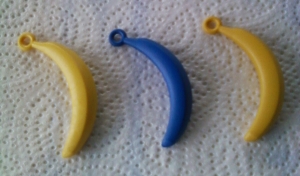
Developing Banana Key Rings (from left to right): Polypropylene let the key ring break too easy, blue was the wrong color, polyethylene with yellow color was just perfect.
Developing Banana Key Rings (from left to right): Polypropylene let the key ring break too easily, blue was obviously the wrong color, polyethylene with yellow color was just perfect.

The permanent exhibition on synthetic materials included some injection molding machines that were still working. So when the museum showed a special exhibition on bananas we managed to find a local manufacturer of molding forms who designed, manufactured and donated us a molding form for a banana key ring. It was great fun for the demonstration technicians and me to find the right synthetic material and the right color to have a perfect banana. We had white, pink and blue bananas and even one that looked like a rotten banana because the temperature was too high and it burnt a little. After a while we were able to produce perfect yellow polyethylene banana key rings. Visitors loved it. (Sorry for the side note, but for it’s not a registrar’s story, I won’t have the possibility to tell it elsewhere.)

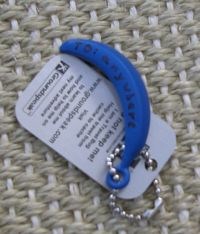
As a side note: The little blue banana is travelling the world as a geocaching travelbug, see http://www.geocaching.com/track/details.aspx?guid=0bbfcf4f-c2e6-4f21-8539-ab73e54b9dfa
As a side note: The little blue banana is travelling the world as a geocaching travelbug and is recently in Sweden…

Being the curator for synthetic materials meant not only curatorial work, but also a lot of registrar’s work. There was a large collection of magnetic tapes dating back to the very first developments from 1934 until the present time and it needed to be sighted and documented. Most difficult was the research on how to store them and how to save the information on them – a problem that is still not solved to a satisfying extend.

As you can imagine time past quickly and it was only a two year contract. In my second year there the Landesmuseum announced the position of the „Depotverwalter“ (administrator of outside storage facilities). Having again nothing to lose, I applied and was chosen. This marks the point where I switched completely from exhibition work to collection work.

It was much later, after we had managed the closing of one of our storage facilities and the relocation of the collection in the remaining two storage halls in 2006, when I tried to explain to an American colleague what my occupation was. I searched the internet and digged out two job descriptions: one of a collection manager and one of a registrar. Deciding my occupation had more to do with the practical issues like physically moving the collection I chose collection manager. Later on I realized that the using of the terms differ from institution to institution, and I’m doing a lot of data base and loan work as well, so I’m a registrar, too.

That’s it, folks! That’s how I became – or realized I was – a registrar.


"Various" is not a category, and "object" is anything

Accession and Category: encoding or collections division

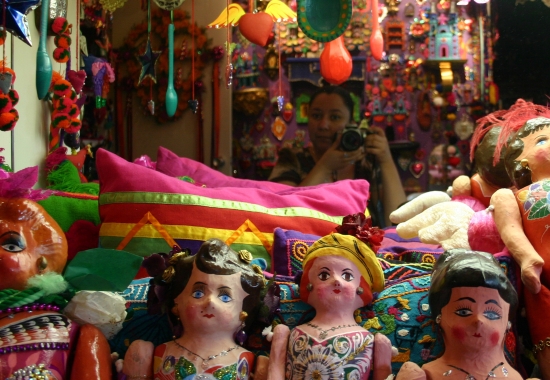
Each of these 3,000 objects of Mexican Folk Art need - and have - a category.Thanks to Aleida Garcia for the picture.  www.imasonline.org
Each of these 3,000 objects of Mexican Folk Art needs -and has- a category. Thanks to Aleida García for the picture.  www.imasonline.org

In the work of a museum collections registrar, finding accession encodings and a category for each object in your collection is indispensable. They are more than one number, for themselves carry a large amount of information, or open the door to more details.

These codes are a “QR” avant la lettre. Their use in software management and control of collections allows that they become starting points for numerous computerized search criteria; search fields of the software may include all numbering and terminology that contain these encodings.

The code or accession number is used universal and indispensable, the category seems to be less appropriate for some museums. However, I give more attention to this second part. While the code or accession number usually refers to the year in which an item entered the collection, sequentially for each calendar year [for example 2012.0034], the category defines object type, purpose and meaning. The category should be not an encoding that is used for aesthetic concerns or some supposed superiority or natural value, cultural or naturalcultural (artistic, scientific, technological, religious, etc.). A categorization can or should include as many subcategories as necessary. OBJECT TYPES, for example:

[PAINTings / ABStracts-0148];

[FURniture / CONsole-0025];

[VEHicles / AUTOmotives / TRUcks-0012];

[TOOLs / HAMmer-1135];

[CLOcks-0982];

[TAPestries-0023];

[PRINt / POSter-1128];

[CLOTHing / SHIrt / MALe / AFRican-0089];

[LITURgical / CHAlice / GREEk / ORTHOdox / CHURch-0051];

[MUSic / INSTRuments / WIND instruments / HEBrew-0129];

[MACHine TOOls / PERCussive / DRIll-0023]…

I refer here only to cultural and technological objects, due to my lack of knowledge about the natural areas, biological or mineral.

I typed in uppercase “OBJECT TYPES” because that little word, when used improperly, generates false information, vague and too generic, which is unacceptable for a museum collection. The same goes for the little word “VARIOUS” (Miscellaneous). Every object, of whatever type (natural, cultural, technological or naturalcultural) has a name and belongs to a genre, type, species, family, etc. This applies even when it comes to intangible cultural heritage or intangible natural heritage. This holds true for everything in the registrar’s universe, which means that he / she should be well aware of this fact and give indeep thought to the classification of every object he / she has in the collection. This means that the regsitrar should cooperate closely with curators and researchers, or even manufacturers, who know more of that object and possible categorizations than the registrar. In codings per category should always be an appropriate term for categorization or division. And if the existing categories in the collection don’t have a place for this type of object: create one! A good collection management software allows and encourages, as a good manager, a good healer and a good registrar.

In my work as a logger I never categorized an object as “Various”, but corrected and relocate some existing cases that were filed as such. Same goes with the truism category “objects”. Obviously, everything is an object! (at least until you create the “Museum of Thoughts and Feelings” … The recorder is in trouble there …).

I have seen cases, for example in a museum of Latin America, in which part of its collection (which appears on their website) is categorized as “Objects”. Even almost a year ago I made some comments and suggestions, but until now I got no response.

The correct title or generic name of an item are a must: I found a case in which an item was called “Armchair with two armrest” … A quick check in books reassured me that a chair that has two armrest is called Armchair … And a bit of reasoning helped me reconfirm that skateboards have rolls, because…

Registrars in museum collections can and should be able to open their schemes and reasoning in order to do their job properly, efficiently and creatively, adapting to the circumstances and type (Category) of the object that needs to be accessioned and documented in the collection. A good registrar must remain critical!

How I became a museum registrar I

The artist that became a registrar – and is now professor

Fernando Almarza Rísquez

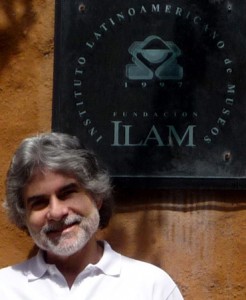
Fernando today, in front of the ILAM in Costa Rica.
Fernando today, in front of the ILAM in San José, Costa Rica.

I studied fine arts for four years, and developed an activity as an artist in three exhibitions. Later I studied graphic design for two years, having worked briefly as an assistant designer. I was then 26 years old, and had some knowledge of art history and aesthetic sensibility.

In 1986 I began studying art history in college (BA, MA History Art), and I saw a notice posted requesting an assistant to the registrar at the Museum of Contemporary Art in Caracas (MACC, in spanish), Venezuela. Required studies art history, knowledge of art handling, conservation, English, organizational skills, responsibility, etc. I submitted my CV. I did the interview rigor, including the translation of a press report that made the museum on a grand exhibition of the English sculptor Henry Moore few months earlier.

This was in April 1986. I was excited but worried because there was another candidate who studied Arts in England and had excellent English. But on the 28th I was called to give me the good news that I had been selected for the position. Very happy, I started on 2 May.

I had some “advantage” because I knew quite well the largest museums of Caracas, and much of its permanent collections, including the Museum of Contemporary Art itself. The English translation was done very well, as I concentrated on the Spanish translate ideas and concepts rather than to translate word for word. Anyway, I began my career, and to date (December 2012). I have accumulated 26 years of continuous experience, always intense study. Common sense has led me to investigate how different objects are registered, whether cultural, or technological, natural or naturalculturales.

I was at the MACC until 1993, after which I began to provide advice to other museums of Caracas and Venezuela, where I developed a record structure and current computerized cataloging. In 2006 I started writing articles in newspapers and magazines specialized museological on that experience, and develop virtual catalogs for some museums of the Western world. Since 2007 I started as a professor at the Latin American Institute of Museums (ILAM, in spanish), sited in Costa Rica, where I teach courses online and face on the same subject, plus related topics.

I have always held to reflect on our profession, and I am actively linked with institutions and professionals from many countries.

High in the sky

This story reached me by email after I asked a little about the amazing photos that I saw. Sharon McCullar is the Curator of Collections at the Lakeshore Museum Center, Muskegon, USA. She recommend to imagine her hanging over the rail of the lift bucket trying to yell the story down to an interested passerby while reading the story. 🙂
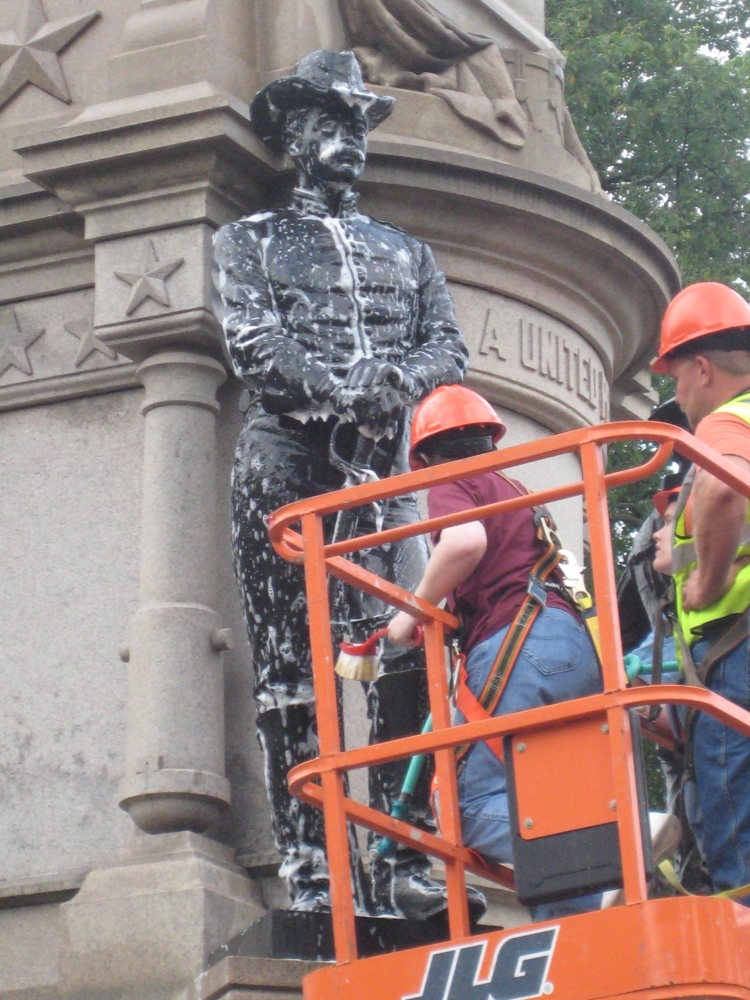
Lakeshore Museum Center Curator of Collections Sharon McCullar, Archivist Beryl Gabel and city of Muskegon lift operator washing and waxing the top statue of the Soldiers and Sailors Monument(70 feet tall) in downtown Muskegon Michigan. See story for details.

Hackley Park is an important focal point for downtown Muskegon Michigan.  The park was dedicated on Memorial Day, May 30, 1892 .  Charles H. Hackley, a prominent local lumber mill owner, purchased the land and paid for a Soldiers and Sailors Monument to commemorate the service of Muskegon County citizens during the American Civil War (1861-1865).  The 76 foot tall granite monument includes five bronze statues and was designed by Italian-born architect Joseph Carabelli.  Around the base are a sailor, cavalryman, infantryman and artilleryman.  On the top of the pedestal stands a 14 foot goddess of Victory figure.  The monument bears the inscription: “Not conquest, but peace – To the soldiers and sailors who fought and to all patriotic men and women who helped to preserve our nation in the war of the rebellion.”Four more statues were commissioned by Charles H. Hackley and installed on the four corners of Hackley Park on Memorial Day, 1900.  They are sculptures of prominent Civil War persons.  President Abraham Lincoln, Admiral Farragut were made by sculptor Charles Niehaus.  General U.S. Grant and General William T. Sherman were made by J. Massey Rhind.

Lakeshore Museum Center Curator of Collections Sharon McCullar, Archivist Beryl Gabel and city of Muskegon lift operator washing the Cavalryman statue on the Soldiers and Sailors Monument in downtown Muskegon Michigan. This statue is about 20 feet off the ground, but we still wear our safety harnesses and gear. The operator has to be pretty skilled to get us close without dinging the statue.

In 1997 -1998 the statues were conserved by McKay Lodge Fine Arts Conservation of Oberlin, Ohio.  The Lakeshore Museum Center teamed with the City of Muskegon to develop a simple maintenance plan to help preserve the restored statues.  Part of that teamwork is that our curatorial staff (meaning me, the Curator of Collections, and other curatorial staff as they are available) works with the City to give the statues a wash and a light coat of wax each year.  We schedule this in early September of each year. It is usually mild weather with favorable relative humidity and temperature conditions.  If it is too hot the wax does not set up, but if it is too cold the washing step is very uncomfortable and the wax is difficult to apply evenly.The wash removes surface grime and gives us a chance to inspect the statues for damage or deterioration. We use a mild detergent recommended by the conservator and fairly soft scrub brushes.  The light coat of wax provides a thin layer of protection against the grime and makes it easier to remove it next year.  We don’t attempt any more aggressive measures, since we are not metal conservators.  It takes about 4 hours per statue depending on the conditions.  A warm day with a slight breeze helps the statues to dry quickly.  Wasp nests hidden in the folds of the sculpture is a very unpleasant surprise.  I have angered a number of very large spiders as well with a soapy bath.

To access the statues, the City of Muskegon provides a tall lift – we have to get 80 feet into the air to reach the tip-top of Victory.  This takes a skilled operator and nerves of steel.  It can get pretty windy that high in the air – especially if there is a storm coming in across Lake Michigan.  Maneuvering around the statues and the granite base also takes skill.  We need to get close enough to work effectively, but not bang into the statues with the lift bucket.  The bucket sways quite a bit – by the end of the week I resemble a tipsy sailor as the world sways no matter if I am on the lift or not.  But the views of Muskegon Lake, the city and Lake Michigan are spectacular!

Text and pictures: Sharon McCullar

A registrar needs a flexible mind

The professional practice requires to keep up to date. You have to “think outside the box”, without constraining into one thought pattern or routine, especially when there are situations that require reflection and need to be addressed with a flexible mind. The registrar of the permanent collection of a museum should be especially flexible. Continue reading A registrar needs a flexible mind

A project to break down language barriers and connect registrars worldwide