The problem of how acid gases behave with buffered paper enclosures is interesting and not quite what we might expect. Most of us, even industry scientists working on stability issues, have learned that buffered paper reacts with acid gases and therefore prevents them from passing right through. Some of later heard that maybe buffered paper enclosures won’t necessarily protect the object inside from external acidic gases, but buffering will at least protect the enclosure and make it last longer (and as a physically protective armor, this should be good for the object as well.)
Well, the first problem is to sort out what this buffer is. The Oxford Concise Science Dictionary defines a buffer as “A solution that resists change in pH when an acid or alkali is added or when the solution is diluted.” Since we need to keep our paper enclosures relatively dry, a buffer in paper doesn’t fit the scientific definition of the term. ISO 18902 Imaging materials – Processed imaging materials – Albums, framing and storage materials, uses the term “alkali reserve” instead of “buffer”.
Certainly the typical things that we expect to find as buffers in paper are all “alkalis” by definition. These may include alkaline earth carbonates such as calcium and magnesium carbonate or some metal oxides such as zinc oxide. If we add an alkali like sodium hydroxide (lye) or sodium carbonate or borax, to the pulp solution, they’ll dissolve in solution and disperse into the paper. Much of it would come out with the water being drained from the pulp and the rest just affects the pH of the paper. Generally, as acids entered the paper, the pH of the paper would simply go down. So while these substances are alkalis, they aren’t reserves of alkali. The reserve aspect is accomplished by using alkalis of low solubility so they have a minimal impact on the pH of the paper, but are still available to react with acids. For example, if we start with pure water at 25 degrees C, we should be able to dissolve 0.007 grams of calcium carbonate into a liter of water. Just as a reference, the paper industry says that they produce common office photocopy paper with the intent that it leaves the mill with a water content of 5% by weight so a typical sheet of this paper contains about 0.2 grams of water, enough water to dissolve 0.000001 grams of calcium carbonate.
So rather than being dispersed through the paper, the alkali reserve exists as discrete particles in the paper at a rate of typically 2% or 3% by weight.
The final piece of the problem consists of the acid vapor molecules and how they move. Gas molecules move randomly so we have no idea what any individual molecule is doing at any particular time (unless we specifically watch it). Fortunately there are statistical rules that allow us to predict the behaviour of a large number of gas molecules. However, we’re interested in individual molecules. Buffer particles have no attractive force pulling acid gas molecules towards themselves so whether or not an acid gas molecule happens to run into a buffer particle is completely a result of random chance. There are a very large number of random paths through the buffered paper that don’t end at a particle of the buffering agent and as a result, acid gases can pass right through the paper. In addition, acids and buffer particles can co-exist in the paper.
We first observed this back in the 1990s following a nitrogen dioxide fuming experiments with photographs in buffered paper envelopes. In the presence of water, nitrogen dioxide forms nitric and nitrous acids with the nitrous acid decomposing into nitric acid and nitric oxide. Much to our surprise, the paper envelope had both a high acidity and a high alkali reserve together. Years later, the same thing was observed in experiments with deteriorating acetate film with buffered paper envelopes: high acidity and high buffer content coexisting in the same envelope paper.
After explaining how a system with static buffer particles and randomly moving acid gas molecules could produce this situation, a colleague suddenly exclaimed, “It’s lazy dad!”
As my colleague explained, lazy dad is sitting in front of the television and doesn’t want to miss a minute of the game. (Fill in your favorite sporting event here.) Lazy dad, the buffer particle, isn’t going to move unless the house burns down. Meanwhile, the kids, the acid gas molecules, are running wild through the house. They don’t particularly care where they’re running, they just want to run around. Nothing is going to change this system unless a child happens to run too close to dad who will then scoop the child up (react) and tell the child to “knock it off and stop running in the house.” There are many random paths for the children to run that don’t happen to go near dad and they aren’t going to stop unless they run into (react) Lazy dad. Lazy dad isn’t going to chase the children so Lazy dad and the running children can co-exist in the same house (paper.)
Note that other solid additive in paper have the same limitations. For example, we filter our air in certain labs using activated charcoal supported on pleated paper and the filters more or less obey the same physical laws, although there are a few differences. The filters have fans blowing large volumes of air through the filters so molecular motion isn’t limited to strictly random movement and the loading of charcoal is much higher than a few percent. The filters are pretty black with charcoal. However, at a lower loading rate and without the fan, these filters would be limited by the same physical laws as buffering in buffered paper.
So buffered paper envelopes don’t quite do what we expect them to and it’s because of the laws of nature rather than a design failure of the product.
Picture by Nico Kaiser via flickrOn July 8 we called out to the world that we are in need of translators. The reaction was overwhelming. When we called out we were four authors Matthew Leininger, Anne T. Lane, Fernando Almarza Rísquez and myself and three translators, Liliana Rêgo, Araceli Galán and Georgia Flouda.
Within one and a half week our little team of seven grew to twenty! They came from nearly all cardinal directions and a broad range of professions:
There are the museum studies and museology students Patrícia Melo from Portugal and Carolina Vaz from Brazil.
Then I’m glad we have a professional translator on board: Salvador Martínez lives in Spain and translates Spanish/French and Spanish/English for a living, but agreed to lend us a hand for free!
Then the great colleagues who work in the jobs this blog is all about: Maria O’Malley, the Collections Manager/Registrar at the Southstreet Seaport Museum in New York, Lucía Villarreal, the Exhibitions Registrar at the Museo del Prado in Madrid and Cleopatra, the Registrar of a photography collection in a Folklore Research Institute in Greece and Sylviane Vaucheret, the Documentation Officer for Natural History at the National Museum of Ireland.
Then two colleagues from the profession that is closest to our own in respect of philosophy, viewpoints and aims: Molly Hope is a textile conservator from New York who already translated for the Ixchel Museum of Textiles in Guatemala and Rosana Calderón, is a Senior Conservator at the National History Museum of the National Anthropology and History Institute in Mexico.
And I’m especially glad an proud of the four colleagues that looked over the fence of their own professions and are willing to help us, because museum work is always a combined effort, no matter if you work in collections, education, exhibition and/or marketing:
Jiska Verbouw works as a science communicator at the Museum for Natural Sciences in Brussels. Arina Miteva is working for Smart Museum, a company that develops museum mobile apps. Tegan Kehoe works as a museum educator at the Old South Meeting House in Boston. Phineas Chauke is the Regional Marketing Officer at National Museums and Monuments of Zimbabwe.
With this great new team we will explore new languages, adding Dutch, French, Russian, Zulu, Shona and Shangaan. And we will travel onwards to new galaxies… oops, wrong film… to new stories, articles and other helpful contents for the registrars, collection managers and curators of collections around the world.
We will also explore a new medium: you can follow us on twitter (http://twitter.com/RegistrarTrek). Here we will announce any new post or article on this blog and more things that we find interesting.
Mark Landis Also known Aliases: 2009 – Steven Gardiner 2010 – Father Arthur Scott 2011 – Father James Brantley 2012 – Mark LanoisThe New Yorker piece should be out by the end of the month. I have much to share about Landis and will certainly do so but somehow at the moment this feels like a one-way street. I’m sitting here writing all I know about Landis, keeping you informed about my findings, telling my story but I don’t know if I am just talking to myself or if I reach you collections people out there.
I really would like to hear if any of you have either encountered Landis or his alias that I have spoken about or what you have encountered in your research on lenders that raised a red flag. I have spent five years of my life on this one person and I know there has to be more people like, or not exactly, like Landis out there. What does your development office do in researching donors or philanthropists? What have they found? Has this case of Landis made you ask questions or have a wow moment in your current position? I like to hear from you.
I love blogging, and one part of blogging is asking questions and giving answers. So, for the next part I thought we’ll make a part that we’ll call
Questions to Matt
You ask questions, here in the comments section or through mail or phone and I’ll answer them in the next part. I am anxious to hear even the most obscure inquiry from you on the case or even my background…
You all are the best and please keep up the good work where ever you are currently working knowing that your next adventure will be even bigger and better than where you are currently. Do your job well, keep your nose clean and you will be fine.
Seems we missed celebrating the first half year of Registrar Trek due July 1st and the 200th subscriber to our feeds! Well anyway, never too late to celebrate, so
Cheers to all our faithful visitors out there!
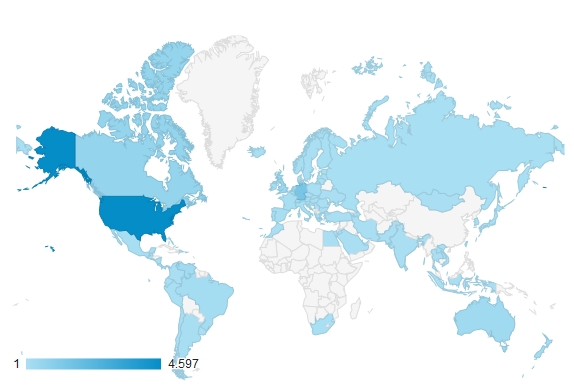
As you can see, you come from all parts of the world: registrars, collections managers, curators of collections, students of the arts, art history, history, museums studies and many, many people who are just interested in what goes on behind the scenes in a museum.
As numbers show, we have been visited by nearly 10,000 people until now, who have read nearly 18,000 pages. This is great! But no reason to lean back, but to lean in. As we said in our starting post in January it’s our aim to give people the possibility to read registrar’s stuff in their own language. To achieve this, we need
YOU
If you are speaking two languages and are willing to translate something, please, drop us a line at story@museumsprojekte.de or write a comment.
We are not expecting anyone to translate ALL our articles and posts. We are looking for people who have read some of our stuff and say “Hey, this should be available in my mother tongue” and then translate this story or article. Every language is welcome, but especially welcome are people who are able to translate in the five languages we already have: English, Spanish, German, Portuguese or Greek.
We are enthusiasts, so we can’t offer you any money for that. But we can offer you our appreciation and the possibility to work in a wonderful multi-national team of museum enthusiasts.
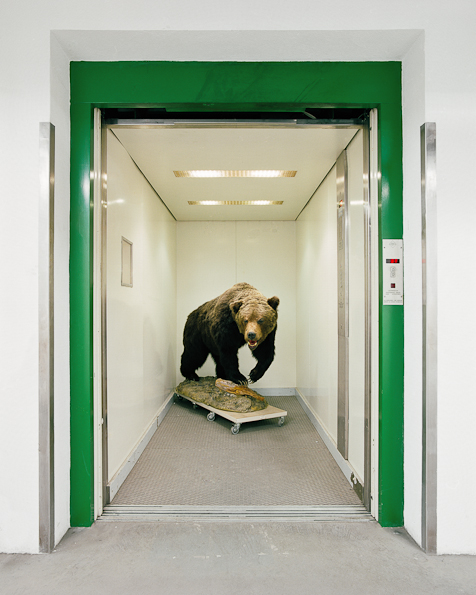
Are time travels possible? Well, I believe they are, at least in our mind. A picture, a sentence, a smell and you are suddenly somewhere else, a few years back, undergoing a certain situation once again. These sudden recalls are sometimes nice, sometimes awful and sometimes just funny. The last time it happened to me was when I first saw the bear in the elevator from the “Skeletons in the Closet” project by Klaus Pichler (see his article “On tour with Noah’s helpers” for more details).
I was visiting some former colleagues at the Landesmuseum für Technik und Arbeit short before the opening of the exhibition “Kosmos im Kopf” (the cosmos in the head). I pressed the button at the staff elevator and waited for it to arrive. The door opened and I suddenly jumped backwards. A gigantic Great Dane stood before me, staring at me, jar slightly open. For a moment I considered this a rather ridiculous but somehow adequate way to die for a museologist, but then I thought again. It was not logical that a man-eating dog would use the elevator to search for its next prey. After the first shock I looked closer and discovered that the Great Dane was just stuffed. Apparently, the dog was “parked” in the elevator until the preparators would need it.
I decided to join the dog in the elevator and it reminded me of another occasion a few years earlier. I had just started studying museum studies and was still trying to make up my mind which path I wanted to chose in the field. So I took an internship at the Naturkundlichen Sammlungen (Collections of Natural History) in Berlin-Charlottenburg. In the workshop of their taxidermist stood a stuffed wolf that looked so realistic one had to touch it to be sure it wasn’t alive. Their taxidermist was a real artist. He explained to me how he “stuffed” animals (a term he used to distinguish ordinary “stuffers” from real taxidermists who learned and studied the trade). Before he did anything with the dead animal, he tried to get a picture of the animal when it was alive. A picture in the most comprehensive meaning of the word: he tried to get pictures, videos, tried to talk to people who knew it when it was alive and so on. He explained that if you don’t do this, you just prepare an animal that is one of its species. If you want to do a taxidermy of a certain animal, only this unique animal, then you have to know its personality otherwise no-one will recognize it when it’s ready. And this is true. Try it yourself when you are visiting a museum of natural history the next time. I promise you that you will spot animals that look just “right”, nearly alive. And there will be some that look just “wrong” although they are anatomically correct (you will find some that aren’t even that – but that’s a different story).
Since this internship I have a great respect for the job the taxidermists do – and I discovered that I will never have the patience to be one myself.
Book: ‘Skeletons in the Closet’, photos by Klaus Pichler, texts by Klaus Pichler, Julia Edthofer and Herbert Justnik, english edition, is out now and can be ordered via the homepage of Klaus Pichler.
Just in case you thought I’d been twiddling my thumbs in between all the stuff I’ve written about in past issues, let me tell you about
Requests from the Public
Let me set the scene – I have two interns waiting for me to tell them about their next project. Not just what it is, but how to do it. And not just tell them but show them. And do a few myself so they get the idea. Then Kris is on the phone to tell me that she needs me to proof the texts for the Eagle Project panels before she sends it to the printer at 2:30. It’s 1:00. I bring up the texts on the computer, and then go over to the table to show the interns how to pad and wrap children’s dresses in tissue and put them into boxes. But the phone rings, it’s an elderly voice soft as sorghum molasses……
“They told me that I needed to talk to you. We’ve been cleaning out the chicken house at my great grandpappy’s farm and we found this rock, I think it’s really old, it looks like something the Indians must have used, it’s all sparkly but it has these scratches in it. We washed it real good so it doesn’t smell too bad, and I went over it with a file to get rid of some of the scratches. I’m bringing it over in 15 minutes, I hope you don’t mind. I’m sure it’s valuable.”
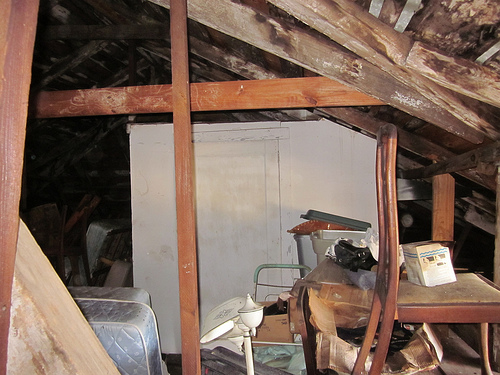
Well, yes, I exaggerate. But by far the greatest number of calls from potential donors start out with “We were cleaning out the attic at my (choose your relative)’s house.” If it sounds like something we might want, I check with Kris and we arrange to go see it or have it brought in. If it doesn’t fit our collections parameters, I suggest other museums that might take it. If the caller wants to know something about the value of an item, particularly if they plan to donate it, I am forbidden by museum ethics to give them an appraisal. We keep a list of appraisers and websites to which we refer them. If they just want to know what something is, I try to help them over the phone, but if I can’t, I either have them bring it in or I try to suggest somebody else to help them.
Another common type of call is from a person wanting to know how best to preserve a family treasure. I try to find out as much as I can – what the object is made from, what condition it’s in, what the person wants to do with it. I also ask whether the area they want to store it in is heated and air conditioned, and what kind of light it has. It’s a ticklish situation sometimes, because I have to try to get an idea over the phone about whether the person is willing or able to spend any money on specialized storage materials. If so, I suggest what they might need and give them information about where to get it. If not, I often resort to the old quilt-in-a-pillowcase strategy. There’s also the zip-loc- bag strategy, the if-you’re-comfortable-it’s-probably-comfortable-too strategy, and the anything-but-cardboard-boxes-in-the-attic-strategy. I usually try to convince them that washing or polishing up something frequently does more harm than keeping it in less than ideal conditions. If I find I need to do more research myself, I tell them I’ll call back. And I do.
I even got myself into a volunteer gig of my own through a phone request for information. Later this month I am going to a small local museum to teach their only paid staff member and some of their volunteers how to mark objects.
I love helping people with these things, but it takes time. And I’ve got to go update the database.
The Registrars Committee of the American Alliance of Museums has a really outstanding listserv. A place to turn to when in need of advice, thoughts, ressources… and sometimes a good laugh. Recently someone started the thread “You might be a registrar if…” and well over fifty mails with sentences came in. These are too good to stay internally. Enjoy and feel free to add more in the comments!
You might be a registrar if…
..your mother got this mug for you for your birthday…
[001] …you drive halfway home before realizing you’re still wearing nitrile gloves.
[002]…your car has been used to transport 19th century longrifles, a Civil War artillery sword, and crumbling pieces of a plank road.
[003]…your work clothes are always in danger of being ruined by soot -covered plows, loose nails, and oily machinery.
[004]…you’ve been cut by blue board, corrugated polypropylene, steel shelving, and T-squares.
[005]…you make sure you’re up to date on tetanus shots.
[006]…you’re stingy with your personal finances, but think nothing of spending $30 on a storage box for an artifact worth $5.
[007]…you have to force yourself to touch things in an antique store or junk shop.
[008]…seeing the destruction of Washington DC in the movie “Independence Day” your first thought is for the Smithsonian’s collections!
[009]…you think a $10 million insurance value is chump change.
[010]…you see a disaster movie and your first thought is: but that painting is owned by a different museum than the one shown… is it on loan?
[011]…you find yourself labeling the names and dates of your personal photographs just in case someone else finds them later.
[012]…you carefully order all your correspondence by date and store them away in the best temperature control part of your house.
[013]…you hesitate to handle your own jewelry without gloves.
[014]…you put Mylar circles under all your personal collections at home.
[015]…you totally do not understand how people can fail to recognize the absolute need for separate scissors for adhesive tape and non adhesive tape use (and there are separate paper cutters on the counter for sticky vs. non sticky).
[016]…you have two pairs of scissors, one labeled for cutting adhesive materials, one threatening death if so used.
[017]…you get over-excited looking at a tractor-trailer loading plan.
[018]…your favorite birthday gift (which you requested with the exact product number) is an archival metal-edge box with unbuffered tissue paper for your private collection.
[019]…you feel guilty about flying business class when you are accompanying an artwork in transit, but resentful when you must fly coach when you are not with the artwork.
[020]…you become delirious with joy if a conservator working on a piece of old furniture reports finding a few old threads of upholstery fabric clinging to an old nail.
[021]…you create an accession register to track all of your DVDs/Blu-Rays, a separate one for CD’s and yet another for books.
[022]…you track all outgoing and incoming loans of aforementioned goods (see [021]), using said register.
[023]…you scold your own mother when you walk in and find her using a regular bic pen on family photos instead of the nice pigma micron ones you bought her.
[024]…your children chastise other kids for touching objects in a museum.
[025]…you retrieve old family vacation slides from the trash bin where your mother has thrown them after scanning them.
[026]…you go to an exhibition in which you have no loans and the first thing you look for is a hygrothermograph in the gallery space.
[027]…your “random act of kindness” is rubbing down the edges of a label that is slightly curling, and hope if it happened in your galleries a fellow registrar would do the
same.
[028]…you can give a detailed description of how fabulous the mounts and/or installation techniques were, but can’t remember the art pieces you went there to see in the first place.
[029]…as a child you catalogued the contents of your dollhouse, and recorded how much each piece cost or if it was gift from a family member.
[030]…you cannot enjoy a special exhibition of paintings by your favorite artist because all you can see are condition problems that should be noted or brought to the attention of the resident registrar.
[031]…you make note of Climate controlled trucks / companys while on a road trip.
[032]…you find yourself labeling your kids’ artwork on paper carefully on the reverse on the lower right hand corner in #2 pencil.
[033]…you scream in horror, Don’t Touch!, at the little kids happily petting the raggedy old moose head at the local thrift shop because you are dead certain that thing has arsenic.
[034]…your friends and family no longer ask about your love life but instead open every conversation with: Sooo, what exhibit are you working on?
[035]…when personally moving, you label each box with a number, location, color coding system (with that color coded system extended into the rooms of your new living space), and alert symbols and/or stickers AND have a detailed spreadsheet to item level of what is in each box. It makes unpacking a breeze and you already have a box estimate established for when you move again (plus whatever percentage of increase during your residency at that dwelling)!
[036]…whenever you visit a new museum you beg their registrar for a tour of storage and get more excited about that than the exhibits.
[037]…you keep an extra pair of clean cotton gloves in your purse, just in case, and have actually been thankful when you’ve needed to use them.
[038]…you visit another museum and see only the storage space and loading docks and not the public spaces at all.
[039]…you have a pencil for the registrar’s use and only the registrar’s use. If someone else wants to borrow it you require a deposit and rental fee.
[040]…you use the tape measure next to the lipstick in your purse more often than the lipstick.
[041]…your son spots the accession number on an exhibited artifact and you explain it to him and the half dozen other people who noticed it.
[042]…when you go to an exhibit, you look closely at the plex vitrines to see if there are bubbles in the seams… and security screws on the lids!
[043]…you don’t notice the art so much because you are looking up a t the track lighting and wondering whether there are too many foot candles of light.
[044]…you get a little too close to the art to see if that inattentive guard on his cellphone will chastise you… and say something to him when he doesn’t! (Never let it be said registrars don’t defy authority when necessary!)
[045]…you are visiting an exhibition in a foreign city and begin to describe the methods of object display/housing to a family member and turn around to find 25 people trying to inconspicuously ‘listen in’. Then they realize you notice them and begin to ask questions about the object and museum practices. Soon – you have a larger group than the official tour guide and are chastised for taking away the focus from the ‘paid professionals’.
[046]…you have a separate stash of acid-free folders that you hide from other staff members so they are safe for your accession and loan files.
[047]…you go through your accession files and curse anyone who placed rusting paperclips, rubber bands, or other fasteners that are now causing problems.
[048]…you have been told by other staff members that couriering an artifact will be a really fun trip and you rolled your eyes at them.
[049]…you use Nomenclature terms (including the format with the comma) to describe items to others – whether they are museum objects or not.
[050]…after losing countless clearly labeled pairs of scissors, you begin hiding a pair in your filing cabinet. You only tell your intern and stress that guarding said scissors is one of their most important responsibilities.
[051]…you struggle to keep yourself from asking your server to pass along that the mechanically reproduced prints on the wall are in an acidic mat and will be fried in a few short years of direct sunlight. Of course you still mention this to everyone you are dining with.
[052]…you take great umbrage to being referred to as a “curator” and insist that your partner, family, and anyone within a five foot radius knows that you’re a registrar, and what, exactly, you do.
[053]…the security guards in galleries hover when you come in the gallery because you’re squatting and and walking back and forth to try to get a raking light so you can see any condition issues with a painting
[054]…you can pinpoint the location of one bone fragment from a multi-thousand collection to the shelf and box without consulting the database, but you can’t, for the life of you, find your keys, passport, or birth certificate at home.
[055]…you have the shortest job title in the whole institution, but you need the longest amount of time to explain what it means.
[056]…you refer to your child as 2012.1
[057]…you forget to bring your favorite cakes along when you go shopping, but are able to memorize the last 100 items accessioned in the right order with ease.
[058]…your boss calls you up to ask if we could use an XYZ and you reply: “we have one and it stands in A 17, third shelf, half right” without even checking the data base.
[059]…your community Reverend calls you to tell you that he loves that you volunteer for the “Bingo Wednesdays” at the retirement home, but could you please stop to shout out a list of artifacts after you shout “G 32”?
[060]…when you visit the homes of friends and family you automatically make sure any framed piece hanging on a wall is level! (And then mentally note any damage or condition issues.)
[061]…you are tempted to use cavity packing when sending Christmas gifts to out-of-town relatives.
[062]…you actually apply U/V film to your windows at home.
[063]…you are performing a full condition report on your personal stuff you are selling on eBay.
[064]…the security guard in every museum you visit has to tell you to step away from the vitrine, painting, object (when all you are really doing is trying to see how it was mounted)
[065]…you organize your summer trips on an excel spreadsheet cross referenced with 3 ring binder
[066]…you walk into a restaurant with animal heads on the walls and refuse a table under one because you KNOW there is arsenic in that mount (really has happened)
[067]…you get confused by lists that are ordered by some criteria other than accession (or loan or temporary) number.
[068]…you are writing a blog post/rant for artists who pack their own work for shipping.
[069]…you reconciling an FIC 1 is the high point of your week/month/year.
[070]…you get a thrill out of a well-designed and constructed packing crate.
[071]…you catalog your collection of pencils on an excel spread sheet, and use them down to a tiny nub before “retiring” them (the equivalent of deaccessioning!)
[072]…you love the snarky Museum Director in the original Night at the Museum movie because he’s voicing what every museum professional is mumbling under their breath about visitors.
[073]…you offer to organize, catalog and scan hundreds of family photos and documents, then distribute them on flash drives to family members, and (of course) donate the originals to an archive.
[074]…you acquire a pH pen for testing your own personal collection of calligraphy & bookmaking papers.
[075]…you find yourself turning over the silver and china at a dinner party to check out the marks.
[076]…you shock your friends and especially your mother, when you compare the pros and cons of Peterbilt, Kenworth and Volvo cabs, mention reefers (that gets everyone excited!), or call out lengths or heights of trailers at a glance.
[077]…you shock your mother and impress your friends when you show them your certification to operate an order picker forklift.
[078]…while travelling on family vacation, random truck drivers wave and call you by name.
[079]…you use so much packing tape on each box during an impending home move that someone has to tell you to stop (repeatedly), b/c you’re using too much tape. Repeat a few dozen times and make several trips to buy more packing tape.
[080]…you label each box (during the same impending home move) with a letter and number on each side and corner that corresponds with a room in the house or a theme. You keep a corresponding log book with the box number and contents listed for easy identification.
[081]…you tell your home movers how to pick up, tie down, and stack furniture and boxes.
[082]…you alphabetize your dvd collection, have all of your books catalogued and organized by theme/topic, and have your vintage Star Wars collection catalogued and photographed. Ok, maybe that just makes me a nerd! : )
[083]…you have a color chart for all of your nail polish bottles. (My mom once told me that this was a little sick. I just think I’m extremely organized!)
[084]…you find yourself trying to use EMu shortcuts on Google and searches. I’m not even a registrar and I still find myself hitting CTRL-F after entering search terms instead of the ENTER that everything else uses 😛
[085]… your husband catches you mumbling SQL coding to yourself while you’re driving, because that is the best time to think through a problem with your report codes.
[086]…you are a “conduit of information.”
[087]…when you walk into a restaurant your husband says “uh oh” because some of the pictures on the wall are crooked and he knows you have to be seated in another area or you will whip out your (purse -sized) level.
[088]…you seem to find cotton or nitrile gloves in the pockets of every piece of clothing you own.
[089]…you make a game of hunting for visible accession numbers on objects in other museums’ exhibits
[090]…you find yourself looking at the font of other exhibit labels and wishing you knew where to find it (but you forgot to actually read the text!)
[091]…you go the courthouse for jury duty, and when going through the metal detector are asked to step aside due to a suspicious metal object in your purse…..that turns out to be a tape measure! (true story)
[092]…while driving down the road checking out the cabs on the tractor trailer and saying ” ooooh, that’s a really big cab-I bet they have a great sleeper in there!”
[093] …when traveling to accompany a work of art on loan, in “cargo class”, and you have to wait for 5 hours in dirty, hot customs warehouse, sitting next to the box, yawning and growling (as in cat mug photo), drinking a cup of some kind of brown liquid, which very slightly reminds you of coffee.
[094]…in your car you carry packing blankets, bubble pack, dartek and a measuring tape just in case. Yes, my husband thinks I am a little… well, intense.
[001]…you are horrified when the guys on Pawn Stars are handling an original Spiderman issue 1 in their bare hands.
You might teach registration if…
[001]…you carefully cut and paste all these great comments into one document and print them on acid-free paper to use on the first day of class as a supplement to What a Registrar Does all Day.
[002]……you notice your apprentice wrote “1936, estimate” in your data base and ask why he writes “estimate” behind such an exact date and he says:
“Well, this type was built 1936 but I haven’t had the possibility to check the serial number with the manufacturer, so, it’s only an estimate, right?”
And you nod, turn away, oppressing the urge to shout “That’s Mama’s boy!”
This post is also available in Italian, translated by Silvia Telmon
FIC = Found In Collection, most of the time an object that was accessioned a long time ago and has no accession number written on it. Normally accompanied by a data base entry that says “location unknown”. ↩
After my latest virtual hang-out with Angela and having familiarized myself with the philosophy of the project, I have come to realize that there is scope in writing on the practicalities of working as a museum curator in Greece. This blog serves as a forum of communication between museum registrars and curators from all over the world. In this framework, let me elaborate a bit on what it means to work in a public archaeological museum in a state hampered by economic crisis.
With the exception of a few museums, the New Acropolis Museum being the most famous of them, most of the archaeological museums in the country are under the jurisdiction of the newly baptized General Secretariat of Culture. This was formerly part of the Ministry of Culture and since June 2012 it belongs to the Ministry of Education, Religious Affairs, Culture and Tourism. The concept for this change was the reduction of the administrative departments within the Greek state public sector. As time goes by, this also means some form of degradation in the expectations of the members of the Greek Archaeological Service and of the museum professionals among them. The numbers speak for themselves.
When Ministry of Culture still existed it always had the lowest budget among all Greek ministries. The so-called General Secretariat for Culture now has to fund most, if not all of its actions, through EU funded projects. These projects are approved and then run under strict specifications through the so-called National Strategic Reference Framework (NSRF). From their inception and throughout their implementation the museum or other archaeological projects are administered centrally on a national level. Nevertheless, in many cases they absorb as much as half of the daily energy of the involved museum curators in order to sustain the labyrinthine bureaucracy of NSRF. So aiming at more museum projects virtually means more bureaucracy and one naturally wonders where the exit of the maze can be.
Sorry gang it has been a while since my last entry and I hope you welcome me back. The last four months have had its up and downs and now I am in a down time. Why? I am once again seeking full time employment.
As some of you may know I have been in the fine arts, non profit field for 15 years. I lost my position with the local art museum a few years back. I had to step outside my comfort zone to land a job. This Landis investigation helped me to do that. How you may ask how? I met Marty and Jan Sikora of Cincinnati at the opening of FAUX Real last April 1st, 2012. I talked with them about Landis and my experience in the art realm and how I may help them someday with their franchise. Months go by and I stay in touch and still no job. December 2012 comes still no job and much uncertainty going into 2013. Landis at this point did as he said and stopped his scheme, so little activity for me to follow.
2013 comes and Landis follows me into a new season. I was contacted by a veteran writer for The New Yorker and he interviewed me for twelve hours over a two day period and even watched the Daytona 500 with me. We had a great time and I learned some new things regarding Landis. He is still active and I now know of his current, fifth, alias. Look for an upcoming publication on Landis in The New Yorker very soon. It will probably be the strongest piece yet written on the subject and reaching more readers that I know have not heard of Landis.
So back to the job search. The week my unemployment dried up, I got that call from Marty and he hired me on as an inside sales administrator. I knew nothing about the business and being in a for profit world was so foreign. Well to say it simply, was not a good fit and the business was not doing well. I lost my job due to attrition last week. Landis basically was integral insofar that if Marty and Jan had not come to the opening, I would not have had a paycheck for the last four months. I say this to say, don’t get too comfortable in your current position. Think outside the box and make an effort to believe that you can do whatever you put your mind to. Give it your best effort even if you don’t know the first thing about what you are doing. There are people out there that will see you for who you are and what you can do. Take comfort in this folks. There are still good people out there that will give you a chance and I will remember this as I move forward in my life.
Look for the piece in The New Yorker that should come out this summer and as always, keep Trekking!