Category Archives: Stories

Packing Shoes for Conferences and Other Somewhat Serious Thoughts on Professional Footwear

by Janice Klein, Executive Director, Museum Association of Arizona on June 08, 2016, originally published on the AASLH Blog

I just spent five days in Washington, D.C., at the American Alliance of Museums Annual Meeting and, while I am sure there were many things I should have been doing to prepare myself for the intensity of the information and social overload that was ahead, I found myself focusing on shoes as I prepared for the conference.

Here’s the thing about women’s shoes and conferences. You really can’t wear daytime “business” shoes for two days in a row since they are just not designed for all the walking and standing you need to do. So if you’re going to a two-day conference you need two different pairs of daytime shoes. You also need a pair of comfortable walking-around/traveling shoes, and if you’ve got an evening party you also want a pair of dressy shoes. We’re now up to four pairs of shoes for two days. Stupid, right?

shoes7To be honest there are comfortable business shoes for women, but they can be prohibitively expensive and frankly, don’t tend to be very fashionable. And yes, you can wear comfortable shoes, but no matter what color they are, they pretty much always look like comfortable shoes.

Flats in a variety of styles and colors are increasingly available, and generally are better for the walking around part (although still may not give enough support for standing for long periods of time), but when you’re only five feet tall like me, at least a little bit of heel is required to hold your own with taller colleagues.

And here’s another thing. I, like many other women—and lots of men, too—really, really like shoes. I’m sure there’s a sociological, if not psychological doctoral dissertation to be written here, but it is undeniable that shoes are fun. Honestly, would Sex and the City really have been so popular if they were all wearing running shoes the way women actually do in New York City?
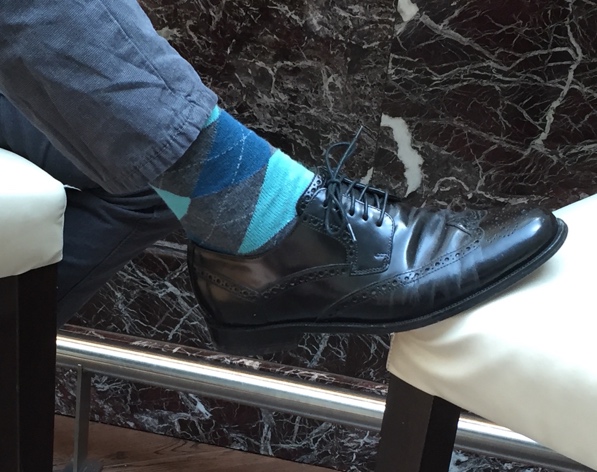
shoes11For the most part my male colleagues can manage with one, or maybe two pairs of shoes, no matter how long a conference lasts. To be fair, I have noticed that men are beginning to wear comfortable shoes, too, but then again, who looks at men’s shoes? And while we’re on the subject of men’s and women’s clothing, most conference spaces set their temperature controls to be comfortable for men in suits and ties. That means the rest of us get to wear a variety of sweaters, jackets and the ever-indispensable shawl. My guess is that it is conference-going women who are responsible for the continued success of the pashmina.

Ruby-Slippers-pin-e1464901309781I have now developed the habit of laying out all the possible shoes I could wear and then slowly narrowing down my choices to a mere three or four (and the outfits that would go with them). Several years ago, when I was doing some last minute shoe-shopping I hit upon one possible solution. When asked by the eager young salesman what I was looking for, I almost said “the Ruby Slippers.” And then I realized, that was exactly what I needed. They fit Dorothy perfectly, they went with everything (although she never actually changed her clothes), were obviously comfortable enough to walk long distances and even dance in, ensured everyone’s success, and got her home safely. I never found the shoes, but I do have a Ruby Slippers pin that I wear often at conferences.

When I told people I was writing about women’ shoes and conferences, I didn’t know whether this was going to be funny, angry or satirical. So many women – and men – I talked to had their own shoe stories that I realized what I have to say is clearly affirming for me and my colleagues. So, no, it is not stupid to pack four pairs of shoes—or more—for a two-day conference. Unless, of course, you do happen to own the Ruby Slippers.

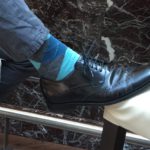
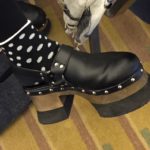
[Editor’s note: The author has provided supporting evidence in the form of pictures of AAM attendees’ feet. These can be seen below.]


New Unknown Pest Detected – Have Your IPM in Place!

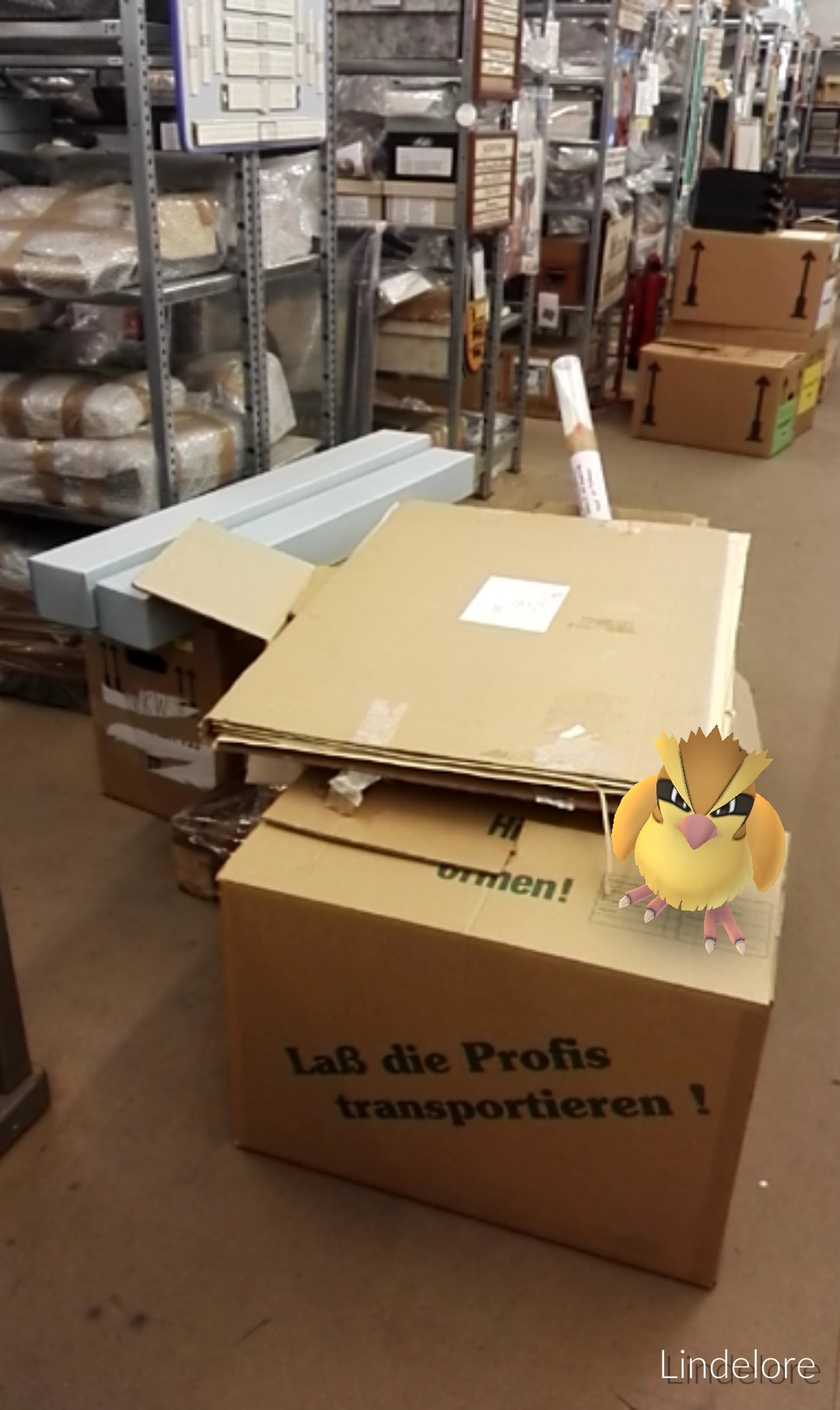
Last week there were several sightings of a new pest. Colleagues especially from the U.S. and Germany reported having spotted unknown species in their galleries and storage areas. Even the administrator of this page was not spared, see the picture.

The odd thing is that this new pest seems to be only detectable by using smartphones or tablets. They seem to pass sticky traps unhindered. So far, museumpests.net has not listed them.

Pokemon in the admin's storage area
Pokemon in the admin’s storage area1
As the senior and mid-career museum colleagues were clueless, some younger colleagues stepped up and offered help. They were able to catch some specimen and pointed to resources like this one to find out what was caught. It seems that they all belong to a family called “Pokémon” with a whole range of different species. The one depicted here seems to be called a “Pidgey”.

So far there was no immediate damage to collections reported. However, as registrars and collections managers we stand on guard. Some interns and student assistants pointed out that these pests can be trained and become much stronger, which doesn’t sound good. But they also pointed out that the real problem might be the trainers who want to catch more “pokémon” and therefore tend to ignore their own safety and the safety of their surroundings.

Being aware that we still do not know the extend of this new infestation, nor if it causes damage to collections, we at Registrar Trek have collected some recommendations on an new IPM – Integrated Pokémon Management:

  • The trainers catching these “pokémon” might not be fully aware of their surroundings – remind them in an appropriate and polite way that they have to follow your house rules and respect the safekeeping measurements for your objects and fellow visitors.
  • If there are serious issues with a gathering place of those creatures (“pokestops”) or places where trainers meet for challenges (“gyms”), you can report them on this website: https://support.pokemongo.nianticlabs.com/hc/en-us/articles/221968408-Reporting-Pok%C3%A9Stop-or-Gym-Issues, i.e. you can ask for having them removed from the game.
  • As there are now a couple of people in the vicinity of your museum that might not be the typical visitors but maybe an audience you like to involve more – how about talking to them, learning what they are interested in and inviting them inside? How about a reduced entrance fee for pokémon trainers that are first time visitors? (unlike pokémon, you don’t have to catch them all, but attracting a few would be an idea…).

We keep watching this new phenomenon and might inform you on further ideas for Integrated Pokémon Management.

Angela

  1. Note that some of the boxes in the picture are positioned directly on the ground, which is NOT how you should store them. Unfortunately, the pokémon decided to pop up where we were preparing some objects for transportation, so you can see a collections management fail at the same time. Always level your boxes above ground, so they won’t be damaged by water or feet, folks!

Nomenclature 17.2 – A Registrar’s Vision

CC0 - by Master Tux via pixabayOkay, I have a vision flashing in front of my eyes as I go through the database cropping photographs and renaming artifacts. Like the toasting fork that had been catalogued as a Pan, Roasting. My vision is of the future of the ungainly, poorly bound green book that tells me what I am and am not allowed to call these objects. Some of these things are difficult for a child of the mid twentieth century to identify. So I am seeing a future digital version of Nomenclature, and if you are willing to fork out the extra bucks, you get a version like Leafsnap where you photograph the item on your portable device and show it to the Nomenclature 17.2 program and it says, aha! And you say eureka! Because the device tells you what to call the item. How cool is that?

Anne T. Lane

Unmanaged Collections is here – We celebrate with “The Outtakes”

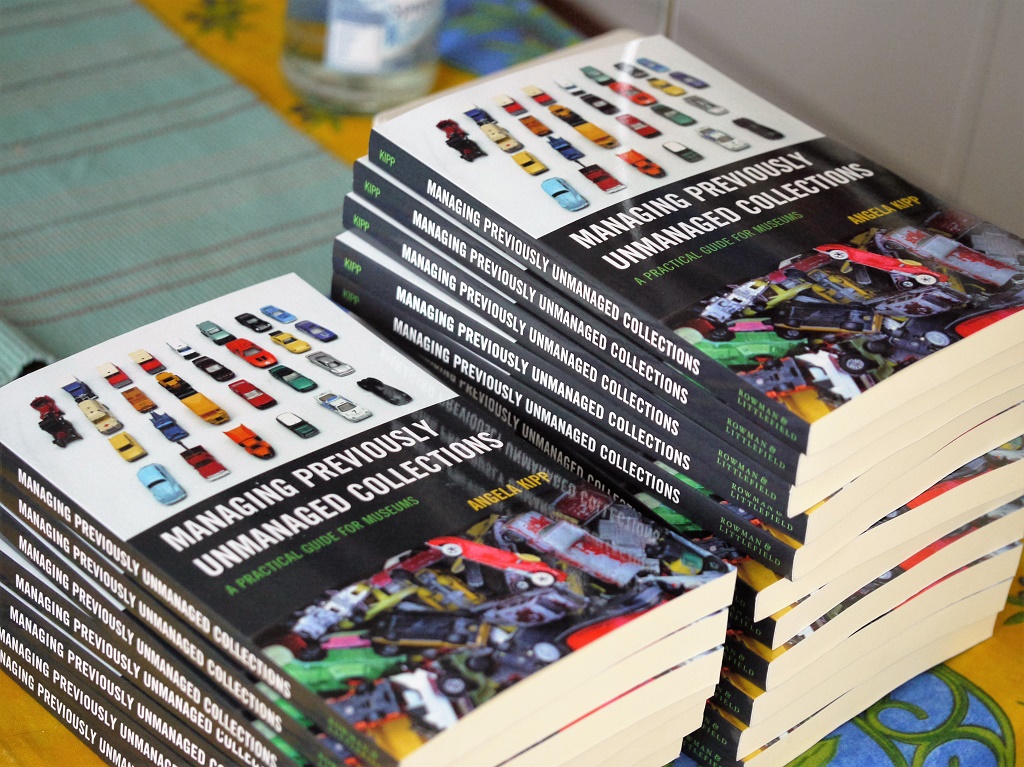
As you know, I was taken a little by surprise by the publishing of “Managing Previously Unmanaged Collections”. Now, after I recovered, I’d like to celebrate with you, the readers of this blog and faithful supporters. I thought I’d compile a couple of “outtakes”, things and stories that didn’t make it into the book.

The Cover
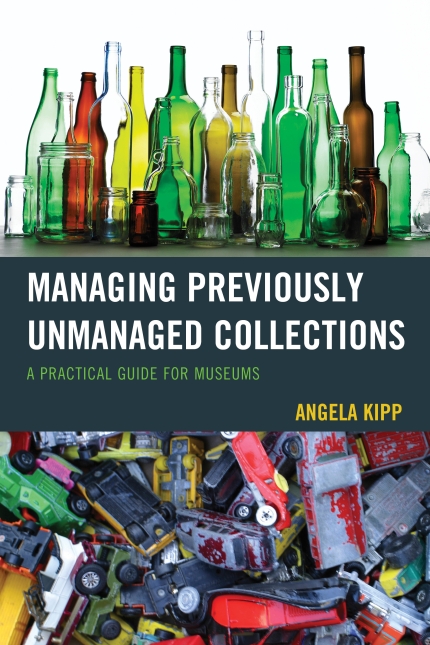
ManagingC1-1oldI received a few compliments for the cover. Thanks a lot. Actually, the first cover looked a little different, as you can see in the picture.
As much as I loved the idea of having something shabby and chaotic and something clean and well-ordered on the cover I thought it didn’t convey the message clear enough, besides the fact that one could assume the bottles were emptied while writing the book…
I experimented with alternative pictures when Bernd, my colleague and significant other said “You know what? I think we can do it better!” A couple of hours later we were equipped with a collection of old toy cars, archival materials and camera equipment. We experimented with different setups which, quite to our surprise, revealed that a bunch of cars bagged and labeled looked a lot more chaotic than a line of cars without labels. So we ended up with the “parking lot of toy cars” you now see on the cover.
For those who desperately tried to match the cars of the picture below the title with the ones above: sorry, the upper ones are German while the lower ones are probably from the U.S. – and they never met each other.

More Stories!

There were a lot of awesome stories about unmanaged collections I heard along the way and I would have loved to publish them all. However, it didn’t always work out. Sometimes there was a change in upper management and people didn’t get permission, sometimes the work contracts ran out before the submission was approved, sometimes life just got in the way in some other form. I hope that I can publish some of these stories here on the blog some time in the future.
However, there was one story that always brought a smile on my face when I thought about it, but one I couldn’t use because… well, I somehow managed to delete that email and that way couldn’t get back to this person to ask permission. And even if I had the mail, I’m not sure if it would have been appropriate to publish it in the book. However, I think here is the time and place to share my smiles:
This person was interviewing for a position to manage an unmanaged collection. When they showed him/her the collection that was, as far as I recall, a shack crammed with objects from roof to floor he/she exclaimed “What the f**k??” Out loud in front of the people responsible for hiring. And got the job.

Curious Corrections!

My dear friend and colleague Darlene Bialowski certaily spent a crazy amount of time on this book project, helping me with corrections and conundrums. More than one time those corrections were not only helpful, but also hilarious. Like, when I discovered that yes, there is such a thing as too much documentation or when I asked her for the correct American term for the German “Sägebock”, sending a picture, and she answered: “‘the best assistant of the non-human variety’ tool I adore is called a ‘sawhorse’.” I don’t know how often I passed this phrase along since then…
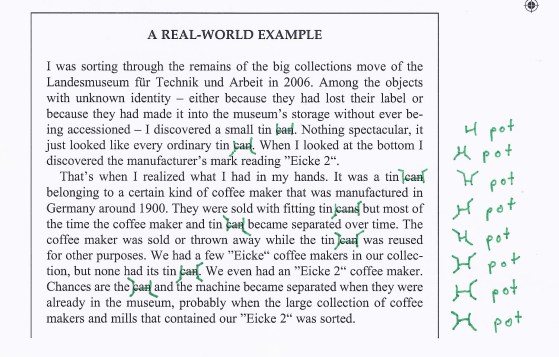
When the final proofs came she realized that in one real-world example I used the term “tin can” and until she saw the picture of what it really was she always thought of it as, well, a can in which food is preserved. Only when she saw the picture she realized that it was actually a coffee pot. To correct this ambiguity I nearly ran out of correction signs:
correction oddity1

More Pictures!

When I was negotiating the contract the editor told me they would like to have pictures. I was so convinced that no one would be willing to share the crammed shacks of objects that I insisted on no pictures in the contract. To be honest, at this point I wasn’t even sure I could talk anyone into sharing real-world examples in written form…
Then, as I was collecting real-life stories I found many colleagues actually had pictures. Unfortunately now I already told some contributors that I don’t need pictures… I did what I always do when in doubt: I sent a mail to the RC-AAM listserv. I asked if anyone was willing to share their before/after pictures from their collections. I was delighted to receive a whole bunch of awesome unmanaged collections that became managed and most of them made it in the book.
One, however, I received after the deadline. It is Alicia Woods’ favorite picture of the place you will find in the book under the title “Artifact Morgue”:
Artifacat Morgue
That mannequin leg sticking out from between the shelves says all about unmanaged collections doesn’t it?

Cheers,
Angela

This post is also available in Russian translated by Helena Tomashevskaya.

Ooops- Managing Previously Unmanaged Collections is already out!

Yesterday, I was taken by surprise when our library sent me a mail that they had just received their copy of “Managing Previously Unmanaged Collections” and were about to catalog it. Two hours later I received an email from my dear colleague Susanne Nickel with congratulations as she received her copy. Throughout the whole day, while I was desperately waiting for an important transport to arrive at our museum, the mails from contributors saying “just received my copy” hit my inbox. It seemed like literally EVERYBODY had my book in hand before me.

When I finally came home my heart missed a beat when I saw a parcel sitting in my backyard – soaking wet in the pouring rain. But fortunately, when I opened it, all was well:

P1020449 (2)

The best news is: My publisher, Rowman & Littelfield has provided a special perk for you, our faithful readers: you can get 30% off the list price if you order it directly from them, see this flyer for details (unfortunately, this is only valid for U.S. orders):

Managing Previously Unmanaged Collections Flyer

Now, with one day delay I finally managed to inform you all. Thank you so much for the support and I’m about to produce a more thoughtful celebration post. 🙂

Cheers,
Angela

This post is also available in Italian, translated by Marzia Loddo and in Russian translated by Helena Tomashevskaya.

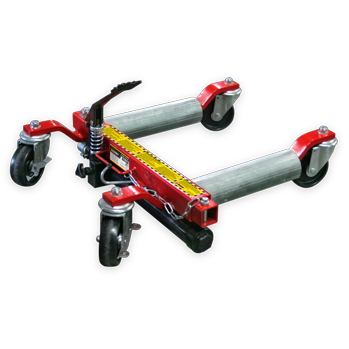
From “Kojak” to “Go-Jacks”

Go-Jacks Image : bendpak.com
Go-Jacks
Image : bendpak.com

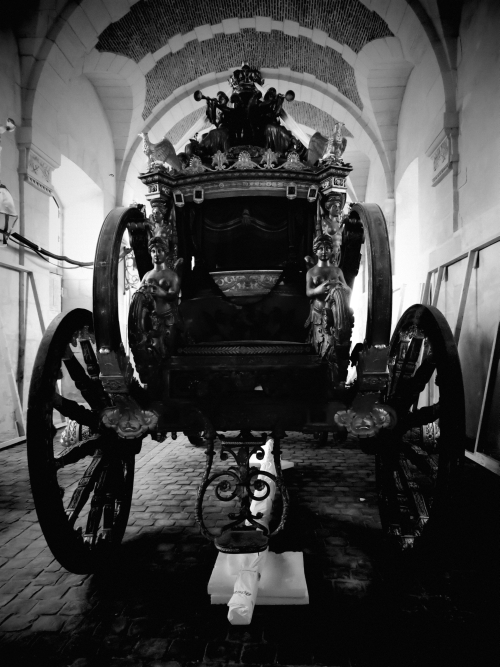
This day you are translating an article for Registrar Trek, and you discover that what carriers call “Kojak” (term you thereby always use since you had to use it to move carriages) are called in reality “Go-Jacks”…


(Update of the vocabulary in my little head : done !)


Demonstration of the use of Go-Jacks : https://youtu.be/mush3hNbnmY
The article that enabled this discovery : Art work, Artefact, Auto, and Pop-Culture Shrine, Part 2

Aurore

Préparation des « petites charriotes » qui seront visibles à la ré-ouverture de la Galerie des Carrosses du Château de Versailles dès mai 2016.  Image : © Aurore T
Preparation of the « little carts » which will be visible at the re-opening of the Gallery of Carriages at the Palace of Versailles in May 2016.
Image : © Aurore T

What happened September 2nd? A registrar’s climate mystery
Part 4 – Alternative Solutions

I hope you enjoyed our little climate mystery. A lot of our readers did and submitted possible solutions. Two people came up with the right solution in this case:
Geert Bellens suspected immediately that the logger was brought into another room and was right about this place:

”If someone was breathing close to the logger, the temperature would rise at 16:30, but humidity also. If a heat source was involved (local heater, lamp,..) I would expect rising temperatures, and lower humidity, but no that drastically.
I would think someone took the datalogger to another room (warmer, dryer) and then maybe outside in the car for a night, to put it back the 3th September…?”

And Michael Hall did a complete analysis that was accurate to the point:

”I would suggest that the logger was actually removed from it’s original location. The changes in humidity are being driven by the changes in temperature. Looking at the conditions before and after the fluctuations the conditions are fairly stable. The sudden change in temperature could be caused by someone accidentally putting the logger into their bag that has come from a warmer environment, walked out of the building allowing the temperature to cool, then got in a car,driven home with the air con on, got home at about 17:30, the car is left in the evening sunlight allowing the car to warm up before the sun disappears giving a gradual cool down overnight. At 07:30 next morning, the person drives into work, realises they have taken the logger home and puts it back in situ.“

Although those were the right solutions in our case, there were other solutions that are well worth considering when YOUR logger shows an odd graph like ours:

Christian Baars: “The weather was mild during early September 2013, with daytime temperature at around 24 deg C. However, your T changes are too rapid to be caused by normal daily fluctuations. The RH changes in this case are counter correlated with your T changes, which suggests that something affected T but confirms you have no independent RH control. As you say there is no HVAC an equipment malfunction can be excluded. Something lead to the steady then rapid T increase, then slow drop during the night, followed by rapid normalisation of conditions. Do you have central heating in the building which came on, the store got too warm, someone opened a window in the evening of the 2nd which was left open over night then closed in the morning of the 3rd?”

Kathy Karkut: ”Potentially something was dropped over the data logger such as a box or bubble pack, etc. and the readings are for a very small contained space surrounding the DL. The next time someone was near the DL they removed the covering.“

Chris Au: ”My first avenue of inquiry would be to confirm the integrity of the datalogger; was the data compromised in its collection, interpretation, storage or transmission?
Secondly, was there any other evidence of the T and RH fluctuation?
Thirdly, what are the items in storage? Could anything there be a cause?
Perhaps there would be clues in those answers.“

Hugh Glover: ”A staff member did something dry as they left for home and undid it when they arrived in the morning; not sure what they did though!”

Paul McAuley: ”I agree with Kathy Karkut, something has fallen over the datalogger unit creating a microclimate – a sheet of bubble wrap or tissue – or some creature has interfered with the sensor – or maybe there is a ghost in the machine…”

Pat: ”There was marked solar flare activity from Sept 1 to Sept 3 2013. Could that have had anything to do with disrupting the datalogger readings?“

The most interesting alternative solution, and something I really hadn’t thought about so far came from Doug Nishimura. We take it for granted that we – or the building and our technical appliances – control the climate conditions. However, sometimes it’s the other way round. The objects control the climate:

”I was going to comment that the places where temperature and relative humidity go up or down together (at least briefly) looks like the objects controlling the conditions. We’ve seen this in a historic house in which the attic went up and down in temperature with day and night. In the day, temperature would rise accompanied sometimes by a small dip in RH followed by a sharp rise in RH before plunging. As temperature peaked and started dropping, we might see a little upward spike in RH but followed by a sharp drop in RH as temperature fell before rising back up. This was the wood in the attic releasing water vapor as temperature went up (off-setting the expected drop in RH as temperature rose) and the adsorption of water back into the wood as the temperature fell again. We more recently ran into in a warehouse full of ceramic pottery pieces from archaeological digs. The clay was also adsorbing water as temperature went down and releasing as the pottery pieces warmed up.

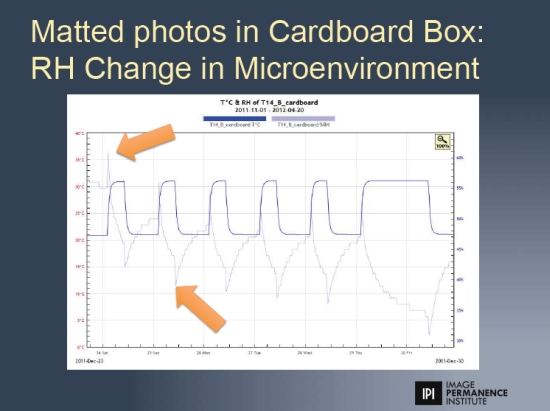
IPM_Slide

I’ve included a pdf slide of on an experiment my colleague, Jean-Louis, did with sensors in a box of matted photographs. He actually had a sensor inside the stack, inside the box on top of, or beside the stack and outside the box. The large arrows point out the first points that show the effect of the material on the RH inside the box. So you see as the temperature goes up, the humidity sharply follows it up before talking a long slower slide towards equilibrium. When the temperature goes down, we get a sharp drop in RH followed by the long slow slide towards equilibrium. As we poked into data that people uploaded to eClimateNotebook, we noticed this pattern appearing surprisingly often and we figured out that if you start from an empty room with non-hygroscopic walls, the environment is what it is. We start adding objects into the room and the room controls the objects. Eventually you reach a point where the ratio of hygroscopic materials to free air in the room is just high enough that the objects start to control the room. We don’t really see it so much in temperature, although I point out that a ream of common office copy paper (and American copy paper is 8.5 X 11 inches or 215.9 mm X 279.4 mm and one ream is 5 pounds or 2268 grams) takes the same amount of heat in or out to change one Celsius degree as 3.64 cubic meters of dry air. Possibly the effect doesn’t show-up because of the slow thermal conductivity of paper, but it’s an example of what can happen.“

Keep watching your climate data, folks!

This post is also available in Russian translated by Helena Tomashevskaya.

What happened September 2nd? A registrar’s climate mystery
Part 3 – The Solution

what_happened
“Looks like trouser pocket” said my colleague.

It wasn’t a trouser pocket, but it was the right lead. What we got here was definitely a people pattern. A storage area of the size at hand can’t change humidity by 20 % within 10 minutes if it is not to really catastrophic circumstances. It couldn’t be something that happened in the storage, it was something that happened to the logger.

Here’s the whole story:

The data from our data loggers is downloaded to a laptop at the beginning of each month, preferably on the first day of a month. September 1, 2013 was a Sunday, so September 2nd was the date for collecting the data.

On September 2nd about half past four p.m. our conservator responsible for the loggers called me to say that he just couldn’t make it to download the data on this day. But as we had a staff meeting on the next day and I was already at the offsite storage now, he asked if I could simply fetch the logger and bring it to the museum the next day.

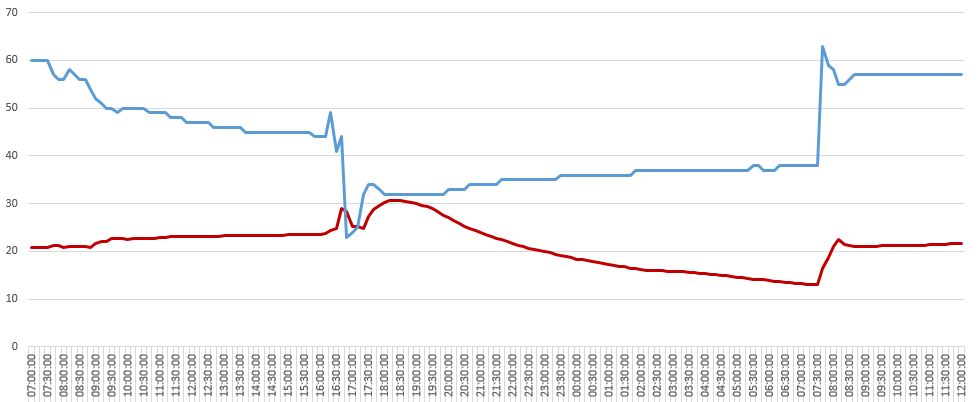
Well, of course I could. I immediately took the logger and put it in my car so I wouldn’t forget it at closing time. While I was finishing my work at the offsite storage you can see how the poor logger lies in my car that was parked in the bright sun. About 20 minutes later I closed the storage and hit the road. As it was hot in the car, I rolled down the windows, resulting in a temperature decrease to a pleasant 25 °C (77 °F). At half past five I parked my car at home, again in the bright sun of a lovely, mild September evening. It was one of those last warm September evenings, where you can sit in front of the house with a cool drink and enjoy the warm rays of the setting sun. Apparently, it was far less pleasant inside of the car, hitting 30 °C (86 °F).

The next morning I got back into my car which had cooled down to 13 °C (55,4 °F) during the night. I was freezing, so I turned on the heating. When I found a parking lot in front of our museum at 8:10 the car was quite comfortably warm at 22,5 °C (72,5 °F). I took the logger and brought it to our conservator, so from now on the logger logged the regulated climate inside of our museum.

Hope you enjoyed our little real-world riddle.

The Start
The Hint

This post is also available in Russian translated by Helena Tomashevskaya.

What happened September 2nd? A registrar’s climate mystery
Part 2 – The Hint

what_happened

I had a look at the graph. It looked like a pretty normal day in this area until about 16:40. We have a slow increase in temperature from about 21 degrees to 25 degrees Celsius (69,8 to 77 degrees Fahrenheit) and a drop in humidity from 60% to under 50%. Nothing odd for this less-than-ideal hall in the changing season of a German autumn. If you take a look at the weather dates of said day from the nearby weather station you can see that our inside correspondents with the outside: http://archiv.mannheim-wetter.info/2013/pcws/20130902.gif (thick green line for temperature, thin purple line for humidity).

Then, after 16:40 things got odd. We see a sudden increase in temperature up to 29 °C (84 °F) and a drop from 44% to 23% within only 10 minutes. If this weren’t odd enough, only 20 minutes later we see the temperature dropping back again to 25 °C (77 °F) and humidity slowly increasing to 32%. At 17:30 we see again an increase in temperature, climbing up to over 30 °C (86 °F) and staying as high until 19:00 to slowly, slowly start decreasing over the next few hours, reaching 13 °C (55,4 °F) at half past seven the next morning. Then, suddenly, the temperature increases, again in an unusual way, reaching 16 °C (60,8 °F) at 7:40, nearly 19 °C (66,2 °F) at 7:50, peaking to 22,5 °C (72,5 °F) at 8:10 to become quite stable again at 21 °C (69,8) and 57% relative humidity.

Again and again I looked at the data and discussed it with colleagues. Then, a colleague mumbled “Looks like trouser pocket.”

Suddenly I could see the whole story when looking at the graph. Can you?

The Start
The Solution

This post is also available in Russian translated by Helena Tomashevskaya.