Museum professional, lover of all collections work, former collections manager of the TECHNOSEUM in Mannheim, Germany. Now Professional Services Specialist for Gallery Systems. Independent museum professional.
Cat wrangler and #SciFi enthusiast.
Views are my own. Of course, they are. I can't make anybody responsible for the garbage my brain produces!
today, I’m proud to announce the opening of the French version of Registrar Trek! Now our French readers have the possibility to read posts directly, not only as PDF and to subscribe to a French newsfeed. Thanks to Aurore Tisserand for translating all the necessary texts to make this possible. We celebrate this achievement with a post about a French-German cooperation in collections research made possible by the fantastic Registrar Trek network, especially by Marine Martineau.
À bientôt
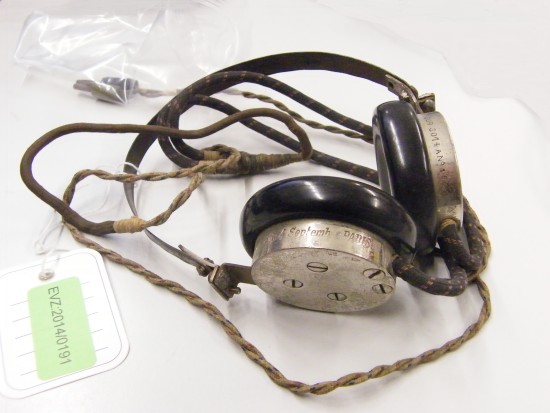
Angela Earphone„Didn’t you take French at school?“ my colleague Bernd Kießling asked across the table, looking up from a set of earphones he was documenting.
“I can order you a tarte flambée and a café au lait but might accidentally provoke an international conflict when trying to order a hotel room, why do you ask?” I said, looking up from a long list of objects that had to be cross-checked with our data base.
“This earphone is made in Paris, but I’m not sure about the manufacturer. Have a look.”
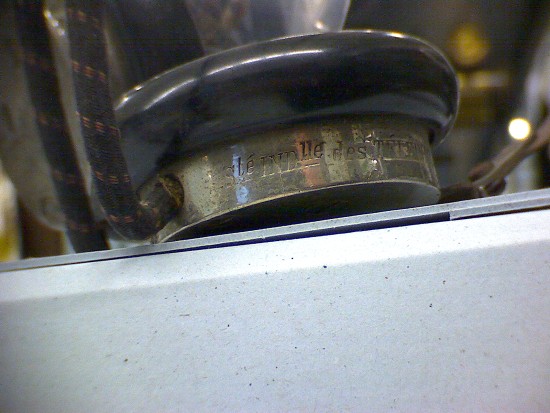
I moved over and took a look at his monitor where he showed me the tiny inscriptions he magnified by using an USB microscope*.
Detail of one receiver of the earphone, picture taken by the USB microscope“Slé INDlle des…” I spelled out, “I don’t know, seems like an abbreviation of some kind, maybe the manufacturer, but I don’t know. You know what? I’ll send the picture over to Marine. She’s in Paris, so maybe she can help us with that.”
Marine Martineau, registrar and translator for English/French at Registrar Trek received the mail a few minutes later. She took a look and passed it along to Thierry Lalande, collections manager at the Conservatoire National des Arts et Métiers. He and his colleague Marie Sophie Corcy had the idea to ask Frédéric Nibart, a wide-known expert of the French phone.
Within a few days we knew that the earphone was built in July 1928 by the Société Industrielle des Téléphones in Paris. We even received an article from M. Nibart about their company history which we immediately included in our data base.
It was a great feeling of international collaboration made possible by the worldwide network of Registrar Trekkers. We really hope we can return the favor one day.
Angela
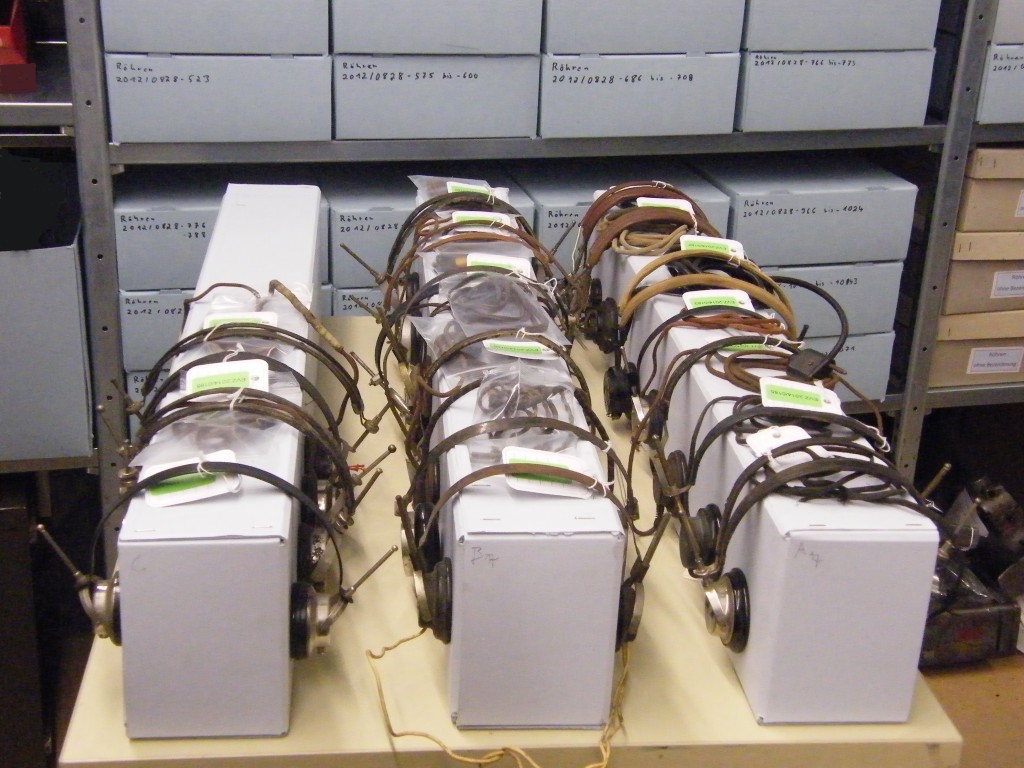
Storage solution for the collection of earphones: These long archival boxes are usually used for storing maps but have exactly the right dimensions to support earphones in the position most “natural” to them. For final storage we will support them with some bubble wrap and make a hood out of polyethylene foil for the boxes.
* = The USB microscope was originally part of a hands-on demonstration in a temporary exhibition and has a second and very useful live now in artifact research.
Not in my vaults! Sometimes we all could need some registrar superpowers…As an spin-off of a discussion following the release of an article from Sheila Perry about their barcoding project at the National Galleries of Scotland (“If it moves, barcode it” ) Dan Smernicki (twitter @DanSmernicki ) came up with the idea for a new post on Registrar Trek:
“A Registrar’s Wish-list. Things that *should* exist, but for some infernal reason don’t.”
I guess you all have your dreams and wishes – some concrete and easy to realize if the Money-for-collections-care-fairy (“You’ve got 3 archival wishes”) appeared, some futuristic (magic glasses that let me see the object I’m searching for marked red in the rack) some out of wishful thinking (white gloves that remain white).
So far we have:
Dan Smernicki @DanSmernicki : a system which tracks items, and people, and reconciles the two.
Me @RegistrarTrek : condition reports on-the-fly and an app telling me if I have a fitting crate
Cecilia Peartree @ceciliapeartree : Works of art that shriek loudly if nobody has notified the database team of their location change.
Maggie Mazzullo: I wish I had a special sixth sense that alerted me when people are/were in the vault area ‘rummaging’ around or otherwise causing an upsetting mess. Kind of a vault alarm and then I could appear right behind them and catch them in the act.
Maggie Mazzullo: I also wish I had a laser system that would target and vaporize pens, beverages and other verboten items as they were coming into the student study area to interact with artwork.
Caitlin (Schwartz) Rumery: I would have to add onto the aforementioned condition report one and say glasses that examine an object and let me know of any lose, unstable, or otherwise-about-to-break-in-my-hands parts.
Caitlin (Schwartz) Rumery: Also, a magic system that creates Crystal reports on the fly based on what I need at that moment.
Caitlin (Schwartz) Rumery: Lastly, a drone to follow my trucks so I can spy on my shipments and the drivers. That way I can make sure there is no funny business happening on the road…
Please add your wish/dream to the list, either by commenting or by using twitter and the hashtag #registrardreams
Ei vahinko tule kello kaulassa.
An accident won’t arrive with a bell on its neck.
(Finnish Proverb)
A little tired we started into the second day. The decision had to be made between „Valuation and Insurance“ and „Be Prepared“. Well, I felt not prepared after going to bed at 2 a.m., so I chose „be prepared“.
The first presentation „Disaster Relief / AIC-CERT“ was divided in two parts, one about the idea and the training by Julie Bakke, Chief Registrar at the Museum of Fine Arts in Houston/USA and one they called „Steve’s Reality Show“ from Steve Pine, Senior Conservator for Decorative Arts at the Museum of Fine Arts in Houston/USA.
After Hurricane Katrina hit New Orleans in 2005 it became apparent that the biggest problem in saving collections is not that there are too few people who are willing to help nor is it that there is too few expertise, the problem was that there was no form of organization that brings those two much needed components together. Therefore the American Institute for Conservation developed AIC-CERT (American Institute for Conservation – Collections Emergency Response Team). It is a group of volunteers consisting of conservators and collections specialists that will offer their knowledge in case of emergency – via phone, email or on-site.
Training is always a crucial point when it comes to save collections after a disaster. People who are trained will better know what to do and much less likely lose their heads. That’s why AIC-CERT conducts trainings all over the US. Participants learn in 5 days how to form effective emergency response teams, how to work together with other emergency professionals and how to protect oneself and others. The last point is extremely important, for museum people often don’t think about their own safety when entering a disaster zone. Among the recommendations were:
make sure you wear proper safety equipment like hard hat, gloves, masks…
before re-entering a disaster zone make sure people know where you are going
never go there alone, always enter with a buddy
Be prepared: Julie Bakke with hard hat, mask and, of course, clipboard. Picture via twitter @BergFulton
What is crucial even in „minor“ incidents is to have an „Incident Command Post“, someone who coordinates everything that is done on site and who makes sure that all the information is flowing: safety warnings from police and fire fighters to the emergency response team, handling instructions from the advising conservators to the emergency response team, findings and new dangers detected by the emergency response teams to the officials,…
An emergency team in the way the AIC-CERT sees it consists normally of 4 people: 1 team leader, 2 people in the field and 1 logistics coordinator. Somehow registrars and collection managers seem to be a perfect fit for the logistics coordinator, because they are often responsible for their institution’s disaster plan already. They can also be good fits for the Incident Command Post.
The training of the AIC-CERT isn’t purely theoretical. They do mock disasters in their training. They set up a scenario (category 3 hurricane in the museum, fire in the library due to a short circuit…) and the training team has to go through it to learn what to do and when.
Along with this session came the information that the long known „Emergency Response and Salvage Wheel“ is now available as app for mobile devices: http://www.heritagepreservation.org/wheel/
Steve Pine reported on what AIC-CERT had done to help when Sandy stroke. In this case the MOMA acted as an information hub with conservators giving advise and coordinating help. They used their „Inside/Out“ blog to offer help and answer questions from artists whose artworks were affected by flooding. You can take a look at these posts here: http://www.moma.org/explore/inside_out/tag/hurricane-sandy
Steve showed pictures of the work that was done by AIC-CERT members together with artists and other volunteers to save the artworks of an artist’s colony and the costumes and props of the Martha Graham Dance Company (http://afrnyc.org/emergency-response-martha-graham-dance-company). Toilet paper instead of Japanese paper helped to dry pictures before mold could set in. Window screens were used as drying racks. An empty industrial hall as „field hospital“ for artworks and props… It was impressive to see how the professional knowledge of conservators and the spirit of improvisation resulted in saving thousands of artworks.
Fire at the museum
The next session confronted us with another registrar’s nightmare: „Fire at the Museum“. Adina Ekbergh, Security Manager of the Museum of Ethnography in Stockholm/Sweden reported the incidents of this black day very calmly but vividly.
When the smoke detector in the cold storage room went off they immediately evacuated the museum and the fire brigade arrived 7 minutes later. Unfortunately, smoke had infected the storage rooms in the vicinity of the cold storage room and the fire sprinklers did their work for 13 minutes, soaking the artifacts stored there. Fortunately, Adina was on site and immediately entitled to coordinate everything that was necessary by upper management.
When the fire fighters had everything under control all doors were opened to let the smoke out and staff members guarded the doors. Most staff members waited on site to go back into the building to help with recovery. But unfortunately, the forensic investigation couldn’t be completed on that day and the building was sealed at midnight. The investigation continued the next day. Needless to say, the museum staff couldn’t begin with the treatment of the wet artifacts before the forensic investigation was completed. Precious time passed, and as a collection of feather, fur and leather artifacts was affected, the 24 hours that passed before staff could begin with recovery were enough for mold to set in.
As soon as they could enter, the recovery began. They decided to freeze everything that was infected. From Thursday to Saturday every staff member helped with the treatment. At first they worked without protective equipment because there weren’t enough masks and gloves on site. Shopping for this equipment was one of the first tasks!
Adina pointed out that they learned a lot from this disaster:
Always have enough protective equipment at hand, because one can be sure that everybody wants to help but health of staff members should come first! Adina put it this way: we regard ourselves as professionals working with items, not as people. Therefore we often forget to consider health risks.
If someone offers help, don’t say no. Don’t underestimate how disasters are physically, mentally and emotionally exhausting. Don’t be afraid to ask for help.
No items should stand on the floor!
Write a diary of what happened when in the incident – you forget!
Involve the neighbors.
Have good connections to officials like fire brigade and police – establish them before something happens.
Train your staff for disasters.
The reason for the fire was identified as high voltage in a sensor of cold storage room. Pondering about the safety of our own collections we left for coffee break.
Vahinko tulee viisaallekin.
Even the wise one sustains damage.
(Finnish Proverb)
The last sessions of the first day saw two speakers who were were different in appearance and presentation style but who definitely pull together when it comes to bringing back lost art: Christopher A. Marinello, Director and Founder of Art Recovery International and Rune Sivertsen, Detective Superintendent of the Norwegian Police. It was the eloquent lawyer and the straightforward law-enforcer speaking – and we were all spellbound for the next one and a half hours.
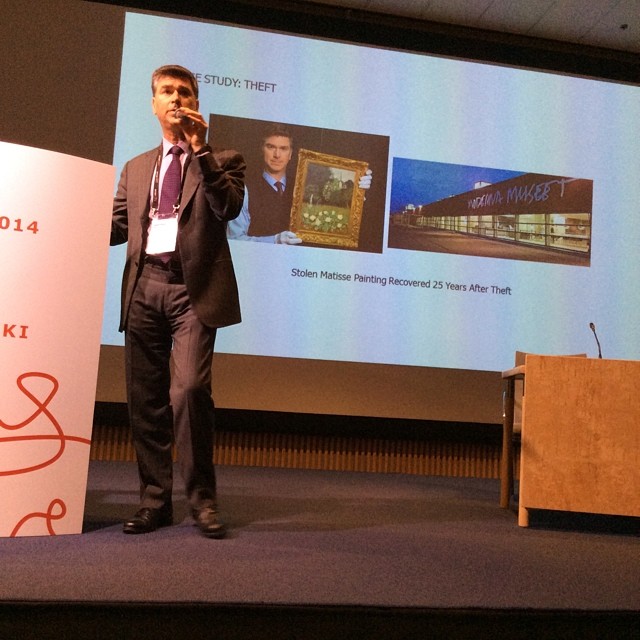
Chris Marinello speaking about the restitution of a Matisse (via twitter @erc2014)„Who steals art?“, asked Chris Marinello at the beginning of his presentation „Art lost and found“. He made it clear that art thieves are not at all like they are depicted in Hollywood movies like „The Thomas Crown Affair“ or „Entrapment“. There is nothing romantic or heroic about them, they are just ordinary criminals, the type of guys who steal wallets.
Art theft is an „industry“ making 6 billion dollars per year. But how many „good guys“ are there to prosecute these thefts? Marinello had it in figures: In Italy there is one Art Crime Police Officer for 200,000 inhabitants. In the UK it’s one for 15 million inhabitants and in the US it’s one for 20 million inhabitants. Only 15% of lost art is ever recovered. This is one of the reasons why, in Marinello’s opinion, it’s necessary to have help from the private sector.
He introduced the database „Art Claim“ for stolen, looted and missing works of art. One idea is that museums and collectors can register their art works there before anything happens to them. This makes it clear who the original owner is, so art dealers can check the data base when an artwork is presented to them to make sure it isn’t stolen. Police can check the database when they discover an artwork, for example after a razzia.
Another part of the work of Art Recovery International is the negotiation in restitution cases. Chris talked about some difficult cases, including one from the Gurlitt art find. One can only imagine the difficulties of negotiating in cases where something is regarded as legally acquired under the law but still, morally, belongs to the original owner. Convince someone to give a work of art back without compensation just to do the right thing and to right a wrong that happened long ago? Sounds like really hard work.
Now Rune Sivertsen entered the stage for „The Robbery of The Scream and The Madonna from Munchmuseet in 2004“. We were all ears when this police officer revealed the bitter truth of this theft.
There were some circumstances that made it easier for the robbers, although they couldn’t foresee them: The security guard was positioned outside the room where „The Scream“ and „The Madonna“ were on display and the alarm system attached to the pictures was not properly maintained so it didn’t go off when the pictures were removed. The robbers where well prepared for other circumstances: one carried a gun and they used fitting foam glue to silence the alarm bell.
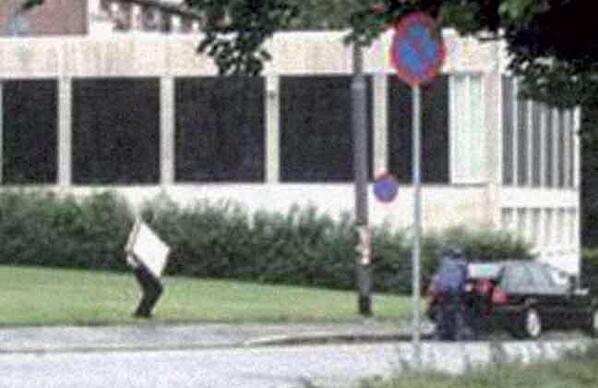
Picture of the robbery – approaching the getaway carBut there were lucky incidents, too: The robbery was filmed and one witness unknowingly took a picture of the getaway car. While the robbers were masked, the driver wasn’t and was identified. Another robber was identified because he wore the same clothes when arrested in another case. But still it took 2 years and 7 days to recover the pictures, which suffered major damages, and to arrest all the robbers.
What really shocked us as museum professionals was when the true reason for the theft became apparent: The pictures were not stolen to steal art and sell it. They were only stolen to distract attention and absorb manpower of the police from the investigation of a major monetary robbery at NOKAS (http://en.wikipedia.org/wiki/NOKAS_robbery) conducted by the same organization of criminals! Even more shocking – if possible: The sentences for the robbery were low, the only one who was sentenced to a significant amount of time in jail for this crime was the one who carried a loaded gun…
With the impression that maybe its only we who regard art theft as a „serious“ crime we went off to the Midsummer Party at Kiasma…
The forger – Mark Augustus Landis Also known Aliases: 2009 – Steven Gardiner 2010 – Father Arthur Scott 2011 – Father James Brantley 2012 – Mark Lanois 2013 – Martin Lynley and John GraumanWell, as I think back to August 7, 2008 whilst at the Oklahoma City Museum of Art working on preparations for an acquisitions meeting, I am proud to say that I am the sole individual to bring down the most prolific art forger in history! Now, I can continue to educate people but now in a much bigger and broader scale with a new medium and here’s why!
The film, Art and Craft that debuted at the Tribeca Film Festival in New York City, will hit theaters in the US on September 19 at Lincoln Plaza in New York City. Art and Craft has been getting rave reviews from all the festivals in which it has been an official selection and much attention from movie goers. I am certain that the museum realm will once again open their eyes to my findings once Art and Craft hits theaters.
For those of you not in the US but want to see the film, EARLY 2015 you will be able to find Art and Craft on DVD, Amazon Instant Video, NETFLIX, iTunes, Hulu and other streaming media.
Trekker, your daily work is a big contribution to the museum community and don’t think for a moment it goes unnoticed! That day in August, yeah I never thought this would happen!
Here is a link on Youtube.com for the official theatrical trailer. Please share on your social media sites so you can help me continue to spread the word about the most prolific art forger in history!
The forest answers in the same way one shouts at it.
(Finnish Proverb)
After lunch there was again a difficult choice to make: Assessing Risk in Lending and Borrowing or Shipping Challenges. I could talk hours about shipping challenges in a Science and Technology Museum, but they are mainly inside my own institution, so I chose lending and borrowing.
“I look forward to hearing from you”: A lending and borrowing scenario was presented by Kate Parsons, Head of Collections Management at Tate, UK and Jane Knowles, Head of Exhibitions, Chair of the UK Registrars Group.
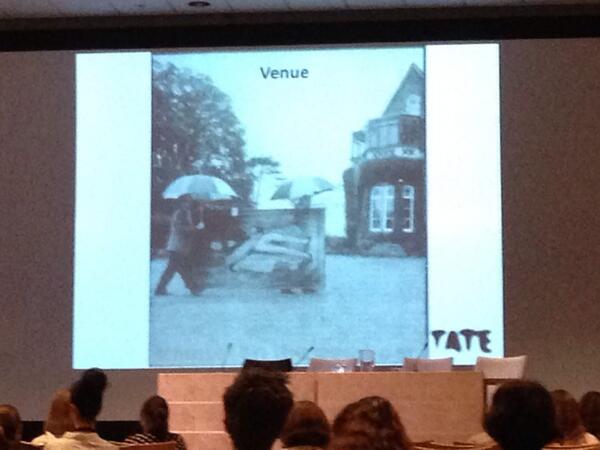
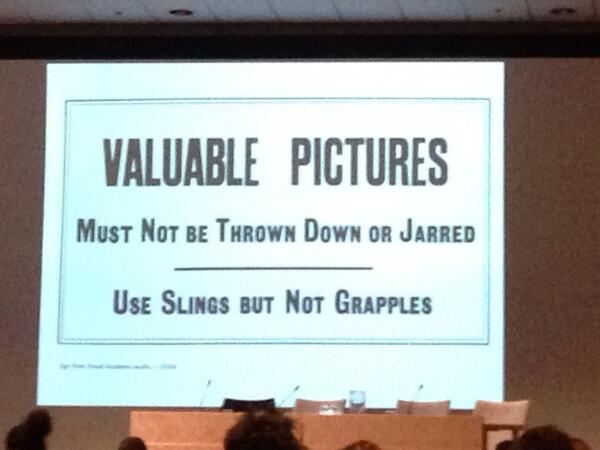
It started with a short look at the history of risk assessment in lending and borrowing with some hilarious finds concerning art transportation:
Generally speaking, there are three types of risks when it comes to loans:
All the risks must be addressed as early as possible in the process. To show how to do this Kate and Jane established a scenario: The Royal Academy wants to loan some works of art from Tate. Taking the roles of the lender (Kate) and the borrower (Jane) they showed how the loan process is established, how risk assessment is done continuously on both sides and how communication is key.
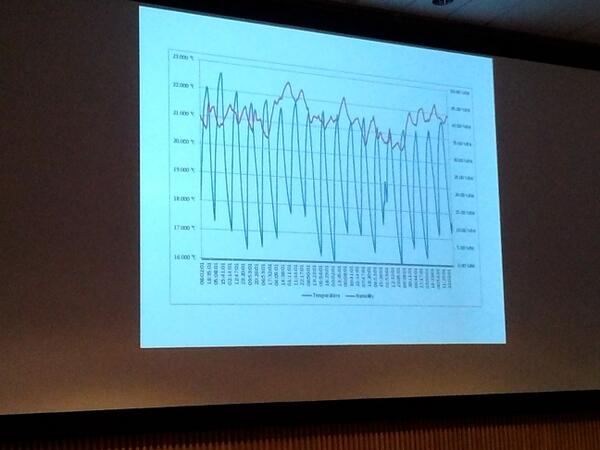
As most loan processes, the one in this scenario didn’t go smoothly. For example, the borrower sends in the climate graph of one of the exhibition rooms, which looked like this:
Is it okay for an alabaster sculpture? Well, even with considering very much in favor of the borrower, it isn’t… They have to find an alternative room for display and there are concerns because of the weight of the statue and transportation issues. In regards to another artwork the borrower finally decides to draw back his loan request. The lender has already invested time in conservation measures, so he sends an invoice for the costs, which, of course, the borrower didn’t expect and hadn’t accounted for. So it went on, but in the end they reached a good agreement for both sides and lived happy ever after…
Gee, I really wish all loan requests and procedures were handled in the decent, polite and collegial way of this scenario! That’s really acting in favor of the artworks, institutions and of course, the colleagues involved. In a nutshell: Lender and borrower should both work together and discuss risks openly and collegial. That’s good risk assessment
Next up was Eva-Lena Bergström with „Lending and Borrowing – Calculating Risks“. She took a look at the historical development of risk assessment in loans and especially on the development of state indemnity programs. Some of the facts and figures I recall (or could look up in my notepad):
In 2009, 22 of 30 European countries had a state indemnity program
Since then 2296 exhibitions were covered by state indemnity and there were 16 reported cases of damage/loss introduced for at least 100.000 artifacts included in these loans (0,016%).
Out of 84 institutions that took part in Eva’s survey only 2 didn’t do risk assessment in any form.
This was followed by an in deep look at the data from the survey the ERC2014 delegates were asked to fill out online before the conference (hopefully published soon).
The following panel discussion soon focused on the practice that some loan contracts include a passage that the borrower can be held responsible for damage that becomes visible up to 6 months after the loan. This is a passage that seems to impose an unbearable risk on the borrower. But a German delegate stressed out that this might be a misunderstanding: under German law (as far as I understood it, but I am not a lawyer) the claim for compensation for an occurred damage during the loan period has to be done immediately after the loan is back. This makes it impossible to claim for hidden damages that only become visible a short time after the loan is back but that are caused evidentially by the conditions during the loan time. Therefore German loan contracts often include such a passage that expands the time to react on 6 months after the loan.
It became obvious that the wording in the contracts must be clear and that it’s not acceptable to take over uninsurable risks. Lending and borrowing is a key responsibility of museums and lenders must accept that every loan comes with certain risks that can’t be imposed completely on the borrowing institution.
I sometimes run into wrong assumptions concerning how silica gel works. One is that silica gel in a display case keeps absorbing water until either the silica gel runs out of capacity or the the interior of the display case reaches 0% RH, which isn’t true.
Probably the most helpful thing to know is that the physics laws that govern how silica gel works are the same ones that govern the behaviour of paper, leather, wood, photographs and a great many other things found in museums. What happens when you put a piece of paper into a new environment? Depending on the condition that the paper was stored at before, it will lose or gain water until it reaches some kind of equlibrium with the new environment. If we now raise the RH, the paper will increase in water content until a new equilibrium is reached. Similarly, if we drop the RH, the paper will lose water until it reaches equilibrium with the new environment.
So this is all about an equilibrium between the water in the object and water vapor in the air around the object. One last little detail is that in all of these “dry” materials, the water is aDsorbed (with a “d”) and not aBsorbed (with a “b”) In aBsorption, the absorbate is held within the body of the absorbant. Fill a sponge with water and if was possible to cross-section the sponge without the water running out, we would see large and small holes filled with water. This is also a relatively large scale event. With aDsorption, individual molecules of adsorbate are stuck to molecule surfaces in the adsorbant like little refrigerator magnets. They stick on relatively easily and they come off relatively easily.
Adsorbed gases are considered to be in a condensed phase. More common condensed phases for water are liquid and ice. so what we have is a phase equilibrium between the adsorbed phase and the vapor phase.
Most likely we want to maintain some given RH so we’ll condition the silica gel to our desired relative humidity. We pour the silica gel into the display case and if the case condition and the silica gel are at equilibrium, then nothing happens. If they aren’t at equlibrium, then the silica gel, just like paper, will adsorb or desorb water until equilibrium is reached. This follows Le Chatelier’s principle which says that if a system is at equlibrium and we impose and change on it , (in out case, we might change the RH, temperature, or atmospheric pressure), then the equilibrium will shift in the direction that opposes the imposed change. So if the RH in the case goes down, then silica gel will desorb water and the RH will rise again (although not quite back to where it was.) If you want to put on your lab coat and safety glasses, then you can tell people that it’s obeying the first law of thermodynamics: the conservation of energy.
-Doug
Douglas Nishimura
Image Permanence Institute
Rochester institute of Technology .
This post is also available in French translated by Aurore Tisserand.
All eggs should not be put in one basket
(Finnish proverb)
After the opening introductions and first session „But is it art?“ by Daniel Birnbaum there were parallel sessions: Security Matters and Couriering 101. As we seldom courier in my museum, I chose security.
Maybe the most impressive presentation was given by Tygve Lauritzen, Head of Security and Operations at the Munchmuseet in Norway. His presentation included practical hands-on security advice for transportation as well as a few general warnings.
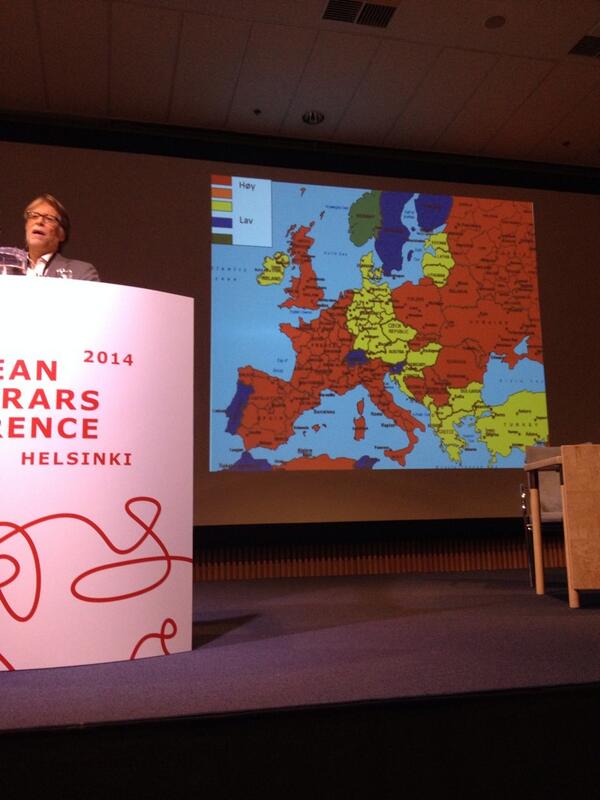
What impressed most of us deeply was a map showing attacks on trucks in Europe (green lowest, red highest): Tygve Lauritzen on the risk of road transportation (picture via twitter @ERC2014)
In fact, art that is transported on the road is 1000 times more at risk than art that is delivered by airfreight – which is somehow logical but also frightening. One of the thoughts Tygve gave was to reconsider sending couriers on these roads. In his view the risk you impose on your most valuable good – the life of your colleague – is much higher than the benefit. What can the courier do if the truck is on fire? What can he/she do when the truck is held up and hijacked by false police?
Transporting art on the road is a risk in itself that can only be reduced, but not avoided by good organization. Some of the recommendations were:
planning the drive ahead, including breaks, safe parking possibilities and alternative routes
providing the drivers with all the phone numbers and directions what to do and whom to call in which occurring situation
providing the drivers with printed out cards saying „I’m not allowed to open the window, please call name/number and escort me to the next police station“ (in all languages of countries the truck has to pass). Many cases of trucks hijacked by criminals dressed as police are known and drivers should not open the windows for their safety. Real police has no problem with escorting a truck to the next police station.
number locks that only show the same number if they were not opened during the transport is a good way to check if something went wrong on the trip
Considering the risk that something might happen on the road it is only logical to define a value limit for art transported on one truck. This is easy on paper but the key is to enforce this policy under all circumstances in the practice.
Tygve stressed out that it’s important to go into „future crime mode“ as registrars. Art is nowadays used as a form of payment in organized crime and we shouldn’t underestimate the risk. We should be prepared that insider information is very valuable to the criminals and that they are very actively trying to get it. Seemingly harmless questions like „Can you give me a telephone list of your institution?“ are not harmless at all. In fact, if you hand it out it’s like you opened a backdoor for the criminals. They will start to do researches on these people to find a weak point, and they will find it. Someone in urgent need of money, someone with an alcohol illness, someone with personal problems…
Thinking in „future crime mode“ also applies to document security. We are often not aware that information we send per email or carry around on our phones or tablets are also documents. Some of Tygve’s recommendations:
Password protect every document before you email it. Be aware that normal, unprotected email is something like a postcard – the content can be easily spied out. Never ever send documents open.
Give the password to people who need to read the documents per phone, not per email.
Dropbox is not a safe place for documents with sensitive information.
In the next session Simon Mears, Consultant for Security Risks and High Value Asset Protection in Denmark, introduced GRASP, the Global Risk Art Survey Program. It is a system invented by insurers as a reaction to certain incidents that involved art, like thefts or fires. It is a holistic approach to make a risk assessment in all fields of possible risks for a collection, including not only thefts and catastrophes, but also damages due to climate issues.
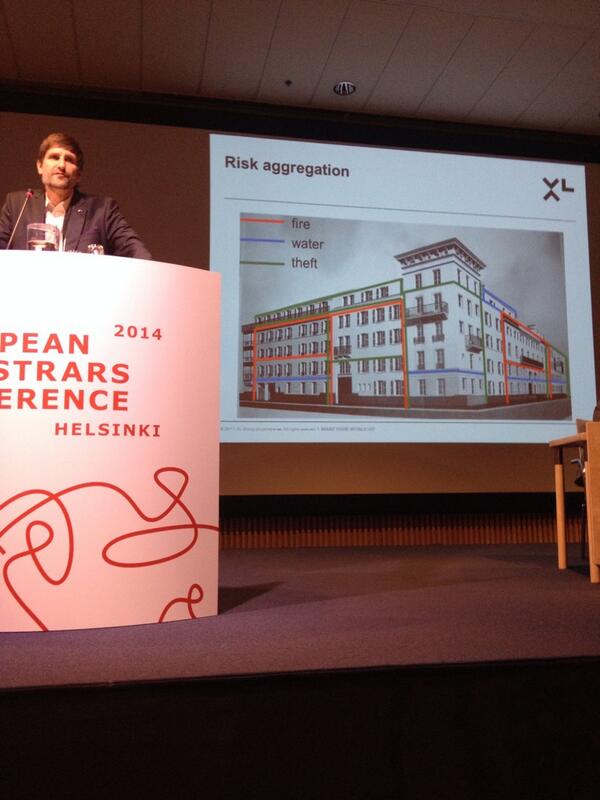
Pascal Matthey speaking on risk aggregation (picture via twitter @ERC2014)
The last speaker was Pascal Matthey, Head of Speciality Risk Engineering, XL Group, Switzerland. He talked about Holistic Risk Management for Museums. Some of the key thoughts I still remember:
In holistic risk management, you have to look at the Maximum Foreseeable Loss (MFL) in one incident. It’s Murphy’s Law in practice: a fire starts, the sprinklers don’t work, fire brigade is late… how high is the maximum foreseeable loss?
Be aware that insurance has nothing to do with risk management in the first place – the money doesn’t bring back the lost art and it doesn’t bring back your reputation after a theft.
A good approach to do holistic risk management is risk aggregation, to define the risks for different parts of the museum instead of defining the MFL for the entire loss of the collection, which is very unlikely to happen. This will also help to keep insurance rates at a reasonable height.
Example: The highest risk for your galleries might be theft and fire, so here you try to reduce risks through organizational measures (i.e. do everything that a thieve has to invest much time into stealing and leaving the building, so police has a chance to catch him when he’s still in the building) and insure the MFL in case of fire and theft. If the galleries are not on the ground floor, damage done by high water might be low. If your storage is in the cellar, here the risk of fire might be low, but you will insure the MFL in regards to high water.
As you can imagine, we had enough food for thought and talk for the following lunch break…
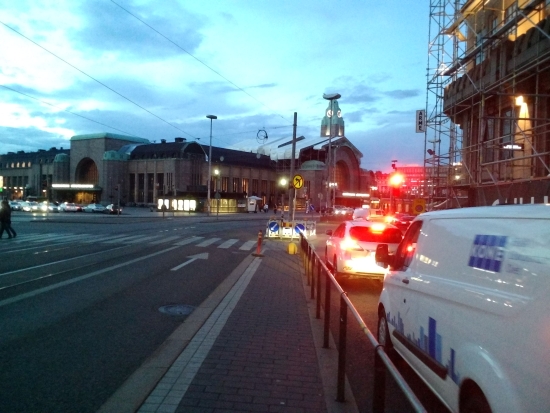
Helsinki white night with the central railway station in the backgroundWhen people ask me how my trip to Helsinki went I start telling them with enthusiasm about the beautiful city, the white nights, the friendly people, the good food, the seagulls,… only to realize then that what they really wanted to know is if there was something useful, innovative, important or in any way interesting at the conference. Okay, sounds legit, after all this wasn’t a holiday trip, although I had lots of fun.
Of course there were lots of interesting things to take away from the sessions. In order to tell it in a way that makes sense to someone who couldn’t attend I started with ordering my thoughts and my notes. The last one was easy, I constantly tweeted from the conference so I only needed to put together a storify to have an easy to access notepad: https://storify.com/RegistrarTrek/erc2014-the-twitter-notepad. I did the work to order the tweets by sessions two times, but unfortunately the program messed it up without me knowing what I’ve done wrong and without the possibility to right the wrong without investing hours. (Note to self: write post about the possibilities and challenges of tweeting from a conference).
Just when I started my report, I realized that the UK Registrars Group had set up a new blog where they posted articles about all the sessions. You can find it here: http://ukregistrarsgroup.blogspot.co.uk/
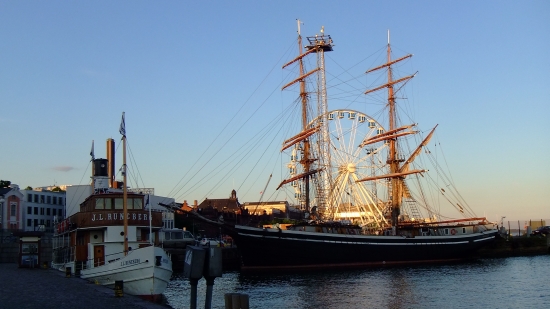
Helsinki HarbourBecause of this I feel somehow relieved from the pressure of reporting in an overarching way and instead can focus on some points in the sessions that seemed especially important to me. I will report in several posts in the order the sessions came up at ERC 2014.
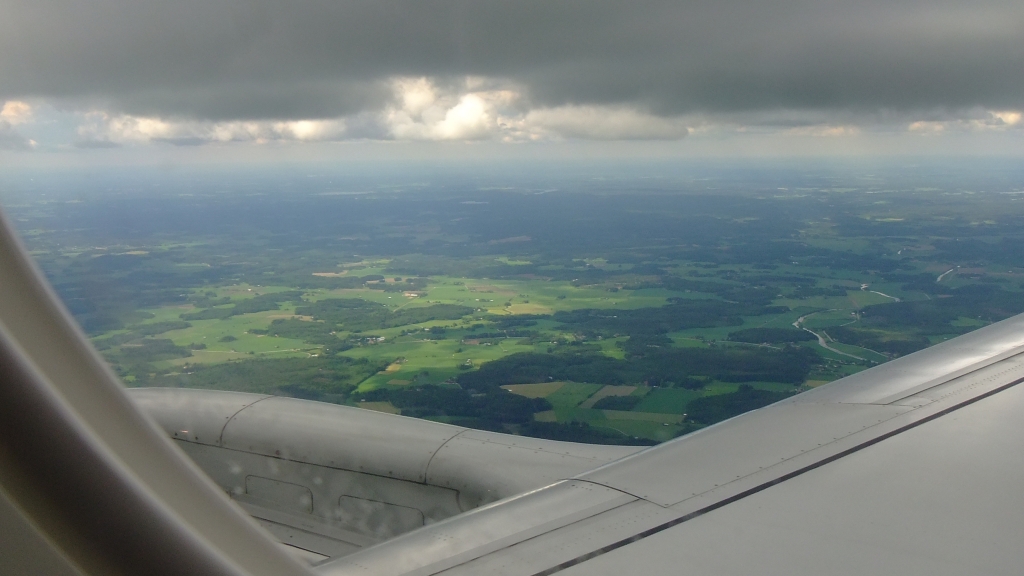
And now, before we dive into the sea of registrar’s techno-babble, please allow me one last picture taken while approaching Helsinki accompanied by the words of the Finnish writer Alexis Kivi, which I unfortunately only found in English:
What is that land of hill and dale
That is so beautiful,
The land aglow with summer days,
Land with the northern lights ablaze,
Whose beauty all the seasons share,
What is that land so fair?
The Finnish Land
This post is also available in French translated by Aurore Tisserand.
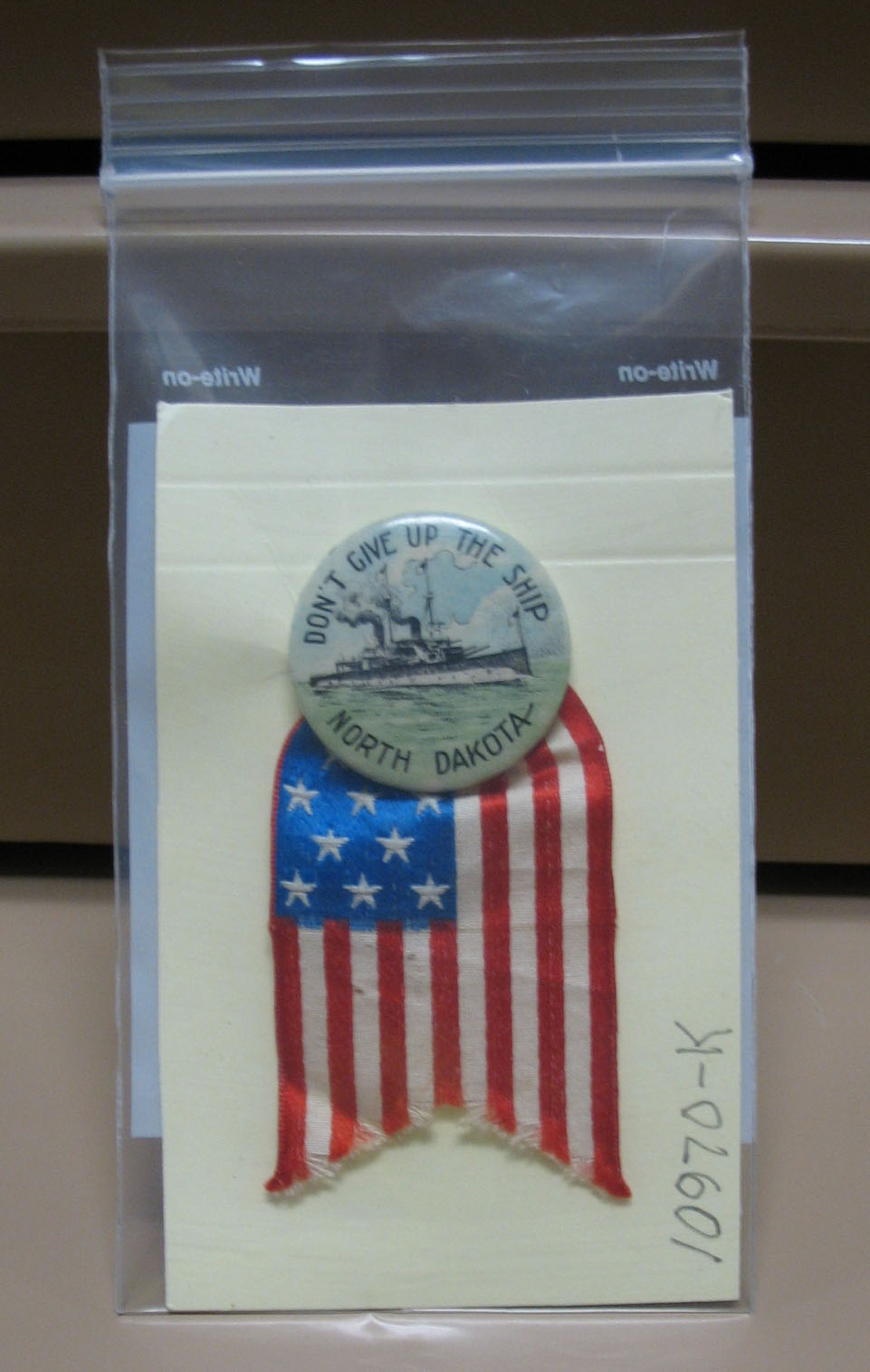
Recently we posted the button storage solution of the MJH. But what if you don’t have a skilled preparator and no time on your hands for such a solution? Well, there’s the approach the Curator of Collections Management of the State Historical Society of North Dakota, Jenny Yearous, sent us.
She told us how they do it:
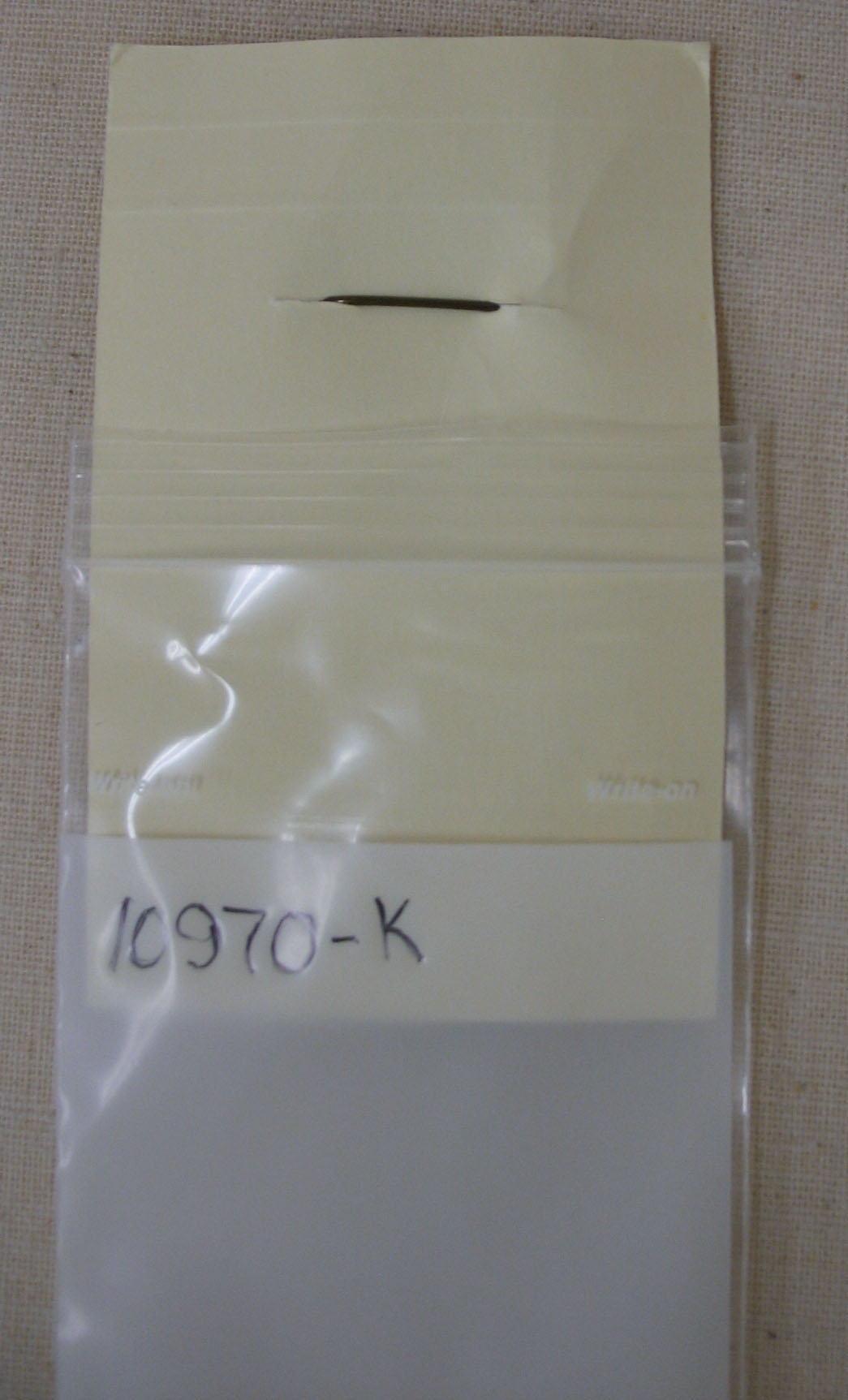
“Acid Free card stock cut smaller than the zippered bag. Small slits are cut in the card stock to accept the pin mechanism. The artifact is labeled with the catalog number, the card is labeled with the number and the outside of the bag is labeled with the number. If/when the artifact goes on exhibit, it can always be reunited with the packaging later. While this artifact is not barcoded yet, the barcode is also be placed on the outside of the bag.
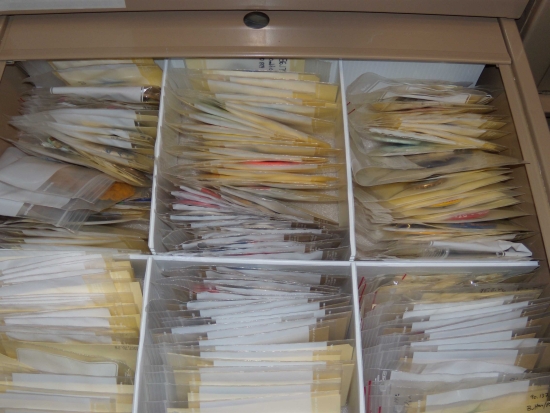
The bags are stored vertically in a drawer or box numerically by catalog number. Because they are in the bags, they can be handled without worry about gloves. Under the right supervision, researchers can easily look at them too.
This is a very easy method, it is inexpensive and can be done relatively quickly with very little training. I will often have pieces of card stock cut ahead to fit the zippered bags sizes that I use.”
Thanks for this storage solution!
Remember: if you have seen a great storage solution, please inform us by commenting or sending a mail to story@museumsprojekte.de