Play it again, Registrar!

Have you ever wondered what it would be like to do the same exhibition again? Do the opportunities for avoiding mistakes make it different or better? Well, that’s kind of the situation we ran into recently.

How it all began
TECHNOSEUM, picture Klaus Luginsland
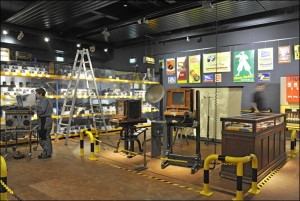
Installation of the exhibit “The Collection: 1001 Artifacts to Listen To and Look At”
TECHNOSEUM, picture Klaus Luginsland

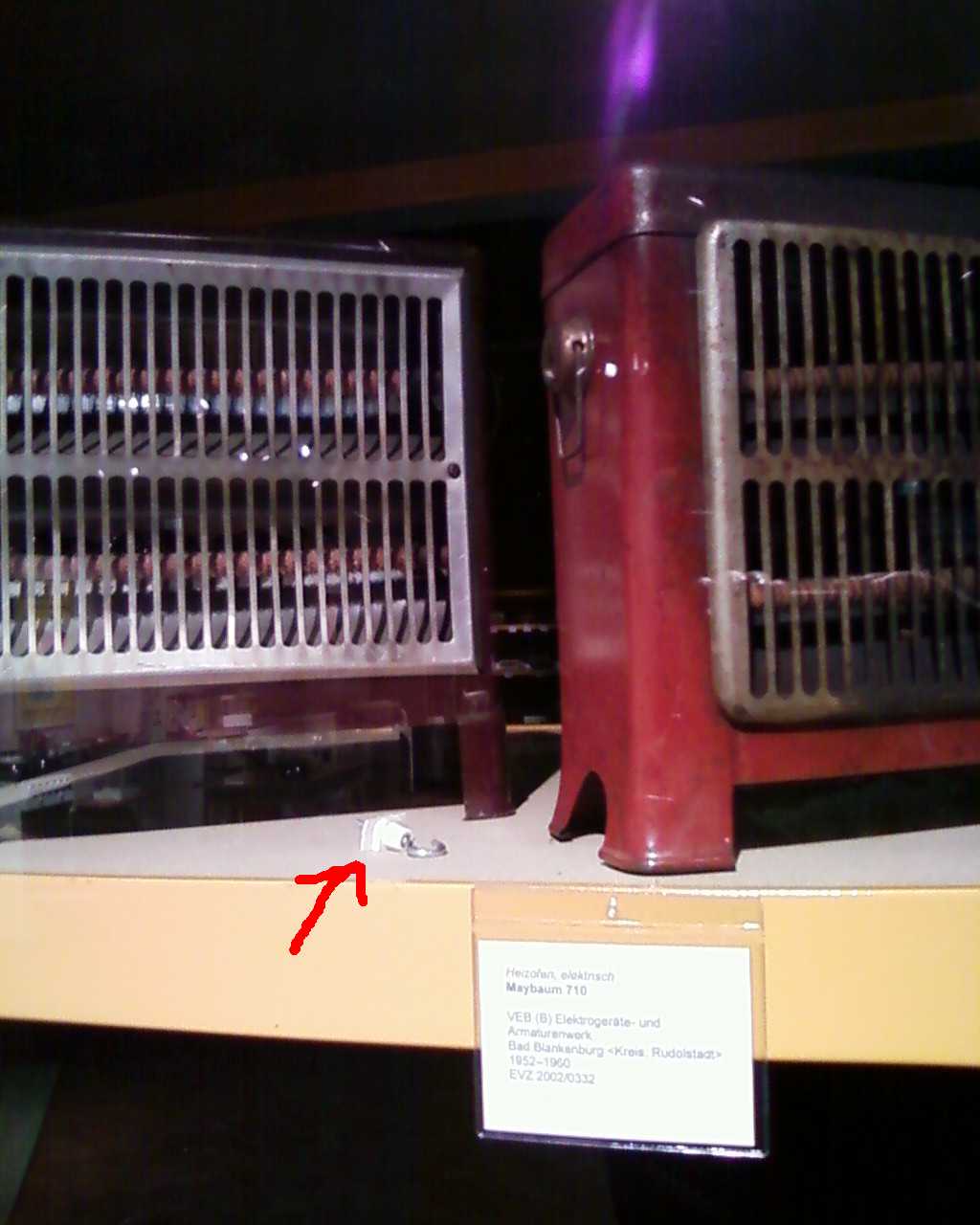
In 2010 the museum building needed to take clearing-up measures that ate up much of the budget. But, of course, our visitors still wanted to see something. No money, no staff, no time – was there a solution? Yes, there was. We still had our own collections! Minimum transportation costs, no courier fees, no insurance problems. If we used only storage racks as showcases and archival materials for presentation we didn’t need much exhibition design and could re-use the materials afterwards. The more we thought about it, the more we fell for the idea. As an extra, we could check a large amount of our collection, correct data base entries, maybe retrieve some of the “location unknown“ artifacts and resolve some “found in collections.” To make a long story short, in 2011 we opened “Die Sammlung: 1001 Objekt zum Hören und Sehen“ (The Collection: 1001 Artifacts to Listen To and Look At), a presentation of our collections of radios, TV sets, record players, film projectors, cameras, tape recorders, video recorders… Our visitors loved it!

So, as you can imagine, when it became clear we would repeat the exhibition using our collection of household appliances, we were all excited. And while team spirit during the preparation of the first collection’s exhibition was like manning an expedition ship and sailing into the Great Unknown, this time it was like a soccer match against our former selves: we wanted to make it bigger, better and more colorful than the first time.
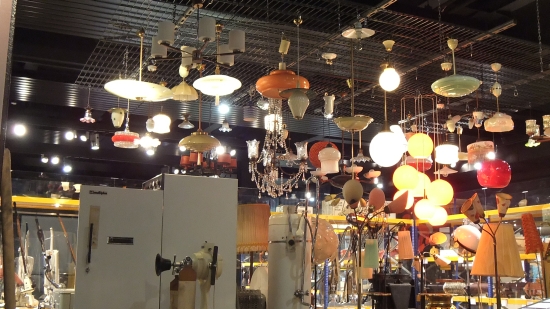
Größer, besser, bunter: Die Sammlung 2. Bild: Bernd Kießling
Bigger, better and more colorful: The Collection 2.
Picture: Bernd Kießling

Spirit of improvement: Right or left – my position

We knew what worked well last time and so we had a map to follow. But instead of following it slavishly in the spirit of “we always did it that way,“ we followed it in the spirit of improvement.
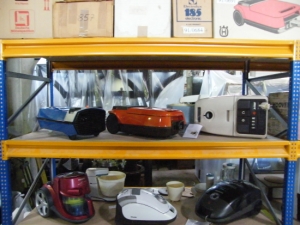
Arbeit an Bestückungsregal im Depot, 2 Teams arbeiteten auf gegenüberliegenden Seiten
Working on the testing rack in the storage area: 2 teams worked on different sides.

For example, the first time we had tested all layouts of the artifacts on the shelves beforehand. We had a rack similar to those in the exhibition set up in the storage area, so we could arrange the artifacts until they looked best. Investing in the time to do this during preparation reduces stress during the final installation process. In addition, it’s not important who does the final installation. The positions on the racks are clear, so anybody with experience in artifact handling can do it without taking time thinking about the perfect layout.

After the artifacts were arranged we gave them position numbers on the shelf. The first time we went with directions, so our packing lists looked like this:

Inventory number, object name, rack number, shelf number, left

While this had worked pretty well, we made some observations:

  • Positioning with terms like left and right might seem clear on paper, but if you have team members who sometimes confuse left and right (like myself), mistakes in positioning are likely to happen.
  • Left, middle and right work well if you only have three radios on the shelf. You can work with more artifacts by inventing terms like “outer left“ and “middle left.” This sounds charming, but impractical.

So we switched to using position numbers from 1 on up, numbering from left to right. Now our packing lists looked like this:

Inventory number, object name, rack number, shelf number, Pos. (for position number) 3
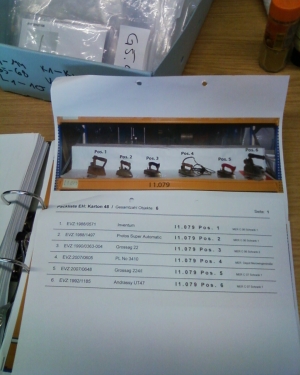
Example: packing list with picture

For the same reason we decided to take an additional step in preparation. The first time we had noted the positions on the shelf only in our data base. This time we took a picture of every shelf layout and wrote the position numbers on it. We attached the picture to every packing list. Now, whoever was positioning the artifacts during installation could use the picture as a reference.

This was only one example of the many things we improved during preparation.

A second loop of improvement

We all worked in “improvement mode“ during preparation and continued that way during installation. We ran into several things we could do better next time.

For example, after we attached the exhibit labels, we took down the inventory cards and collected them. The first time we had collected them all in a box and sorted them by inventory number so that they could be found pretty quickly once one had the inventory number.
Suddenly our student assistant said, “Wait a minute, wouldn’t it be better to collect and store them by rack and shelf number?“
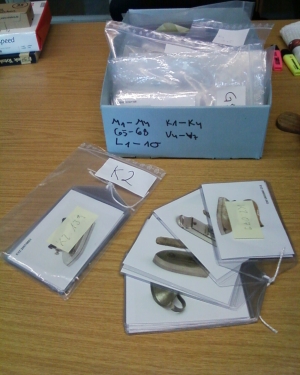
Das "Pakenis-Manöver"
The “Pakenis Maneuver”

We briefly discussed the idea, approved it, and in his honor named it “The Pakenis Maneuver.” From this moment on we collected the inventory cards in zip-lock bags, one for each shelf, with the rack number and shelf number written on them. When we take down the exhibition everybody can grab the bags of the rack she or he has to pack up and is equipped with the appropriate inventory cards.

Another example is the layout pictures. I described how we prepared them and it sounded pretty good to you, didn’t it? Yep, thought so. We were pretty proud of the idea. However, during preparation we realized that it was a good idea, but not the best.

We had a picture attached to every packing list, which wasn’t necessary. Most of the time we simply took the picture from the first box, put it on the shelf and used this picture as a reference. So, in the future we can skip the effort of printing out the picture and attaching it to the packing list. We will print all the pictures immediately before preparation and place them on the corresponding shelves. This will save some paper and ink, too.

Having the position numbers written on the pictures was of help but you had to skip between the picture and the packing list, because you had the inventory number on the artifact and the packing list, but not on the picture. This also led to confusion with similar-looking artifacts on the same shelf. Next time we will also write the inventory numbers on the picture.
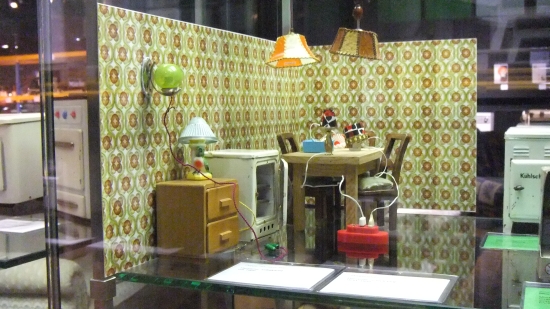
Blick auf eine Puppenküche...
Looking at a puppet kitchen…

The art of making mistakes

One thing we realized during preparation and installation was that we ran into mistakes we had already made the first time. Not wanting to admit mistakes is human. Making the same mistake twice is dumb. The main mistake we made last time was not making notes of what didn’t work. So we only improved the things we remembered, while we were forced to repeat the mistakes we forgot.

Being in “improvement mode“ we decided to do it better this time. Every time we realized something that could have been improved upon, someone said, “Stop. Make a note!“ And we did. It didn’t matter if we were standing on ladders, cleaning acrylic glass or attaching labels; someone always took a quick note of what we had realized.

Shortly after the exhibit opening we sat down, collected all our notes and discussed other things we remembered. We will collect them all in one paper, including the things that worked well and that we will definitely do again. This might serve as a reference for upcoming collections exhibitions and even if many of our suggestions are very specific, some might be helpful for other projects, too.
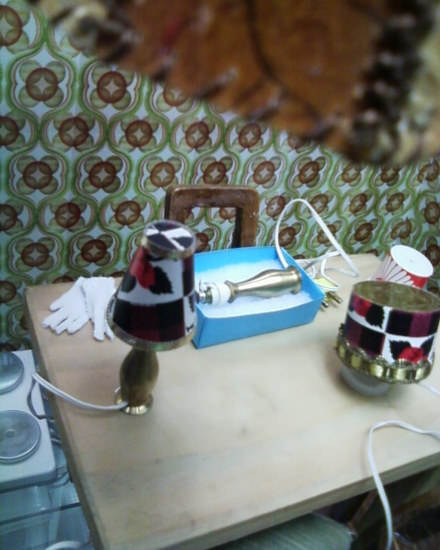
...moment mal, ist das die Küche eines Registrars?
…just a moment, is this a registrar’s kitchen?

Our Score

On February 19 we opened “The Collection 2: The Electrical Household.”

If you have 3D glasses (red-cyan) you can follow our 3D virtual tour. If you haven’t, you may visit our picture gallery.

You may take a look at those two videos from German TV:

http://www.rnf.de/mediathek/kategorie/themenserien/technoseum-mannheim/#.UwoZBYUnYyM
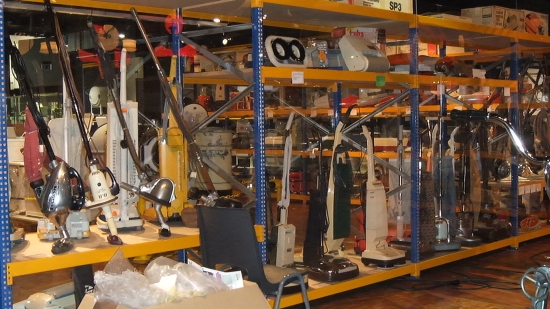
http://www.swr.de/swr4/bw/nachrichten/rhein-neckar/technoseum-in-mannheim-ausstellung-der-ungewoehnlichen-haushaltsgeraete/-/id=258328/did=12909124/nid=258328/m1pgqm/index.html

Einrichtung der Ausstellung "Die Sammlung 2: Der elektrische Haushalt"
Installation of the exhibition “The Collection 2: The Electrical Household”
Picture: Bernd Kießling

I said we were like a soccer team playing against our former selves. So, what was the score?

  • We showed more artifacts than the first time (1750 against 1639, but the first figure included about 300 archival items, while this exhibition was composed almost entirely of artifacts).
  • We had a closer collaboration with our marketing department, resulting in more blog entries, a Christmas tree decorated with household appliances and a Tweetup (#Sammlung2).
  • We looked into a greater number of artifact groups and therefore were able to set more data base entries straight.
  • Both times, we were done with the basic installation a few days before opening, allowing us to improve some more things immediately.
  • Let’s see if we can improve on the number of visitors to the first exhibition, which was 14,400 higher than expected.

But there’s no reason to stop here. When it comes to doing things better, there is no finish line. Next time our rallying cry will be again:

Go, get us!

P.S. During preparation we learned many things (such as: why check shelves before screwing acrylic glass to the front) so there is material for a few more stories on Registrar Trek. Stay tuned!

Like always brought from German English into correct English by Molly Hope.
Picture gallery of the exhibition “The Collection 2: The Electrical Household”

By Bernd Kießling

20 item(s)

You can watch the exhibition in 3D, too, if you have 3D glasses (red-cyan) at hand.

A Dictionary American Registrars – International Registrars

dictionaryEvery occupation has its codes, acronyms and abbreviations. As a radio ham I say things like “I’m QRV at 1900 UTC for a QSO on 40 meters, 73!” without even thinking about how odd this must sound to an outsider. While those codes are international and standardized to reduce language barriers, in our registrar’s realm that’s a different story. My English is quite okay but I often stumble on acronyms and abbreviations that are common in the U.S. museum field but I don’t understand. To make international collaboration easier, I started putting together a collection of these with the help of the fine people that contribute to the RC-AAM listserv. Some of the terms are common in the whole USA, others are used regional or only in certain museums. The list occasionally will be updated when I stumble upon another code I am not familiar with or someone contributes a new term.

Dictionary American Registrars – International Registrars print-out version

AP = “Abandoned Property”, poor object left behind by its owner. Under what circumstances an object becomes AP is defined by law and varies in the U.S. from state to state.

AR = “Artifact Receipt”

BOL = “Bill Of Lading”, paperwork from shippers.

CCMS = “Collections Cataloging and Management System”, a data base.

CMS = either “Collections Management System”, a data base or “Content Management System”, a data base used to manage and publish content i.e. for websites.

COA = “Certificate of Authenticity”, proof of authenticity and ownership of a work – must accompany the work at all times. Especially common in contemporary pieces and editioned works.

COI = “Certificate of Insurance”, proof of insurance coverage on loans and consignments.

CR = either “Custody Receipt”, “Condition Report” or document for TC (see TC).

DAMS = “Digital Asset Management System”, a data base for managing digital content.

Del = “deliver”.

DOG = it doesn’t bark, it’s a “Deed Of Gift”, a document that confirms that an object was donated; a legal instrument proving that ownership was transferred to the museum.

DOR = “Dead On the Road” term used in natural history museums, in particular zoology, for specimen documentation (personally, I think that’s a bit flat *SCNR*).

D/O = “drop-off” or delivery of shipment.

FCL = “Full Container Load”, a full container is needed or a full container is booked for exclusive shipment even if not the whole space is needed. See also FTL.

FIC = “Found In Collection” and object that appears when working with collections and has no accession number on it or any other sign that tells the registrar where it came from. Researching FICs can be annoying, but finding the original accession number through research is one of the most satisfying moments in a registrar’s life. See also FITS and FOP.

FITS = “Found In the Stacks”, kind of FIC for documents.

FOP = “Found On Property/Premises”, see FIC.

FR = “Facilities Report/Facility Report”, document asked from borrowers that states certain information about the museum building, climate, security measures…

FTC = “Foot Candles”, a measurement for light. One foot-candle is equivalent to 10.76 lux.

FTL = “Full Trailer Load”, a full truck or exclusive shipment, see FCL.

GFR = “General Facilities Report”, revised by the RC-AAM and published by the AAM in 2008. This current 30+ page document is an expanded version of its predecessor, it includes more topics now examined by the insurance industry in the wake of catastrophic events which had occurred since the early 2000’s as well as updates within the profession itself. Essential to complete if intending to borrow and also used as a tool for having all information about an institution in one gathered document to be used for any construction or renovation projects. The former title, “Standard Facility Report” (SFR) was changed at this revision because too many thought it meant that the document contained the standards and best practices for the areas covered in the report.

IL = “Incoming Loan”.

IPM = “Integrated Pest Management”, term that sums up all efforts taken to protect the collection from pests – active and preventive.

LOFO = “Last On, First Off”, a term that applies to shipping procedures, for example a lender can request that his objects are the last that are picked up and so are the first that are unloaded at the borrower’s museum. That way these objects are handled the least and are on the truck for the shortest amount of time.

LTL = “Less Than Trailer Load”, generally means a freight job that is less than the full truck or trailer load.

NAC = “Non-accessioned collection”, collection still to be accessioned or not intended to be aquired (i.e. a collection that is temporarily taken into custody for another museum).

OL = “Outgoing Loan”.

PBS = “Packed By Shipper”.

PO = “Purchase Order”.

POA = “Power Of Attorney”, a document stating that someone is legally entitled to act on another’s behalf.

PR = “Payment Request”.

PTL = “Proposed Temporary Loan”.

PU = “Pick Up”.

P/U = “pick-up point” or origination of shipment.

R = “Recto”, face of a document, painting, coin or graphic. Also, the “right” or more important side of two-sided objects; in a book it designates the right-hand page.

RA = “Related Accessory”, a part belonging to an object.

RFP = “Request for Proposal”, if a museum has a project, i.e. designing a new travelling
exhibition, they will define a set of guidelines or criteria they want to have met and ask firms
or designers to submit their proposals for these tasks.

RFQ = “Request for Quote/Quotation”, if a museum has a task to perform (i.e. building a special crate or shipping something to XY) they might ask a company or a number of companies for a bid.

ROD = “Receipt Of Delivery”.

RTD = “Return To Depositor”, returning an object to its owner, for example a lender after the end of an exhibition.

SFR = “Standard Facilities Report”. The predecessor of the GFR; published in 1989 and revised in 1998 it put on the same page the larger art museums which were borrowing and lending often. Sections include questions about staff structure, loan history, security procedures of the institution, environmental controls and the building facilities and more. A borrower’s capabilities to handle a loan were measured by responses to these and many other questions.

SOP = “Standard Operating Procedures”, how things have to be done.

SOW = “Statement Of Work”, document which defines how something needs to be done (i.e. by a designer or company).

TC = “Temporary Custody”, object taken into custody for a certain time span, for example for a certain exhibition.

TIN = “Temporary Inventory Number”.

TL = “Temporary Loan”.

TLC = “Tender Loving Care” is what every museum object needs, but especially used for objects that need intensive care.

TR = “Temporary Receipt”.

V = “Verso”, back side of a document, painting coin or graphic. Also, the “wrong” or reverse side of a two-sided object; in a book it designates the left-hand page.

VIC = “Very Important Cargo”, the VIP among the shipped artifacts.


And a special look on common abbreviations in condition reports:


BC = “Bottom center”, also used: LC

BLC = “Bottom left corner”, also used: LLC

BRC = “Bottom right corner”, also used: LRC

LC = “Lower center”, also used: BC

LLC = “Lower left corner”, also used: BLC

LRC = “Lower right corner”, also used: BRC

N/C = “No changes”

PR = “proper right”, helpful relative direction. For example: if you do a condition report of a painting that shows a woman and there is damage on the hand on the left in the image as you are looking at it, this is noted as proper right (you are looking at the hand on the left, but on her person it is her right hand).

PL = “proper left”, see PR, only with her “proper left hand”, obviously.

UC = “Upper center”

ULC = “Upper left corner”

URC = “Upper right corner”


Terms and abbreviations also used in everyday American English

 
ASAP = “as soon as possible”, normally every document, loan agreement, insurance contract,… is needed ASAP – at best one day before asking.

brb = “be right back”

etc. = “et cetera”, Latin term that means “and other things”, or “and so forth.” For example, “My storage room is full of boxes, crates, etc.”

g2g = “got to go”

misc. = “miscellaneous”, a word that most registrars dislike, because it is so vague. It means “stuff” and is often used (by non-registrars) to label files or contents of boxes when the contents are too varied to be described properly (or one is too lazy to write down all the things that are really in the file or box).

OMG = “Oh My God”

SCNR = “Sorry, could not resist”

VM = “Voice Mail”


Names of products and organizations:

 
AAM = “American Alliance of Museums”

ARCS = “Association of Registrars and Collections Specialists”

ARC = “Australasian Registrars Committee” or “Austrian Registrars Committee”, so be careful to look up the location.

RCAAM = “Registrars Committee of the American Alliance of Museums”

TMS = “The Museum System”, a data base software.

This post is also available in French translated by Aurore Tisserand.

A Tweet a Day Keeps Museum Documentation Ready to Play!

How Can I Make My Collection More Useful?

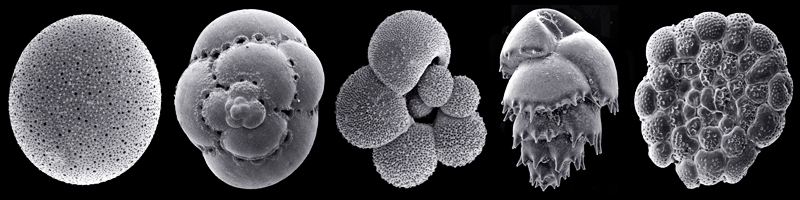
(picture: Michael Hesemann / www.foraminifera.eu)Working with databases is one of the core responsibilities of a registrar. Often enough, one becomes upset with insufficiencies of the used system. You can imagine my excitement when I learned about the project of Michael Hesemann. He took the effort to develop a web database for his own field of interest, the foraminifera. Voluntarily, only out of enthusiasm for his field and collection. It provides quick access to all relevant information for scientists and collectors around the world. Now, even well-known institutions like the Smithonian and the Geological Survey Austria provide information about their collections of forams there. Read more about the development of this project.
Cheers!
Angela

written by Michael Hesemann, Foraminifera.eu Project, Hamburg

Project Development

In December 2007, I became interested in Foraminifera (aka forams)—not widely known single-cell organisms that have been building delicate internal shells for 540 million years. I was surprised to learn that up to 1/3 of the composition of the cliffs of Dover, Egyptian pyramids, and other examples of stone can be forams. Perhaps just as surprising is the fact that all living forams make up 1% of the earth’s biomass and are therefore more substantial than all mammals.

This is likely the first time you’re hearing about this, which suggests that basic information does not come to light without detailed study, review of the literature, and intense research. Fortunately, I met two foram enthusiasts in Hamburg, who, like Ernst Häkel was back in 1900, had long been interested in the beauty of forams and their rich variety of forms. We decided to photograph our collections and post them on the internet at www.foraminifera.eu.

Getting our images online, arduously taken through a microscope, went really well at first. But within a few weeks, Fabrizio contacted us, an Italian scientist offering to contribute 100 SEM (scanning electron microscope) images. Suddenly there were 250 images, which meant we had to sort them somehow and make them easily accessible. We realized we would need to develop a concept that could also accommodate 2500 images.

(picture: Michael Hesemann / www.foraminifera.eu)

Or Own Database Concept Was Inevitable!

The concept of databases used by large museums, scientific institutions, and online databases like EOL or WoRMS turned out to be uni-dimensionally tailored to taxonomy and numbering. Don’t foraminifera have more information to offer? And what did we want from the collection as users? Considerable inconsistencies among datasets, a lack of illustrations, and clumsy interfaces seemed less than satisfactory.

Our Multidimensional Database Concept with Consistent Categories

Our philosophy is that a collection should make its objects easily accessible to everyone, from the absolute layman to the most highly specialized scientist. Every kind of object—in our case, foram shells—carries with it a variety of information. In a database, we’re limited to categories of information that apply to nearly any other object or can be researched with a reasonable amount of effort. For analysis, a high level of data consistency is essential.

With forams, consistent categories are taxonomy, morphology, locality, era (geologic), reference citations, dataset relevance, and collector information. Whether the habitat (ecological niche) can be consistently provided is debatable.

User-oriented Access

The user should be able to easily and reliably retrieve all available information by means of an easy-to-use interface. This necessitates the following:

  • Each object must be represented by realistic illustrations (drawings, photos, 3D objects), and each of the defined fields must be populated (metadata)
  • The interface must allow the user to conduct searches in every field
  • The user must receive a list of search results that includes thumbnail images and essential information from which the user can drill down to more detailed information, including references

Technical and Financial Resources

Because this is not a commercial project, there are no financial resources. Contributions result from enthusiasm for the topic. All contributors cover the cost of their own contributions. All contributors are individually named and receive their own websites and the opportunity for evaluation of their contributions.

Regarding technical issues, only the most simple programs and systems are used: Excel, PHP, SQL, HTML, and a grassroots website hosted by a mass-provider.

A comprehensive collection of literature on forams, journal subscriptions, and good contacts with relevant scientists is available. Collection of sediments and forams are conducted, and detailed how-to’s and tools on processing samples are also available. No-cost access to a scanning electron microscope (SEM) is also available.

Milestones

Not necessarily planned this way, but looking back, this is how it happened:

2008
Development and promotion of the website; receipt of samples from amateur fossil collectors

2009
Further temporal and geographic coverage through 1200 images; creation of a support community of amateurs and junior scientists

2010
Introduction of the project to 400 scientists at the FORAMS2010 conference in Bonn; support from scientists; aid offered to amateurs and young scientists, particularly those in less-developed countries

2011
Expansion of database criteria to 20; conversion from pure HTML to PHP-SQL; support from senior scientists secured; presentations at international conferences; expansion to 4000 images

2012
Top ranking by Google (SEO; expansion of database criteria to 30; networking; receipt of image rights from publishers and institutions; expansion to 5500 images

2013
Permission to use c. 30,000 foram images (including those of numerous type specimens) from the Smithsonian Institute, the Austrian Federal Geological Agency, and the Brzybowski Foundation; permission from senior scientists to use their life’s works; expansion of the image database to 7700 images; cultivation of the support community; collaboration with WoRMS

2014
Project presentation at the FORAMS2014 conference in Chile; continued collaboration with WoRMS; image rights secured for remaining images; expansion of database to 10,000 images; cultivation of the support community

*)
EOL = Encyclopedia of Life, www.eol.org
WoRMS = World Register of Marine Species, www.marinespecies.org

Translated from German into English by Cindy Opitz.

This article is also available in Italian, translated by Marzia Loddo.

CIDOC – Conference Dresden 2014 – Call for Papers deadline extended

Great CIDOC-Conference is coming up in September. For those of you who haven’t read it before:

Dear Colleagues,

The call for papers deadline for CIDOC Conference 2014 has been extended till 20th March.

“Access and Understanding – Networking in Digital Era”

The annual conference of CIDOC, the International Committee for Documentation of ICOM, will take place from 6th – 11th of September 2014 in Dresden, Germany.
Anyone interested from museums and cultural organizations is cordially invited to participate. More details about the conference: http://www.cidoc2014.de/index.php/en .
Discussions and papers will focus on the access to museum collections and cultural heritage in the digital age. Linked data information provide scientists with new and wider perspectives. Experts from museums around the world will address the following themes

• Strategies and Policies in Documentation
• Processes in Museum Documentation
• Museum Documentation as Profession
• Networking
• Metadata
• Multilingual Terminology
• Digital Long Term Preservation
• Intangible Cultural Heritage
• GIS-Applications in Cultural Heritage
• Digital Documentation in Archaeology

Yours sincerely,

Martina Krug
c/o Staedt. Museum Hann. Muenden
museum@hann.muenden.de
CIDOC Board Member

FAUX Real: On the Trail of an Art Forger – Short Notice II

Shhh… don’t tell anybody (well, please do!), but Matt is involved in a great kickstarter film project:

https://www.kickstarter.com/projects/1041148411/art-and-craft-a-feature-documentary

To quote Matt:
“I am not posting this to get people to fund the film, but so they can get a glimpse of this whole Landis caper and be one of the first to see some of the film and film makers including me! As they will see in the clip as I state, ‘he messed with the wrong registrar’. Tell them ‘Talk soon, Matt'”

Sounds fantastic, please have a look!

Cheers,
Angela

Looking back on 2013 – the inaugural ARCS conference – A milestone for registrars worldwide

By Derek Swallow

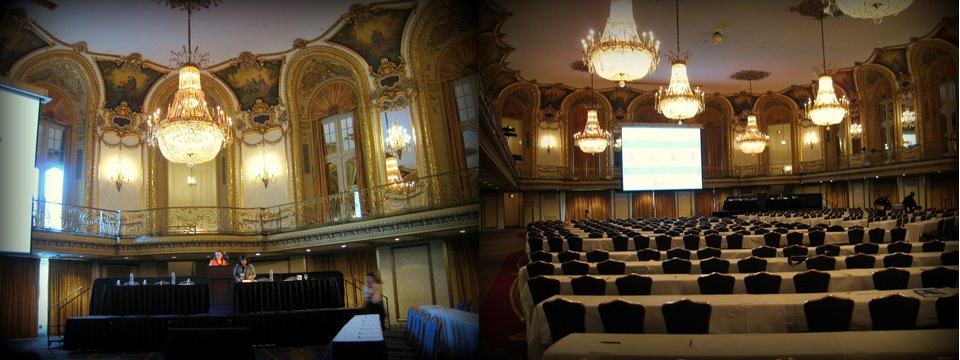
Cascading crystal chandeliers, softly illuminating Beaux Arts wall murals with gilded foliated reliefs, border the massive ballroom: a breathtaking setting that one participant described as “the Versailles” of Chicago. This expansive, opulent hall in the historic Chicago Hilton Hotel, once hosting glamorous balls and formal receptions, now served as our conference room: a somewhat humbling setting, in contrast to the small, utilitarian offices in our home museums. It seemed an incongruous choice of venue at first. With reflection the sense of the location gelled in my mind.

Grand Ballroom in the Chicago Hilton – Conference room
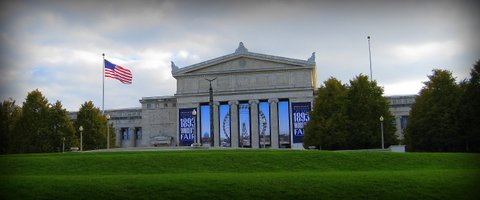
The spacious room and dynamic decor metaphorically represented the energy, optimism, and breadth of the newly created ARCS organization and the glittering wealth of knowledge held by the 530 attendees from 28 countries. Selecting Chicago as host city was also ideal: a cultural center home to innovative world class public art and esteemed institutions such as the Art Institute of Chicago and the Field Museum, to name but two.

The Field Museum, Chicago
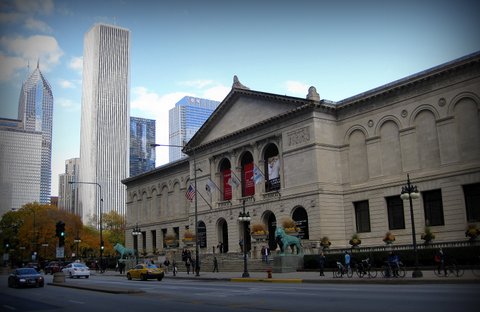
Art Institute of Chicago

The three day conference offered 24 sessions with 60 presenters. The diverse topics appropriately reflected the broad scope of interests held by such a large and eclectic group of participants.I felt fortunate to participate in this important inaugural event and would like to personally thank all the organizers, presenters and particularly the founding benefactors whose generous support made it all possible. To enhance our comfort the sponsors provided participants with a cornucopia of delicious, waist-expanding food that sustained us through the information packing sessions.

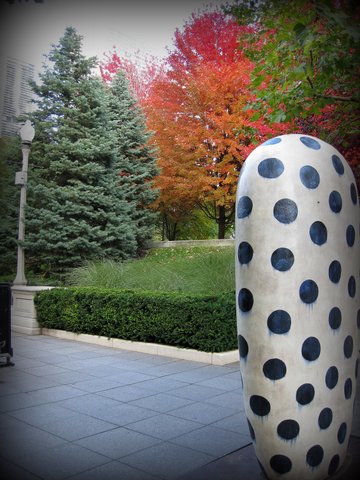
Public art sculpture near the Art Institute of Chicago
For those unfamiliar with ARCS, the acronym stands for the Association of Registrars and Collections Specialists. Its mandate and mission:
“…to represent and promote Registrars and Collections Specialists, nationally and internationally, to educate them in the professional best practices of registration and collections care, and to facilitate communication and networking.”
http://www.arcsinfo.org/home
For the benefit of Reg Trek readers, in follow-up articles, I will synthesize the information from those sessions that I believe inform about topics of global interest to registrars, collections managers and other museum professionals. The first of these will explore the session entitled: Deaccessioning: Is there One Right Way? moderated by Devon Pyle-Vowles ARCS Board Member and Conference Chair with presentation by Dawn Roberts, Collections Manager at the Chicago Academy of Sciences, Peggy Notebaert Nature Museum; Elizabeth Varner, Executive Director of the National Art Museum of Sport; and Linda Wilhelm, Associate Registrar, Collections, The Museum of Fine Arts, Houston.

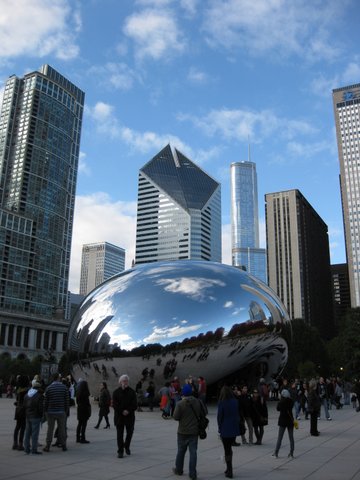
“Cloud Gate” affectionately known as “The Bean” in Millennium Park
To end I’d like to return to the beginning: the formative era leading to the conception of ARCS. The roots for this organization run deep, starting with the appointment, in 1880, of the first US registrar tasked to manage the collections of the National Museum, Smithsonian Institution. Nearly 100 years lapsed before the next major step occurred. In 1977 the US registrars formed the Registrars Committee of the American Association of Museums (RC-AAM) followed two years later by the UK Registrars Group. Subsequent years saw registrar groups surfacing around the globe. “Best practices” and dialogue enhancement now tethered widely separated colleagues. The early 21st century witnessed an upsurge of international loans and the attendant need to develop global standards for transport, documentation, etc. To cultivate such standards an appropriate forum was required. The RC-AAM fabricated one by sponsoring four international registrar’s symposia, the first in New Orleans in 2004. At the last, in Houston in 2011, the renowned US registrar Jean Gilmore proposed the creation of a new organization to meet 21st century needs. After many months of intensive work the Association of Registrars and Collections Specialists materialized: an inclusive, yet highly focused group targeting the challenges of our profession in the new millennium.

“For the first time, registrars and collections specialists have stepped forward as a unified, independent, international group to provide programs and services directed especially to the collections worker.”
(History – Association of Registrars and Collections Specialists – Association of Registrars and Collections Specialists. http://www.arcsinfo.org/about/history).

This article is also available in Italian, translated by Marzia Loddo and in French, translated by Marine Martineau.

A project to break down language barriers and connect registrars worldwide