Category Archives: Articles

Art work, Artefact, Auto, and Pop-Culture Shrine, Part 2

Transport and Exhibit of the John Lennon Rolls Royce

By Derek Swallow – Royal BC Museum

Continued from Part 1
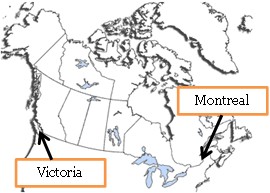
Suffocating from a feeling of impending failure I drew in a deep breath, exhaling slowly. Relax, I murmured. I’m just responsible for moving a car from our collection for exhibit in Montreal with a few complicating factors: the car is a vintage Rolls Royce, once owned and driven in by Beatles legend John Lennon; the entire body forms a metal “canvas” for an original oil painting; it’s 2700 kg weight precludes it moving without functioning brakes – these only operate with the motor running; the car needs engine and other mechanical work; in addition our conservation team discovered flaking surface paint AND we have less than five weeks before the Rolls must be at the borrowing museum. The start date was non-negotiable. Okay, let’s do this I thought optimistically. I shot a call to our Rolls mechanic, mustered one of our conservation interns, who coincidentally specialized in painted metal. Parts were ordered and the restoration of the cars surface began.

Now for the transport plan: initially, it literally involved thinking “inside the box”. We decided to crate the car, move it on an extra heavy duty, brake-equipped dolly and minimize ground transport risk by flying the vehicle to Montreal. Good plan? No. The proposed crate size would only fit on an “air freighter”; the closest service was Seattle. This meant transporting the crate off the island, where Victoria is located, crossing the border into the US and flying the car back into Canada – a logistical and bureaucratic nightmare. In addition, a second scan of the borrower’s Facility Report revealed that the crated vehicle would exceed the size of their largest receiving door. Feeling more than just a bit unsettled I called our Rolls mechanic to ask for his advice. He suggested contracting a ground transport firm specializing in moving ultra-luxury and multi-million dollar race cars. I madly researched, found and booked such a carrier. A couple of weeks sped by, organizing logistics, loan agreements, insurance. The pickup date was now one week away. Conservation work was progressing well; the worst areas were stabilized but lack of time prohibited completing the work. We had counted on this since the only climate controlled vehicle in the transport fleet had been booked six months beforehand. A frantic call went out to our national conservation institute asking how this type of paint on metal might react to the rapid variations in temperature and relative humidity which the truck and cargo would encounter on the cross-country trek. Weather wise there couldn’t have been a worse month to transport in Canada. The Canadian Conservation Institute responded rapidly indicating the unusual paint formula was ordinarily applied only to wood. However, their final determination, though not definitive, indicated the paint should hold up under these conditions. There was a collective sigh of relief, tempered with unease. I phoned our mechanic. The parts were to arrive Thursday. Thursday? The transport truck would be here early the following Tuesday morning. Can you fix the car in time, I asked hopefully? Shouldn’t be a problem was the response – another hesitant sign of relief.
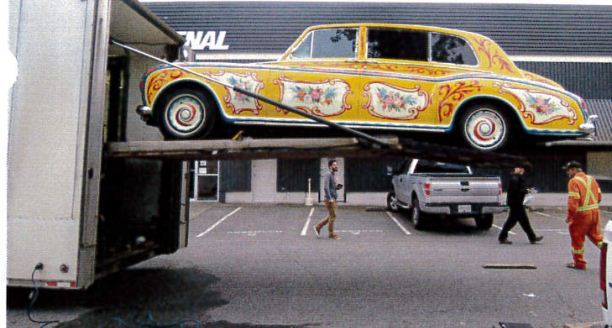
Rolls load – RBCM secure storage
Tuesday morning arrived. The parts had come, the repairs made, the car tested and ready for loading. The transport truck pulled in and lowered its lift gate. The driver stepped down from his cab, eyed the Rolls, looked quizzical and said: how long is this vehicle’s wheel-base again? All eyes turned and collectively the entire teams’ hearts stopped momentarily and this horrifying thought crept into everyone mind simultaneously: the Rolls is too long for the lift gate. Tape measures appeared and measurements taken. The result, the car should just fit. Our mechanic stepped into the Rolls and confidently but carefully edged the car forward into position. It worked. The tires were blocked the vehicle lifted, then driven on board and secured at the wheels.

The driver locked the cargo door, sprung into his cab and the cross-country journey began. We maintained regular communication with the driver who reported good conditions until near the end of his journey when the weather forecast threatened the onset of a huge weather system, with high winds and snow predicted to sweep down from the NW on an interception path with his vehicle. The driver recommended pushing on to out run the storm. It was this, or wait out the storm and miss the delivery deadline. Assured he had recently rested we gave the go ahead.
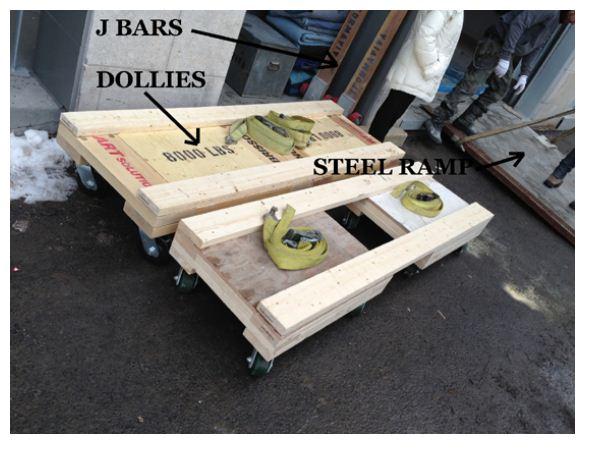
heavy duty dollies
heavy duty dollies
On March 4th, late in the afternoon, 8 hours behind schedule he maneuvered his cumbersome vehicle through the constricted downtown streets of Montreal. Beforehand Montreal police were summoned to secure the area; block off critical streets and do crowd control and museum staff gathered in anticipation of the trucks arrival. The staff, equipped with beautiful high load bearing dollies had anticipated the need to push the Rolls from the truck, along the street, and up the steel ramp into the museum.
Our Rolls mechanic and head objects conservation, who flew out earlier, explained that hand pushing would damage the body and only one method could be used: driving the vehicle into place. The road was wet and salted, creating the need to cover the path before moving the vehicle. Blankets, plastic, foam packing material was scavenged from the truck and museum but the quantity was insufficient.
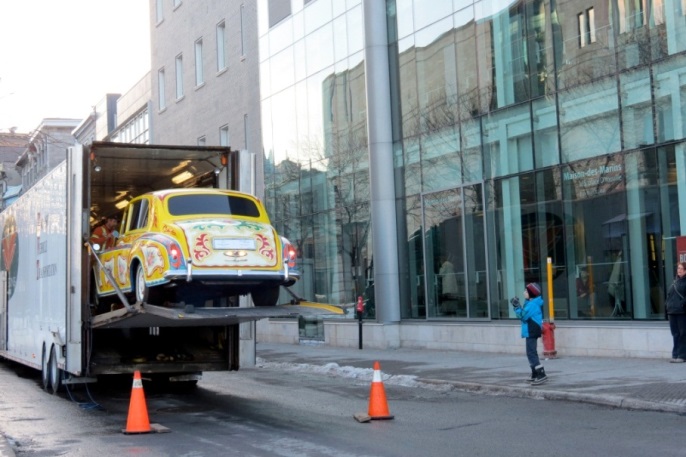
off  load
off load
In desperation someone began “excavating” in a nearby dumpster and discover a huge roll of orange plastic, more than sufficient to do the job.
Once in place our mechanic cautiously started the car, backed it out and off of the truck, then maneuvered it down the street to the museum entrance. Then another heart stopping moment – the Rolls looked too large for the entrance. But we knew the entrance size in advance and we used the dimensions of the car provided in the catalogue description. People with tape measures swung into action. With a self-satisfied grin one staff member turned and proclaimed that we had a whole 10 cms of clearance on either side of the car. Some say collections managers are obsessive about accuracy when documenting the size and details related to collections objects. Thank goodness this statement proved true.
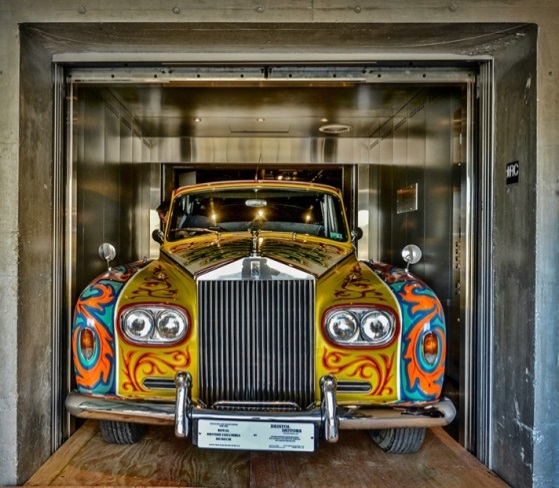
into the museum
into the museum
The next challenge for our mechanic was to finesse the large vehicle through the extremely tight space. It proved a challenging few minutes with people shouting instructions and tensions rising but the vehicle moved unscathed into the exhibit hall.
Maneuvering the car rapidly into its exhibit position onto reinforced plates became the next urgent task. Most of the floating floor tiles supported a maximum of 567 kgs while the load on the individual Roll’s tires was 680 kgs each. Almost immediately after the car entered the hall the regular floor tiles showed initial signs of buckling. The car threatened the possibly collapse of the floor. The museum staff flooded down to the carpentry shop returning with sheets of plywood. Hastily the Rolls was driven onto them thereby safely distributing the weight, eliminating the hazard. Now, how can the car be moved into place? A creative solution coupling technology and brute force was concocted.
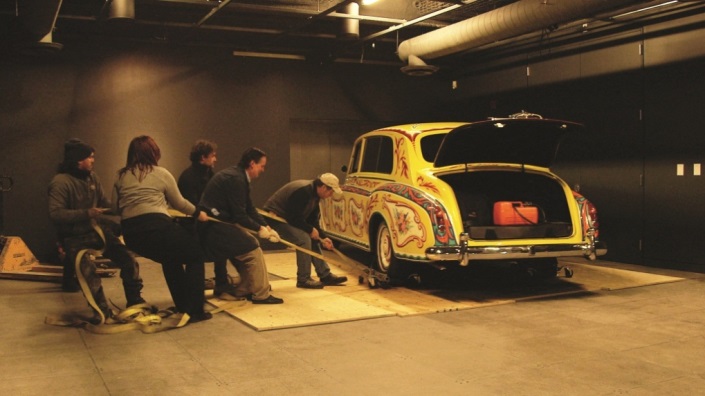
creative moving technique
GoJacks with racket straps attached were placed under each wheel. The team then manually pulled the car over the plywood sheeting and into position adjacent to the reinforced tiles. The Rolls mechanic quickly but accurately drove the car so all four tires rested on the target tiles. It was in position. Yes! Now concern turned to the condition of the painted surface. How serious was the impact of the volatile and dramatic temperature and RH changes? A local paintings conservator, on hand to do the incoming condition report examined the surface carefully and found the paint undamaged.

We did it. We made the target date. The car was in place 24 hours before the special opening for the province of Quebec’s two most powerful politicians: the Premier and the Lieutenant Governor.
All of the hard work and planning, backed by brilliantly accurate cataloguing, tempered with innovative problem solving led to the success of this project.
http://pacmusee.qc.ca/en/media/press-releases/john-lennon-s-rolls-royce-at-pointe-a-calliere (history of the Rolls and install)

This is my last article for RegTrek. I want to thank the RegTrek team for their hard work and support and especially Angela Kipp for her energy and enthusiasm in spearheading this brilliant project. I want to wish everyone a fond fairwell as I transition to a new career: teaching English as a Second Language, and ESL material and curriculum development. I wish everyone the best in moving this amazing venture, RegTrek, forward, and I thank you for allowing me to participate.

Best regards.

Derek Swallow, Senior Registrar, Royal BC Museum.
Art work, Artefact, Auto, and Pop-Culture Shrine

Transport and Exhibit of the John Lennon Rolls Royce, Part 1

By Derek Swallow – Royal BC Museum

Lennon Rolls – RBCM 992.66.2 Collection Royal British Columbia Museum - RBCM
Lennon Rolls – RBCM 992.66.2 Collection
Royal British Columbia Museum – RBCM

Dedication: To the team of Nordic registrars who sponsored the fabulous European Registrar’s Conference, 2014, I attended in Helsinki, Finland and to all collections managers who measure their artefacts with precise accuracy (see part two of this article).

Introduction:

rolls2The rumor percolated through the museum for nearly a month then reality slammed home while scanning my email that cold late January morning of 2013. My eye caught the subject line: Loan Lennon Rolls. I hesitated then opened and read the message. So it’s true, we have five weeks to plan and transport the Rolls from here to Montreal. It’s huge and heavy: 6 meters long and 2.2 meters wide weighing 2,700 kgs. It has to travel 5000 kms., cross country, during Canada’s most severe winter month, possibly through fierce cold, driving blizzards and on treacherous highways. I drew a deep breath, concerned partly with the tight time-line, the vehicle’s mass, potential hazards caused by inclement weather, but also due to my lack of experience with a project like this one. Despite decades of coordinating hundreds of loans I’ve never done a car before. This unease escalated, knowing this was also no typical museum-collected car, representative of its time period, style, and make. This vehicle, a venerated pop-cultural icon and an original work of art, made it unique and precious beyond its appraised value.

The John Lennon Rolls Royce:

A working automobile:

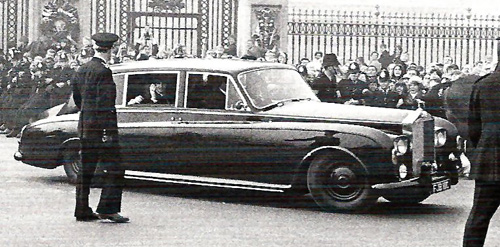
Beatles in the Rolls at Buckingham Palace Oct. 26,1965 www.beatlebrunchclub.com
This fully functioning, 1965 Rolls-Royce Phantom Touring Limousine, now catalogued and in the collection of the Royal BC Museum, originally owned by rock music legend John Lennon, transported the Beatles around for three years.

Pop-Cultural Icon:

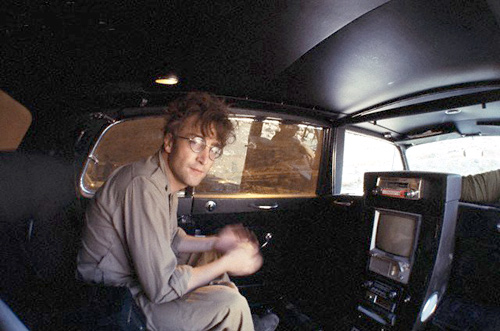
John Lennon in the Rolls in Spain Oct.1966 www.beatlebrunchclub.com
John Lennon in the Rolls in Spain Oct.1966
www.beatlebrunchclub.com
The 60s generation elevated Lennon and the other group members to the stratum of popular cultural “demi-gods”. To some their physical presence within the vehicle transferred to it such a power of association that it took on a “shrine” like quality. In later years, the vehicle, lent for use by such musical superstars as the Rolling Stones, the Moody Blues and Bob Dylan, only enhanced its mystical quality.

Work of Art:

John and Julian Lennon beside Rolls 1967 thegilly.tumblr.com
In 1967, Lennon chose to transform this expensive yet utilitarian object into a work of art. He commissioned artist Steve Weaver to convert the somber “valentine black” body of the car into an explosively vibrant painting. Weaver primed his metal “canvas” with several coats of chrome yellow paint then for six weeks applied by hand bold motifs inspired by Romani designs using strident colours akin to the saturated pigments found in “psychedelic” art, a popular European style in the 1960’s. The end product, with designs flowing over the entire body of the car, was a powerful, unique composition. This transformation created more than just a three-dimensional work of art. The Rolls Royce, a quintessential emblem of prestige and traditional “establishment” now morphed into a powerful symbol of 1960s counter-culture and a striking icon of anti-establishment values. The Beatles were destined to represent a generation of youth eager to flaunt the “establishment” and kindled the phenomenon called “Beatle mania”.

Association with the Nordic Countries:

Beatles in Copenhagen at the KB June 4th, 1964  http://thegilly.tumblr.com
Beatles in Copenhagen at the KB June 4th, 1964 http://thegilly.tumblr.com
In 1963 “Beatle mania” swept Great Britain and surged north to this beautiful Nordic region. Karlstad, Sweden was chosen as the first stop outside the UK. For five days the pop group toured even appearing on Swedish TV. http://www.youtube.com/watch?v=-clOQdFRyig Also, in 1963, the youth of only one world country pushed the seminal Beatles song “Twist and Shout” to the top of the music charts. That country was Finland. http://www.youtube.com/watch?v=pVlr4g5-r18&feature=kp(Twist and shout video). On June 4th ,2014, Beatles enthusiasts in Denmark celebrated the 50th anniversary of the group’s concert in Copenhagen, the city which was the official launch point of the Beatles two year “World Tour”. http://www.youtube.com/watch?v=8_zzoJYoeao (video of the Beatles in Denmark)
Despite their British origin, the Beatles, their music, and the “Beatle mania” phenomenon remains an enduring part of the 60’s pop cultural history of Scandinavia, Europe, and North America and the Lennon Rolls itself, one of its most recognized symbols and icons. The Royal BC Museum cares for the Rolls not just for the people of British Columbia, or Canada, but for the entire world. http://www.youtube.com/watch?v=imXZS6WTxEw (Victoria news cast about the Rolls)

The move of the Lennon Rolls from the Royal BC Museum, in Victoria to Montreal, Quebec was to showcase this icon as part of the anniversary of “Beatle mania” and the group’s concert in Montreal during their “World Tour”. It also was a celebration of the Beatles for the entire world.

rolls7

Images from Pointe-à-Callière website: http://pacmusee.qc.ca

Read Part 2: The Transport of the John Lennon Rolls Royce…

Transit Totem Blog Post Mortem

By Brett Dion

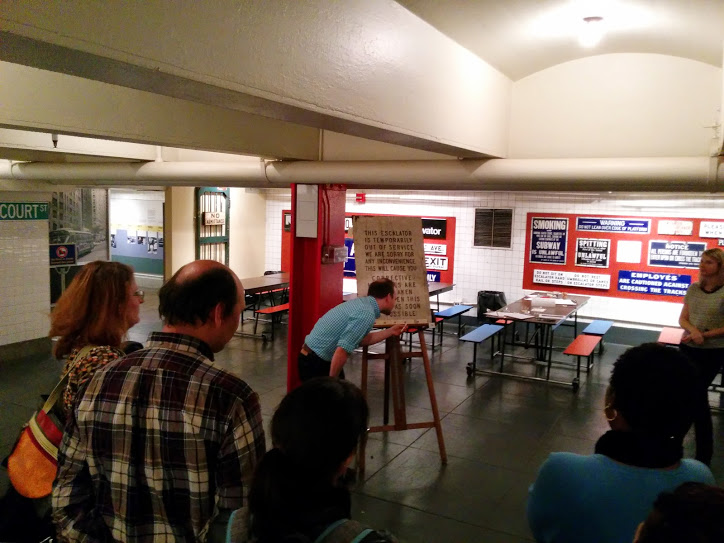
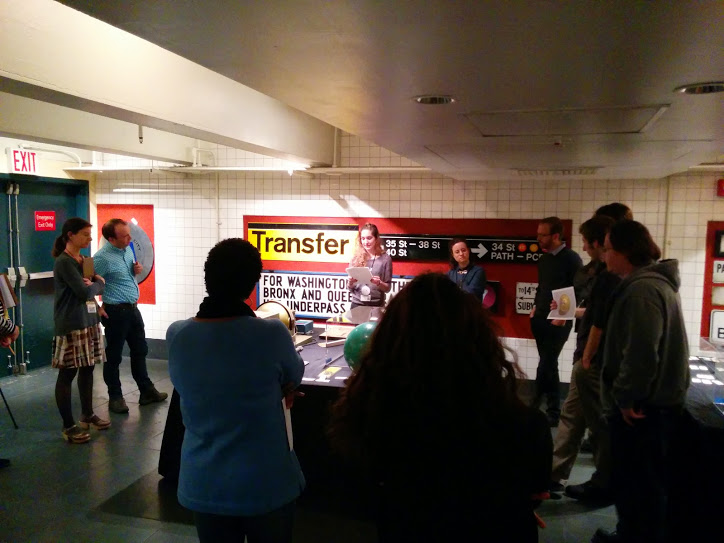
Alex Gallafent with a lengthy sign in "Transit Totem"
Alex Gallafent with a lengthy sign in “Transit Totem”
Angela of Registrar Trek was very kind to credit the “Tell a Tale of a Transit Totem” program at the New York Transit Museum as an original concept in presenting museum collections. But I must confess that I drew inspiration for my proposal from a session at the 2013 AAM conference in Baltimore. The overall theme there was “The Power of Story,” and the session was with Rob Walker, of the “Significant Objects” experiment.

How it all began

In the four years prior to that moment, I had happily toiled away on the cataloging of NYTM’s three-dimensional artifact collection. Coming across found-in-collection tools and parts of the infrastructure and business of urban transportation, then determining a general history or context, was a genuine pleasure. Just as finding out a concrete fact or two held meaning for a trained archivist like myself, I also walked off to lunch or to the evening ride home and free-associated about the unknown track worker who worked with a wrench the size of my arm or the engineer who performed conductivity tests on a sample of third rail.

Rob Walker brought all of that conjecturing back to the forefront for me. I could imagine putting a formal or informal writing group in a room with some of the less familiar and abstract artifacts, along with the definitive and iconic objects that are universally associated with NYC Transit history, and invite those writers to “story slam.” I came back from that AAM epiphany and shared the idea with a select few in management and our Education/Programming staff. I never considered it my job to execute such a program, but I wanted to support it. So for several months, I sporadically brought it up to those individuals to keep the idea alive.

The project picks up steam

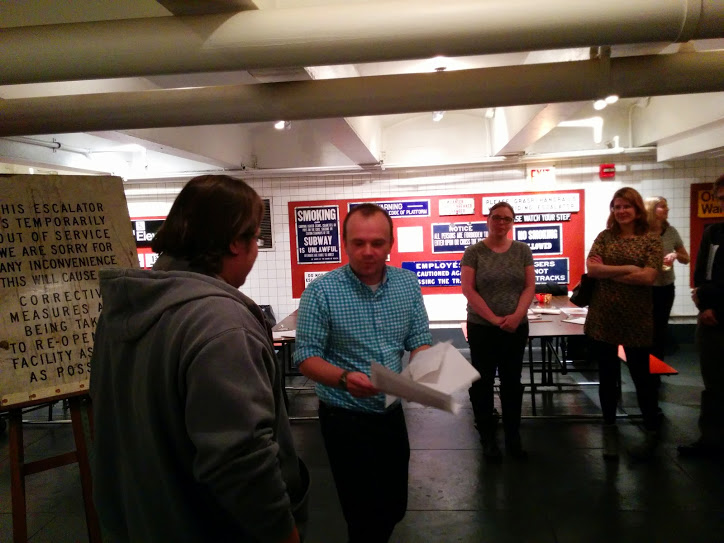
Participants wrote, as well as read, their fictitious exhibit labels.
In late 2013, the museum had made new strides in program development by hiring a producer devoted to public programming. Wisely, Julia Malta-Weingard brought the museum into a new era of public programs by petitioning and crowd-sourcing program ideas from the museum’s staff and patrons. It was one thing for Julia to generate content proposals. But simultaneously, she also brought different museum departments together on a creative effort by staff members who have creative impulses, but don’t necessarily utilize creativity as a primary instrument in their workdays.

Here was a chance for me to answer a solicited call for some programming ideas. Because I had stored up several, and discussed them informally over time, I was ready to easily hone them into the fine points of some proposals that ended up on paper. One of those ideas melded my familiarity with the artifacts collection, the Significant Objects project, and improvisational storytelling forums like “The Moth.”

Finding an audience

Susan Augenbraun reads her supernatural subway token-inspired short story to the group.
Calling the proposal “Tell a Tale of a Transit Totem” was a bit of bait-and-switch promotion. I thought we could draw people in with an emotional or nostalgic connection to the iconic elements of NYC mass transportation, then include the rarely seen, and abstract as well, to spark some truly original creative ideas. My initial proposal was modestly aimed at inviting an undergraduate level creative writing class to participate. In retrospect, I can see that being an OK program, but not a very public one.
In early fall, with a date set for November 12th, 2014, the Collections staff sat down with Julia and we agreed to promote to student writers, museum collections professionals, community writing groups, improv schools and theaters, and NYTM patrons. With just a few weeks until the free event, we attracted more attention and RSVP’s by posting several images of objects and archival photos to the museum’s Tumblr page to prompt advance submissions. This also provided a way to participate for those not inclined to improvise on the spot or to read aloud. Those initial, online “totems” and the subsequent “pop-up” exhibit of 25 more for the museum program were selected by the in-house, ad-hoc production team.

The evening event

Alex Gallafent kept moving and kept the group engaged.
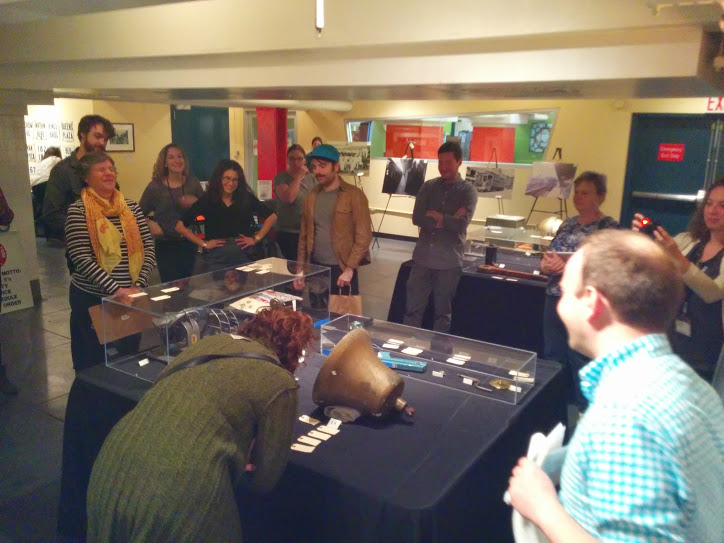
While the program attracted a modest RSVP list of nearly 50, and the actual attendance was about half that, it was a really fun pilot for what we hope will be a perennially or seasonally recurring event. A key to that night’s success was Julia’s booking of an appropriate M.C. to keep the crowd engaged for over 90 minutes. Alex Gallafent not only participated in the writing, but he improvised with some hilarious off-the-cuff remarks. While we had staged a formal podium and seating arrangement for the night, we didn’t use it. With the exception of two short snack-fueled writing sessions at tables, Alex and the group stayed on its feet and on the move. He kept the mood loose and the crowd entirely engaged throughout.

The improvised exhibit label-writing was a great entry point to get everyone’s creative writing flowing. A few guests did make the greater commitment to read their on-the-spot short story drafts. And several of the preliminary online submissions were read aloud.

Engaging with the audience – and the team!

We discovered, I think, a wonderful and malleable template for sequels to this program. I lean towards establishing a link with an undergrad writing program that would assure a core audience of peers who are likely to be comfortable sharing ideas and fragments of stories already. Then, the rest of the outreach could build on that alliance.

One other resonant and firsthand discovery for me was that I saw a great group of museum colleagues coalesce around this event. If we never did another one, I’d still be very proud of the team-building opportunity that grew out of this program proposal. Museums often can’t show off most of their collections to the world, but we know the curiosity is there. Collections and archives are arguably the most content-rich departments of a museum, but the other behind-the-scenes employees don’t get to see much of them. Internally, this program showed me that untapped curiosity and creativity in our versatile and trustworthy staff can be interpreted and shaped into the programming.

European Registrars Conference 2014:
Moving Collections

Niin makaa, kuin petaa.
One sleeps like one makes his bed.
(Finnish proverb)

Moving, moving, moving... we sure do a lot at the TECHNOSEUM.
Moving, moving, moving… we sure move a lot of stuff at the TECHNOSEUM.
As a collection manager in a museum where over 3 % of the collection is permanently on the move due to exhibitions, loans and other purposes, I was extremely interested in this panel.

Moving Collections and Organizations

Per Hedström from the Nationalmuseum Sweden talked about “Moving Collections and Organizations”. As they had to close their main building down due to restoration, they had to move 700,000 artifacts out of the building and into permanent storage. They were successful, nothing was broken or lost and now they are waiting to come back in place. The reopening is scheduled for 2017.

Per pointed out what made the project a success and how to approach occurring issues:
One crucial point was that the relocation project has to be made top priority. One should take into consideration that change is always a source of uncertainty and one has to recognize that staff will be nervous. One needs to find extra money for the move, because you will need a few extra hands.

Then it came, the statement that I would love to write in capital letters and to put a golden frame around:

A RELOCATION PROJECT IS A RELOCATION PROJECT,
NOTHING ELSE.

It’s not a documentation or conservation project. It’s even not the time to experiment with new packing material. It’s simply the project to get all the artifacts safe into the new place and that’s enough.

One has to keep the audience in mind. They will be disappointed that they can’t see the artifacts, so you have to find ways to keep them engaged. One also has to consider staff: you have to keep them engaged so they won’t leave.

At the same time, a closure is an opportunity you won’t have again. You could focus on the future, ponder and discuss new ideas. You’ll end up with 100 new ideas and the difficulty is to choose from them and choose the ones that are strategically right. Per said during the closure they focused on three points:

  1. Vision and brand
  2. Strategically important exhibits
  3. New collection display

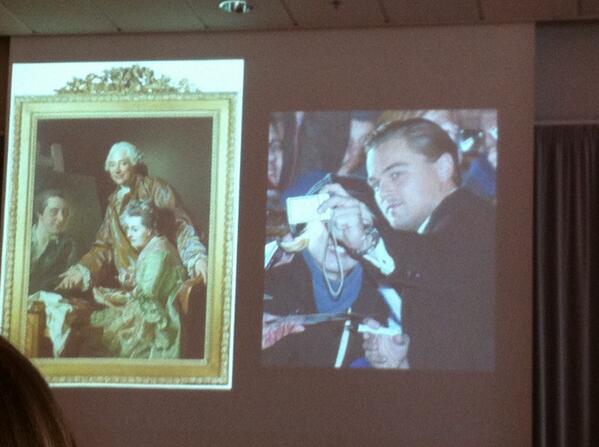
"Selfies – Now and Then" http://www.nationalmuseum.se/selfieseng
“Selfies – Now and Then” http://www.nationalmuseum.se/selfieseng
One of the things that were discussed was if lending should go on during the closure. They decided to limit it down to exhibitions they decided to be strategically important. Among these were for example the exhibition “Slow Art” featuring Swedish designers at the Swedish Institute in Paris https://paris.si.se/agenda/slow-art/ or the exhibition “crossing borders” http://www.nationalmuseum.se/sv/English-startpage/Exhibitions/Crossing-Borders-bra-collaboration-with-Swedavia/ which they decided had high experimental value.

Concerning the new collections display they decided to put emphasize on things that are significant in their collection and focused on what they are good at. But he also admitted: “It’s not easy, perhaps we do too much, maybe we have to focus on less and do this better.”

Storage Relocations at the Museum of Islamic Art, Qatar and Management Challenges of a New Museum

Those two presentations held by Marie-Astrid Martin and Nancy Konstantinou dealing with the challenges of collections management and relocation issues in the Gulf region were breathtaking.

To sum it up: imagine doing what you are doing in your museum right now – only that what you do is more or less done for the first time at the place where you are. You have to implement all procedures and policies you are used to in the North American and European museum world in Qatar for the first time. This in an extreme climate where even short periods without climatization could do tremendous damage to the artifacts and with an infrastructure that is far from what you are used to. Needless to say that few insurers take the risk of insuring something there and Qatar hasn’t a state indemnity in place so far. Like they put it “Living in the desert is the main challenge”. But the museum folks there took up the challenge and managed the move the collection into a newly built warehouse with 9,940 square meters of high shelf units. Kudos to Marie-Astrid, Nancy and their colleagues!

Relocation of XXL Collections – You can’t make an Omlette without breaking eggs

I guess there was no presentation on ERC 2014 that saw me nod more often than the one done by Joachim Hüber. I guess I looked like one of these nodding dogs…

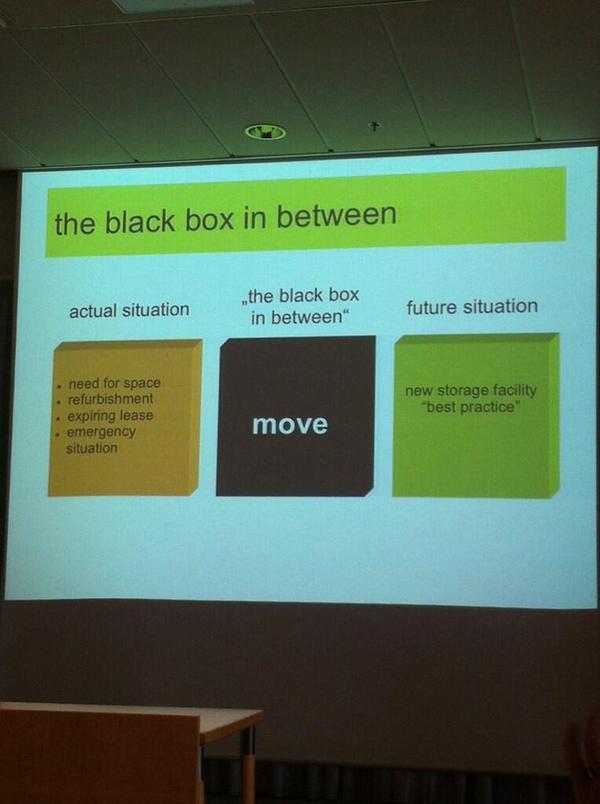
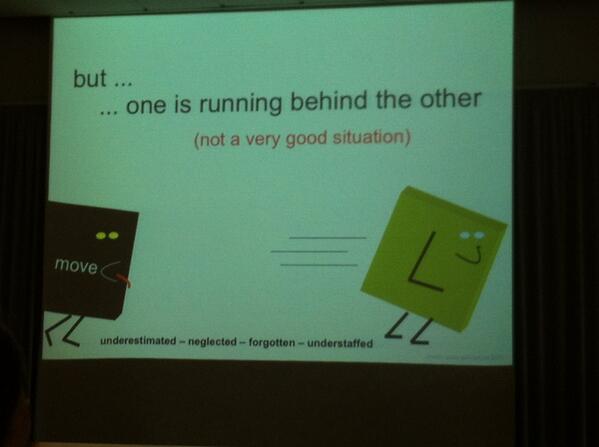
The "move" as the black box between the old and the new storage.
Joachim Hüber: The “move” as the black box between the actual situation and the future situation.
Joachim stated that most of the time “the move” is regarded as black box between the situation that caused relocation and the new location that is of course built with best practices in mind. While much thought is given on the new building by the architect, museum director, head of collection department, conservators, head of relocation project and head of logistics the move is only given much thought from the latter two. Therefore the move is often underestimated and understaffed.

Joachim recommended keeping in mind that the collection move and storage equipment are closely interlinked so it pays to use synergies. Part of the underestimation is often the workload. The move will inevitably need extra resources. It is also crucial to understand that it is necessary to reduce loans and use of objects in-house during the time of the move.

Joachim also warned that the idea of shifting resources from other departments and using them in the move is not a good one. Collections moves have special needs that can’t be met by just bringing in people who are used to do something completely different. Instead, there are three possible options: Hire more staff, contract staff or contract whole packages like transport or cleaning. Whatever the decision may be, keep in mind that you need extra staff, trusted staff, reliable staff. Joachim stated that the cost of relocation ads up to 20% of the whole storage building project and that this is often underestimated. Also keep in mind that the more risk you impose on a contractor, the more costly it will be.

On the practical side you will need several independent working groups, both on the “old” site and in the new building. A thorough recommendation: have a stand-by-hand on each side who is just there to run around to fetch material and so on. You will also need a decision maker on both sites so processes aren’t slowed down because nobody is there who is eligible to decide. This decision maker has to be someone who knows all the tasks and has to be an allrounder and troubleshooter by personality – he/she is the most important person on site.

Crucial to managing XXL relocations is that you stop thinking in objects and start thinking in bulks. If you go for 100% object security in every case you won’t be moving at all, because every move is a risk. To manage a move in a cost-effective way, we have to take some risks. We have to shift from minimal risk to acceptable risk. This includes that we should look to have 95% of the objects requiring standard handling, only 5% special handling. We have to give a close look which tasks are really mandatory and which are optional.

move runningIt is very important that the correct sequence of steps in the move/packaging/transport is planned beforehand. But also: do not over-plan.
What proved to be helpful is using visual packaging so one could see what is transported and therefore immediately see where the problems in handling are. Also, things should go on rolls as early as possible. Using standard packaging makes things easier and cost-efficient. Standard pallets, standard boxes that fit in standard shelves… And always keep in mind that space, space, space is everything!

Even if it is always part of our considerations we should keep in mind that in the case of a move security is a minor problem. Joachim put it that way: Secure the process, don’t secure the single object. If you keep your staff in a good mood and pay them well you have a minimal security risk.
Also Joachim warned us to think early on materials, be aware of considerable costs, use standard products and order tools and materials on time. Using easy solutions instead of complicated ones makes it unlikely that something goes wrong. Sometimes special solutions are needed, then you should pay attention because most of the time the answers are around you.

Some words on hiring: hire the experienced staff early; this is especially important for the decision makers. Do not hire too much over-qualified staff. Again: keep your staff in a good mood and pay them well.

To sum up:

  • Don’t underestimate costs
  • Design suitable processes
  • Use adequate staff, tools and materials
  • Don’t be afraid of taking acceptable risks

Feeling a bit dizzy from all the nodding, I went for lunch break.

The really geeky stuff – how we did it

If it moves, barcode it! Part 2

By Sheila Perry

Note: This is part 2 of the article “If it moves barcode it”, read part 1 here.

We had 3 sets of barcode labels made, with separate ranges of numbers for drawings, prints and photographs, starting from DR00001, PR00001 and PH00001 respectively. These numbers were meaningless and the only important thing was that we knew which objects were in which box. I created a big spreadsheet which showed the correlation between all the different box numbering systems, and we then used this to create an upload to our collections database which changed the box numbers there. This was slightly nerve-racking as there was a risk of the cells in the spreadsheet going out of sync when they were being manipulated. However, undoubtedly the worst part of the whole operation was attaching the labels to the boxes. The labels were provided individually on backing material and had to be peeled off, and (as with double-sided sticky tape) it was only too easy to scrunch them up while you were detaching them! The best part about having the barcodes on the boxes was that we didn’t need to print or write out any lists to record new locations when we started to move them back into the building. We just scanned them with a mobile barcode reader (a Datalogic Skorpio mobile computer) and used that to record the moves, downloading an Excel file from it at the end of each day and then feeding a ‘box upload’ to our database.

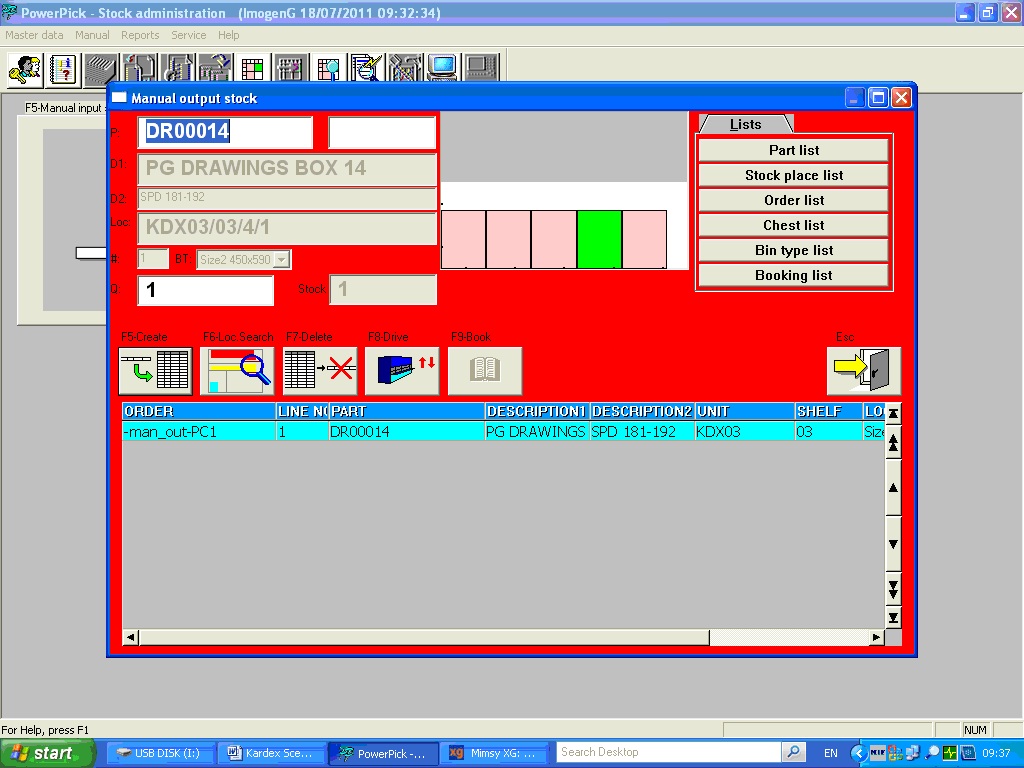
powerpick screenshot barcode

The software [PowerPick – see screenshot] that controls the three Kardex machines holds a small, simple database with a list of box numbers, two description fields which we use for the previous names for each box, and the location of the boxes within the storage system. The box number is used to enable people to cross-refer to our collections database to find the list of items in the box. So in order to retrieve a specific object, the user searches for it on the collections database, finds the box number and feeds it into the PowerPick database, which finds the location (machine number, tray number and position on the tray) and tells the appropriate machine to deliver the tray. The boxes have a ‘home location’ in the units and are usually returned to the same position after being taken out, although this can be changed in the database if necessary. On return, the barcode on the box may be scanned to enable the software to find the right location and deliver the correct tray, but in practice the box number is often typed or pasted into the search field.

No stopping us now!

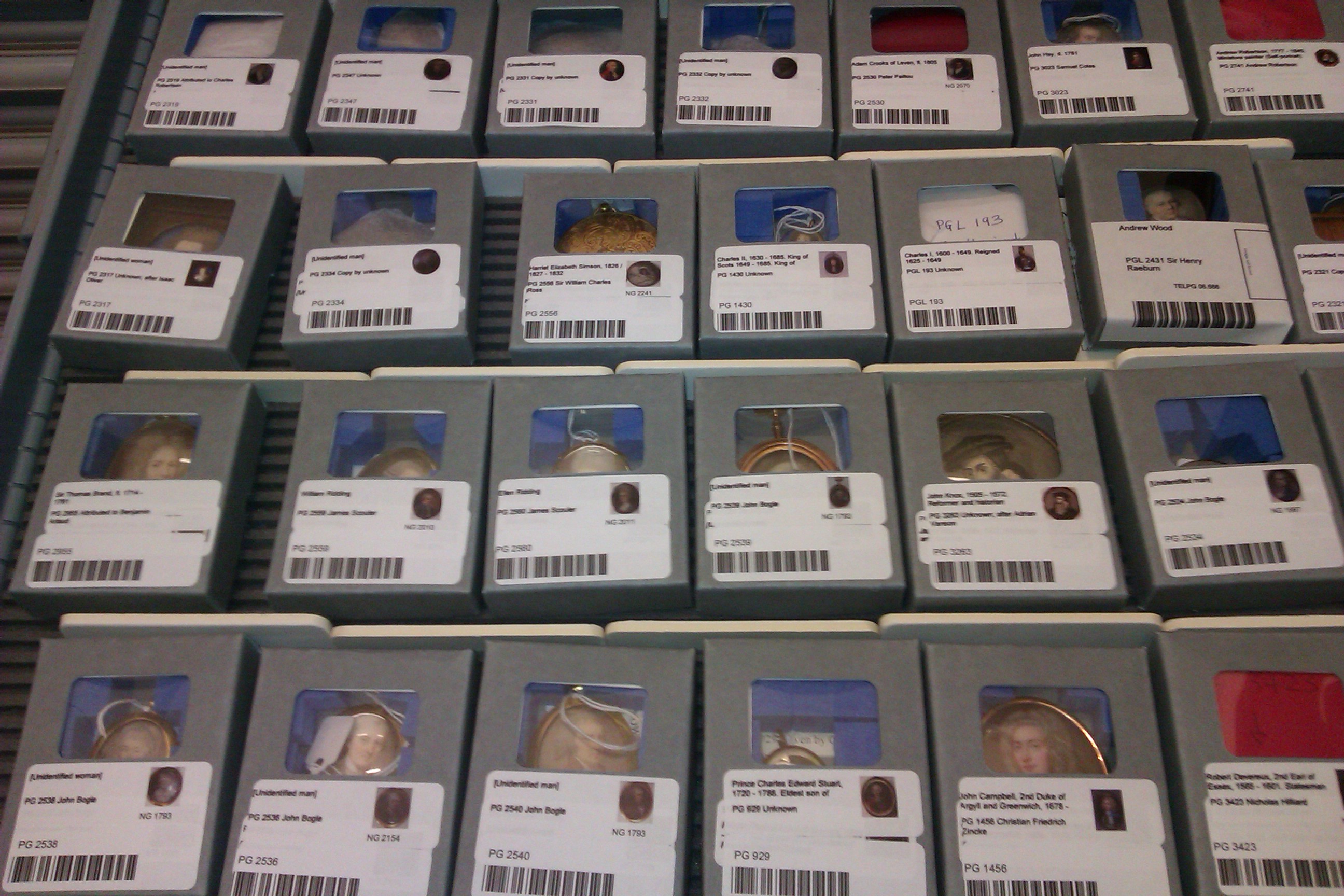
Soon after this we carried out a few smaller barcoding projects to help us to track individual items. In these cases we attached sticky labels of various types to the boxes or packaging of the items. We printed the labels ourselves, which had the advantage that we could include as much extra information on them as we wanted. For the portrait miniatures collection we used conservation standard labels and included an image, the artist name, title and the accession number converted into a barcode. For some reason we always had trouble keeping track of the collection before doing this. The individual miniatures were hard to identify and it was difficult to label them effectively until they were stored in boxes. From the audit point of view it is much quicker to check through them now that they have barcodes. However one issue with ‘do-it-yourself’ labels is that the barcode occasionally turns out to be unreadable. I would say this happens in about 5-10% of cases, whereas for the pre-printed barcodes the failure rate is much less than this. As a follow-up to the portrait miniatures project we added labels with barcodes to the packaging for a collection of portrait medallions, stored in envelopes. These were also hard to track/audit until we did this.

portrait miniatures with barcodes

Some of my colleagues are now at the start of an audit project for the Scottish National Gallery print room, and as part of this they have begun to attach pre-printed barcoded labels to the boxes there too. Any move that takes place will not happen for a while, so for once we have learned from experience and left ourselves enough time to get organised. The latest instalment in our efforts to drag the organisation into the 20th century [no, I don’t mean the 21st!] is under way.

What have we learned (if anything)?

  • We have up to now focussed on barcoding relatively small and insignificant artworks, or more accurately their containers, and not the large valuable ones. This is not because we value the small and insignificant ones more than the others, but because the smaller ones are generally harder to keep track of and easier to mix up with one other. It might be that for the more important/larger items we should be investing in RFID instead of barcode labelling, as this could combine added security with location tracking and/or with condition monitoring. But this is a battle still to be fought.
  • ‘Home-made’ barcodes don’t scan quite as reliably as the pre-printed ones – but you can convert anything you like into a barcode if you print the labels in-house, and it also provides more flexibility, allowing other information to be incorporated as required, and the ability to print off extra labels from time to time.
  • Although barcoding is a good method for providing unambiguous labelling and to facilitate quick audits, there are other methods which would also work if applied with consistency and accuracy.

If it moves, barcode it!

[Better still, barcode it before it moves…]

By Sheila Perry

Our barcoding efforts have been geared towards immediate practical needs rather than the wholesale adoption of technology by the organisation. We might have proceeded somewhat differently if we had acted strategically and attempted to barcode everything in all the National Galleries of Scotland collections. On the other hand, if we had waited to get a consensus on that we might not have done anything at all!

It begins

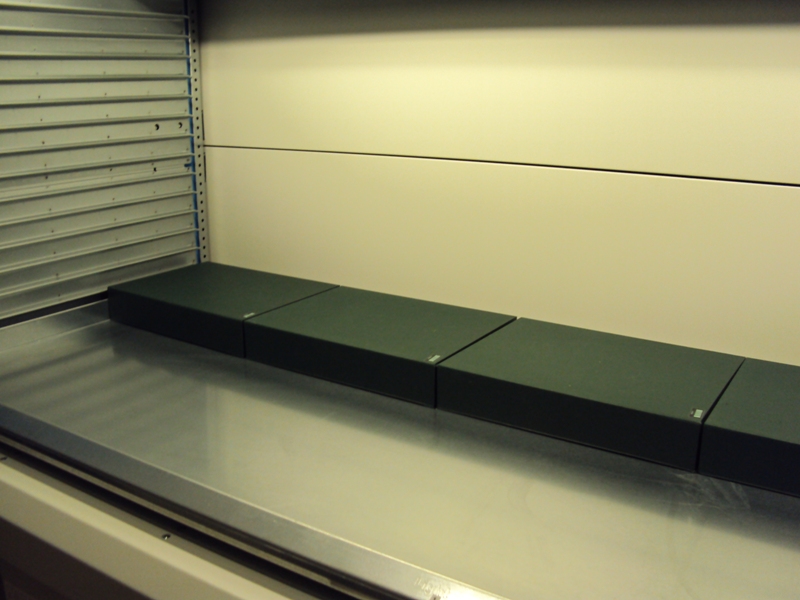
PNIN - Kardex tray with boxes

Our initial barcoding project was prompted by the installation of automated storage machines (Kardex) at the refurbished Scottish National Portrait Gallery in 2011, but it was also the final outcome of a drive to audit every item in the prints, drawings and photographs collections. These had previously been stored, mostly in modern solander boxes, in various locations around the Portrait Gallery, a Victorian gothic structure with spiral stone staircases leading to turret and attic store rooms. We never fully understood what was kept in these areas until we had to empty out the building in 2009.
In the case of the prints and drawings the main issue at this point was the box numbering system that was then in use, although there was also doubt about whether the contents of each box were correctly recorded on our collections database, while in the case of the photography collection the main factor was that large chunks of the collection were not recorded in any way.

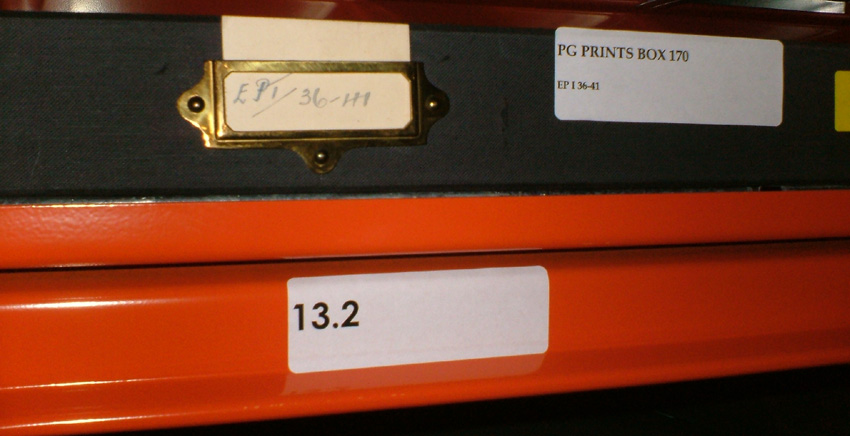
The boxes in which the drawings were stored were labelled with a range of numbers corresponding to an obsolete object numbering system. In some cases the labels, which were pieces of cardboard slotted into metal label holders on the front of each box, had fallen out of the label holders and got lost. Similarly, each box of prints was labelled with a range of numbers corresponding to the accession numbers of the prints that were allegedly kept in the box.

box labelling example

As the prints were not numbered sequentially but according to a complex system designed to record whether the print was Scottish, English or ‘Foreign’, the century in which the print was made and in some cases the coded identity of the sitter, this meant that a box might be numbered something like ‘SP IV 58.1 –150.6’. Some of the print containers had these numbers stencilled on them, often in gold, while others had cardboard labels in label holders as with the drawings boxes.

Once we moved all the boxes out of the Portrait Gallery, having added our own temporary box labels to help us place them on their new shelves in a sensible order and to record the locations on our database, the prints and drawings were stored in one temporary store and the photographs in another. Two projects got under way, one to audit the contents of the prints and drawings boxes and one to catalogue the remaining photographs.

It was mainly because we didn’t want all this tidying up to be wasted that we pressed for all the boxes to be barcoded before their return to the Portrait Gallery. The fact that they were going to be stored in an automated retrieval system which could work with a barcode reader as its input device gave us a pretext to move forward with this. There was a short debate with curators and others about whether each item should be barcoded individually or not, and an even shorter debate about barcoding versus RFID tagging, the latter turning out to be one step too far.

Read the real geeky stuff in part 2 – how they did it!

Sheila Perry is Collections Information Systems Manager at the National Galleries of Scotland, based in the Registrars Department, with responsibility for maintaining and developing the NGS collections database and associated systems. Earlier in her career she was a programmer and database designer, and she writes mystery novels under a pen-name.

European registrars Conference 2014: Be Prepared!

Ei vahinko tule kello kaulassa.
An accident won’t arrive with a bell on its neck.
(Finnish Proverb)

A little tired we started into the second day. The decision had to be made between „Valuation and Insurance“ and „Be Prepared“. Well, I felt not prepared after going to bed at 2 a.m., so I chose „be prepared“.

The first presentation „Disaster Relief / AIC-CERT“ was divided in two parts, one about the idea and the training by Julie Bakke, Chief Registrar at the Museum of Fine Arts in Houston/USA and one they called „Steve’s Reality Show“ from Steve Pine, Senior Conservator for Decorative Arts at the Museum of Fine Arts in Houston/USA.

After Hurricane Katrina hit New Orleans in 2005 it became apparent that the biggest problem in saving collections is not that there are too few people who are willing to help nor is it that there is too few expertise, the problem was that there was no form of organization that brings those two much needed components together. Therefore the American Institute for Conservation developed AIC-CERT (American Institute for Conservation – Collections Emergency Response Team). It is a group of volunteers consisting of conservators and collections specialists that will offer their knowledge in case of emergency – via phone, email or on-site.

Training is always a crucial point when it comes to save collections after a disaster. People who are trained will better know what to do and much less likely lose their heads. That’s why AIC-CERT conducts trainings all over the US. Participants learn in 5 days how to form effective emergency response teams, how to work together with other emergency professionals and how to protect oneself and others. The last point is extremely important, for museum people often don’t think about their own safety when entering a disaster zone. Among the recommendations were:

  • make sure you wear proper safety equipment like hard hat, gloves, masks…
  • before re-entering a disaster zone make sure people know where you are going
  • never go there alone, always enter with a buddy
Be prepared: Julie Bakke with hard hat, mask and, of course, clipboard. Picture via twitter @BergFulton

What is crucial even in „minor“ incidents is to have an „Incident Command Post“, someone who coordinates everything that is done on site and who makes sure that all the information is flowing: safety warnings from police and fire fighters to the emergency response team, handling instructions from the advising conservators to the emergency response team, findings and new dangers detected by the emergency response teams to the officials,…

An emergency team in the way the AIC-CERT sees it consists normally of 4 people: 1 team leader, 2 people in the field and 1 logistics coordinator. Somehow registrars and collection managers seem to be a perfect fit for the logistics coordinator, because they are often responsible for their institution’s disaster plan already. They can also be good fits for the Incident Command Post.

The training of the AIC-CERT isn’t purely theoretical. They do mock disasters in their training. They set up a scenario (category 3 hurricane in the museum, fire in the library due to a short circuit…) and the training team has to go through it to learn what to do and when.

Along with this session came the information that the long known „Emergency Response and Salvage Wheel“ is now available as app for mobile devices: http://www.heritagepreservation.org/wheel/

Steve Pine reported on what AIC-CERT had done to help when Sandy stroke. In this case the MOMA acted as an information hub with conservators giving advise and coordinating help. They used their „Inside/Out“ blog to offer help and answer questions from artists whose artworks were affected by flooding. You can take a look at these posts here: http://www.moma.org/explore/inside_out/tag/hurricane-sandy

Steve showed pictures of the work that was done by AIC-CERT members together with artists and other volunteers to save the artworks of an artist’s colony and the costumes and props of the Martha Graham Dance Company (http://afrnyc.org/emergency-response-martha-graham-dance-company). Toilet paper instead of Japanese paper helped to dry pictures before mold could set in. Window screens were used as drying racks. An empty industrial hall as „field hospital“ for artworks and props… It was impressive to see how the professional knowledge of conservators and the spirit of improvisation resulted in saving thousands of artworks.

Fire at the museum

The next session confronted us with another registrar’s nightmare: „Fire at the Museum“. Adina Ekbergh, Security Manager of the Museum of Ethnography in Stockholm/Sweden reported the incidents of this black day very calmly but vividly.

When the smoke detector in the cold storage room went off they immediately evacuated the museum and the fire brigade arrived 7 minutes later. Unfortunately, smoke had infected the storage rooms in the vicinity of the cold storage room and the fire sprinklers did their work for 13 minutes, soaking the artifacts stored there. Fortunately, Adina was on site and immediately entitled to coordinate everything that was necessary by upper management.

When the fire fighters had everything under control all doors were opened to let the smoke out and staff members guarded the doors. Most staff members waited on site to go back into the building to help with recovery. But unfortunately, the forensic investigation couldn’t be completed on that day and the building was sealed at midnight. The investigation continued the next day. Needless to say, the museum staff couldn’t begin with the treatment of the wet artifacts before the forensic investigation was completed. Precious time passed, and as a collection of feather, fur and leather artifacts was affected, the 24 hours that passed before staff could begin with recovery were enough for mold to set in.

As soon as they could enter, the recovery began. They decided to freeze everything that was infected. From Thursday to Saturday every staff member helped with the treatment. At first they worked without protective equipment because there weren’t enough masks and gloves on site. Shopping for this equipment was one of the first tasks!

Adina pointed out that they learned a lot from this disaster:

  • Always have enough protective equipment at hand, because one can be sure that everybody wants to help but health of staff members should come first! Adina put it this way: we regard ourselves as professionals working with items, not as people. Therefore we often forget to consider health risks.
  • If someone offers help, don’t say no. Don’t underestimate how disasters are physically, mentally and emotionally exhausting. Don’t be afraid to ask for help.
  • No items should stand on the floor!
  • Write a diary of what happened when in the incident – you forget!
  • Involve the neighbors.
  • Have good connections to officials like fire brigade and police – establish them before something happens.
  • Train your staff for disasters.

The reason for the fire was identified as high voltage in a sensor of cold storage room. Pondering about the safety of our own collections we left for coffee break.

European Registrars Conference 2014: Art Theft and Recovery

Vahinko tulee viisaallekin.
Even the wise one sustains damage.
(Finnish Proverb)

The last sessions of the first day saw two speakers who were were different in appearance and presentation style but who definitely pull together when it comes to bringing back lost art: Christopher A. Marinello, Director and Founder of Art Recovery International and Rune Sivertsen, Detective Superintendent of the Norwegian Police. It was the eloquent lawyer and the straightforward law-enforcer speaking – and we were all spellbound for the next one and a half hours.

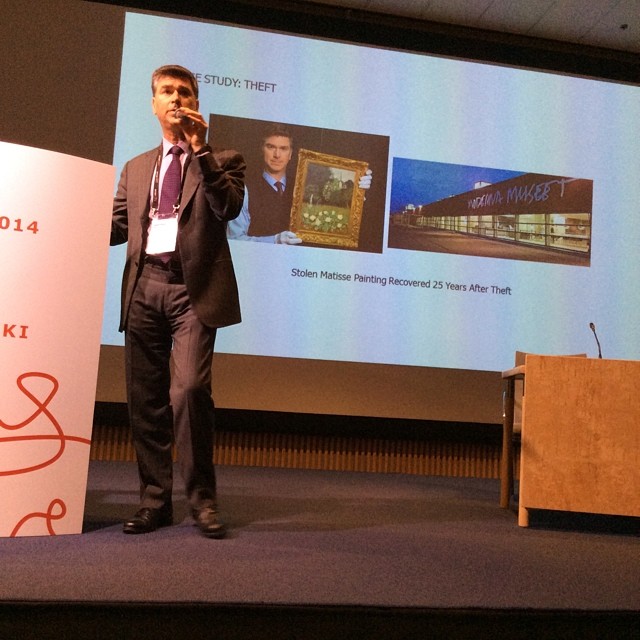
Chris Marinello speaking about the restitution of a Matisse (via twitter @erc2014)
„Who steals art?“, asked Chris Marinello at the beginning of his presentation „Art lost and found“. He made it clear that art thieves are not at all like they are depicted in Hollywood movies like „The Thomas Crown Affair“ or „Entrapment“. There is nothing romantic or heroic about them, they are just ordinary criminals, the type of guys who steal wallets.

Art theft is an „industry“ making 6 billion dollars per year. But how many „good guys“ are there to prosecute these thefts? Marinello had it in figures: In Italy there is one Art Crime Police Officer for 200,000 inhabitants. In the UK it’s one for 15 million inhabitants and in the US it’s one for 20 million inhabitants. Only 15% of lost art is ever recovered. This is one of the reasons why, in Marinello’s opinion, it’s necessary to have help from the private sector.

He introduced the database „Art Claim“ for stolen, looted and missing works of art. One idea is that museums and collectors can register their art works there before anything happens to them. This makes it clear who the original owner is, so art dealers can check the data base when an artwork is presented to them to make sure it isn’t stolen. Police can check the database when they discover an artwork, for example after a razzia.

Another part of the work of Art Recovery International is the negotiation in restitution cases. Chris talked about some difficult cases, including one from the Gurlitt art find. One can only imagine the difficulties of negotiating in cases where something is regarded as legally acquired under the law but still, morally, belongs to the original owner. Convince someone to give a work of art back without compensation just to do the right thing and to right a wrong that happened long ago? Sounds like really hard work.

Now Rune Sivertsen entered the stage for „The Robbery of The Scream and The Madonna from Munchmuseet in 2004“. We were all ears when this police officer revealed the bitter truth of this theft.

There were some circumstances that made it easier for the robbers, although they couldn’t foresee them: The security guard was positioned outside the room where „The Scream“ and „The Madonna“ were on display and the alarm system attached to the pictures was not properly maintained so it didn’t go off when the pictures were removed. The robbers where well prepared for other circumstances: one carried a gun and they used fitting foam glue to silence the alarm bell.

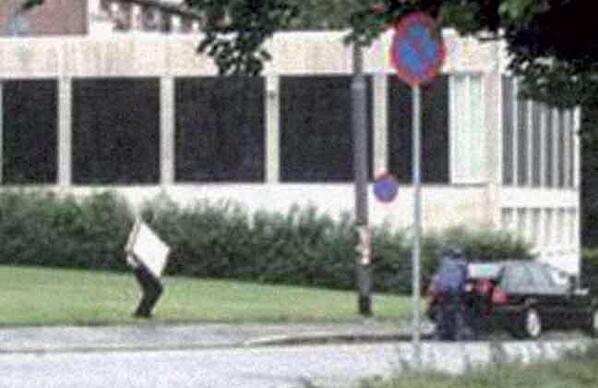
Picture of the robbery – approaching the getaway car
But there were lucky incidents, too: The robbery was filmed and one witness unknowingly took a picture of the getaway car. While the robbers were masked, the driver wasn’t and was identified. Another robber was identified because he wore the same clothes when arrested in another case. But still it took 2 years and 7 days to recover the pictures, which suffered major damages, and to arrest all the robbers.

What really shocked us as museum professionals was when the true reason for the theft became apparent: The pictures were not stolen to steal art and sell it. They were only stolen to distract attention and absorb manpower of the police from the investigation of a major monetary robbery at NOKAS (http://en.wikipedia.org/wiki/NOKAS_robbery) conducted by the same organization of criminals! Even more shocking – if possible: The sentences for the robbery were low, the only one who was sentenced to a significant amount of time in jail for this crime was the one who carried a loaded gun…

With the impression that maybe its only we who regard art theft as a „serious“ crime we went off to the Midsummer Party at Kiasma…

This post is also available in French, translated by Marine Martineau.

European Registrars Conference 2014: Assessing Risk in Lending and Borrowing

Niin metsä vastaa kuin sinne huudetaan.

The forest answers in the same way one shouts at it.
(Finnish Proverb)

After lunch there was again a difficult choice to make: Assessing Risk in Lending and Borrowing or Shipping Challenges. I could talk hours about shipping challenges in a Science and Technology Museum, but they are mainly inside my own institution, so I chose lending and borrowing.

“I look forward to hearing from you”: A lending and borrowing scenario was presented by Kate Parsons, Head of Collections Management at Tate, UK and Jane Knowles, Head of Exhibitions, Chair of the UK Registrars Group.

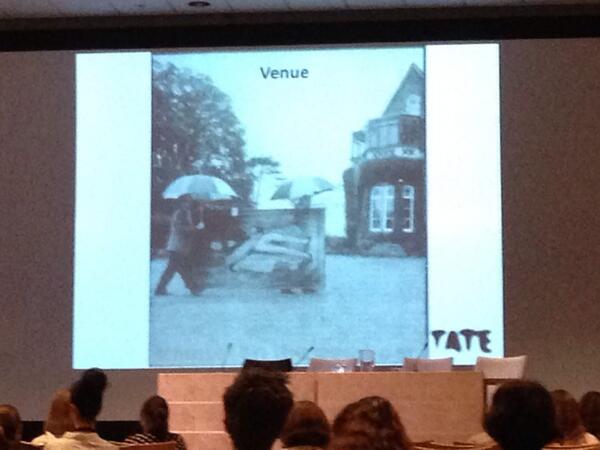
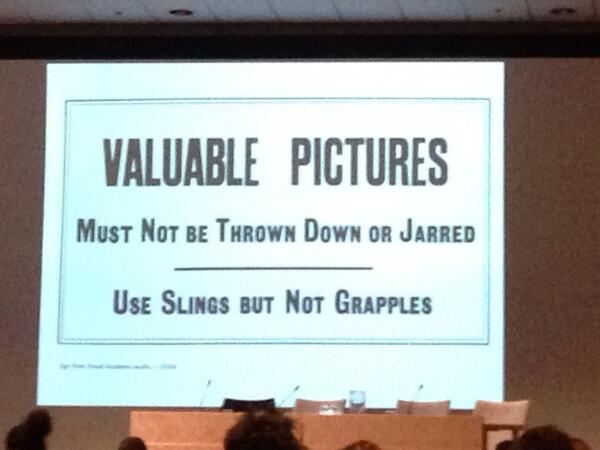
It started with a short look at the history of risk assessment in lending and borrowing with some hilarious finds concerning art transportation:

venue

handling valuable pictures

Generally speaking, there are three types of risks when it comes to loans:

1) Financial risks
2) Logistical risks
3) Curatorial and ethical risks

All the risks must be addressed as early as possible in the process. To show how to do this Kate and Jane established a scenario: The Royal Academy wants to loan some works of art from Tate. Taking the roles of the lender (Kate) and the borrower (Jane) they showed how the loan process is established, how risk assessment is done continuously on both sides and how communication is key.

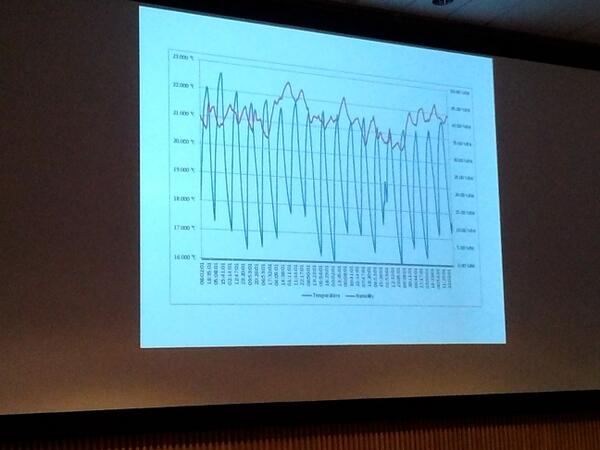
As most loan processes, the one in this scenario didn’t go smoothly. For example, the borrower sends in the climate graph of one of the exhibition rooms, which looked like this:

graph

Is it okay for an alabaster sculpture? Well, even with considering very much in favor of the borrower, it isn’t… They have to find an alternative room for display and there are concerns because of the weight of the statue and transportation issues. In regards to another artwork the borrower finally decides to draw back his loan request. The lender has already invested time in conservation measures, so he sends an invoice for the costs, which, of course, the borrower didn’t expect and hadn’t accounted for. So it went on, but in the end they reached a good agreement for both sides and lived happy ever after…

Gee, I really wish all loan requests and procedures were handled in the decent, polite and collegial way of this scenario! That’s really acting in favor of the artworks, institutions and of course, the colleagues involved. In a nutshell: Lender and borrower should both work together and discuss risks openly and collegial. That’s good risk assessment

Next up was Eva-Lena Bergström with „Lending and Borrowing – Calculating Risks“. She took a look at the historical development of risk assessment in loans and especially on the development of state indemnity programs. Some of the facts and figures I recall (or could look up in my notepad):

  • In 2009, 22 of 30 European countries had a state indemnity program
  • Since then 2296 exhibitions were covered by state indemnity and there were 16 reported cases of damage/loss introduced for at least 100.000 artifacts included in these loans (0,016%).
  • Out of 84 institutions that took part in Eva’s survey only 2 didn’t do risk assessment in any form.

This was followed by an in deep look at the data from the survey the ERC2014 delegates were asked to fill out online before the conference (hopefully published soon).

The following panel discussion soon focused on the practice that some loan contracts include a passage that the borrower can be held responsible for damage that becomes visible up to 6 months after the loan. This is a passage that seems to impose an unbearable risk on the borrower. But a German delegate stressed out that this might be a misunderstanding: under German law (as far as I understood it, but I am not a lawyer) the claim for compensation for an occurred damage during the loan period has to be done immediately after the loan is back. This makes it impossible to claim for hidden damages that only become visible a short time after the loan is back but that are caused evidentially by the conditions during the loan time. Therefore German loan contracts often include such a passage that expands the time to react on 6 months after the loan.

It became obvious that the wording in the contracts must be clear and that it’s not acceptable to take over uninsurable risks. Lending and borrowing is a key responsibility of museums and lenders must accept that every loan comes with certain risks that can’t be imposed completely on the borrowing institution.

This post is also available in Italian, translated by Silvia Telmon.

European Registrars Conference 2014: Security Matters

Älä laita kaikkia munia samaan koriin.

All eggs should not be put in one basket
(Finnish proverb)

After the opening introductions and first session „But is it art?“ by Daniel Birnbaum there were parallel sessions: Security Matters and Couriering 101. As we seldom courier in my museum, I chose security.

Maybe the most impressive presentation was given by Tygve Lauritzen, Head of Security and Operations at the Munchmuseet in Norway. His presentation included practical hands-on security advice for transportation as well as a few general warnings.

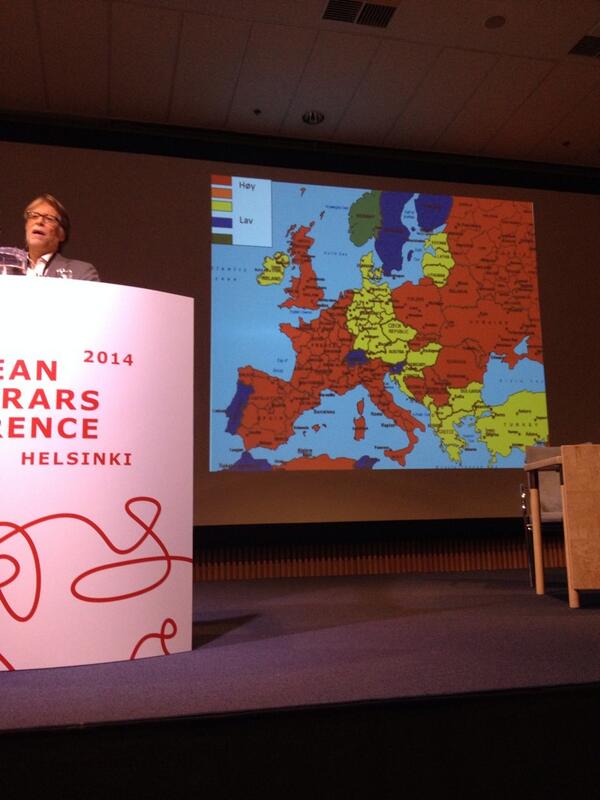
What impressed most of us deeply was a map showing attacks on trucks in Europe (green lowest, red highest):

Tygve Lauritzen on the risk of road transportation
Tygve Lauritzen on the risk of road transportation (picture via twitter @ERC2014)

In fact, art that is transported on the road is 1000 times more at risk than art that is delivered by airfreight – which is somehow logical but also frightening. One of the thoughts Tygve gave was to reconsider sending couriers on these roads. In his view the risk you impose on your most valuable good – the life of your colleague – is much higher than the benefit. What can the courier do if the truck is on fire? What can he/she do when the truck is held up and hijacked by false police?

Transporting art on the road is a risk in itself that can only be reduced, but not avoided by good organization. Some of the recommendations were:

  • planning the drive ahead, including breaks, safe parking possibilities and alternative routes
  • providing the drivers with all the phone numbers and directions what to do and whom to call in which occurring situation
  • providing the drivers with printed out cards saying „I’m not allowed to open the window, please call name/number and escort me to the next police station“ (in all languages of countries the truck has to pass). Many cases of trucks hijacked by criminals dressed as police are known and drivers should not open the windows for their safety. Real police has no problem with escorting a truck to the next police station.
  • number locks that only show the same number if they were not opened during the transport is a good way to check if something went wrong on the trip

Considering the risk that something might happen on the road it is only logical to define a value limit for art transported on one truck. This is easy on paper but the key is to enforce this policy under all circumstances in the practice.

Tygve stressed out that it’s important to go into „future crime mode“ as registrars. Art is nowadays used as a form of payment in organized crime and we shouldn’t underestimate the risk. We should be prepared that insider information is very valuable to the criminals and that they are very actively trying to get it. Seemingly harmless questions like „Can you give me a telephone list of your institution?“ are not harmless at all. In fact, if you hand it out it’s like you opened a backdoor for the criminals. They will start to do researches on these people to find a weak point, and they will find it. Someone in urgent need of money, someone with an alcohol illness, someone with personal problems…

Thinking in „future crime mode“ also applies to document security. We are often not aware that information we send per email or carry around on our phones or tablets are also documents. Some of Tygve’s recommendations:

  • Password protect every document before you email it. Be aware that normal, unprotected email is something like a postcard – the content can be easily spied out. Never ever send documents open.
  • Give the password to people who need to read the documents per phone, not per email.
  • Dropbox is not a safe place for documents with sensitive information.

In the next session Simon Mears, Consultant for Security Risks and High Value Asset Protection in Denmark, introduced GRASP, the Global Risk Art Survey Program. It is a system invented by insurers as a reaction to certain incidents that involved art, like thefts or fires. It is a holistic approach to make a risk assessment in all fields of possible risks for a collection, including not only thefts and catastrophes, but also damages due to climate issues.

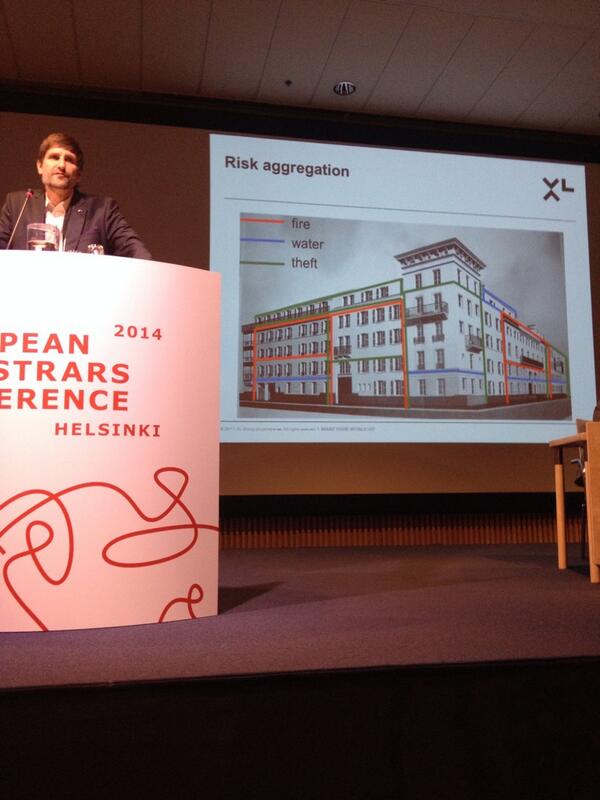
Pascal Matthey speaking on risk aggregation
Pascal Matthey speaking on risk aggregation (picture via twitter @ERC2014)

The last speaker was Pascal Matthey, Head of Speciality Risk Engineering, XL Group, Switzerland. He talked about Holistic Risk Management for Museums. Some of the key thoughts I still remember:

  • In holistic risk management, you have to look at the Maximum Foreseeable Loss (MFL) in one incident. It’s Murphy’s Law in practice: a fire starts, the sprinklers don’t work, fire brigade is late… how high is the maximum foreseeable loss?
  • Be aware that insurance has nothing to do with risk management in the first place – the money doesn’t bring back the lost art and it doesn’t bring back your reputation after a theft.
  • A good approach to do holistic risk management is risk aggregation, to define the risks for different parts of the museum instead of defining the MFL for the entire loss of the collection, which is very unlikely to happen. This will also help to keep insurance rates at a reasonable height.
  • Example: The highest risk for your galleries might be theft and fire, so here you try to reduce risks through organizational measures (i.e. do everything that a thieve has to invest much time into stealing and leaving the building, so police has a chance to catch him when he’s still in the building) and insure the MFL in case of fire and theft. If the galleries are not on the ground floor, damage done by high water might be low. If your storage is in the cellar, here the risk of fire might be low, but you will insure the MFL in regards to high water.

As you can imagine, we had enough food for thought and talk for the following lunch break…

This post is also available in Italian, translated by Silvia Telmon.