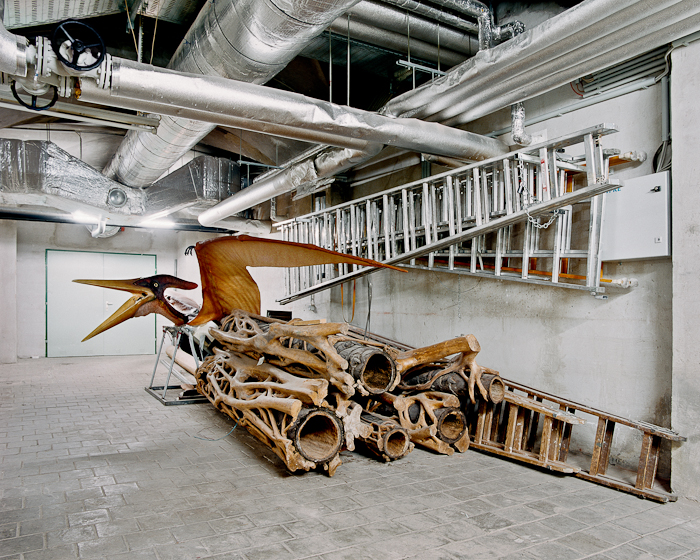
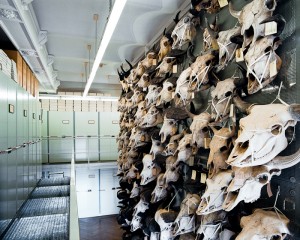
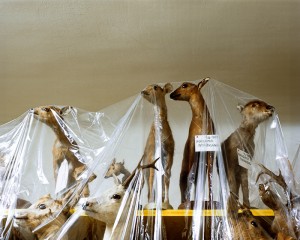
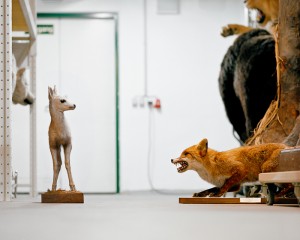
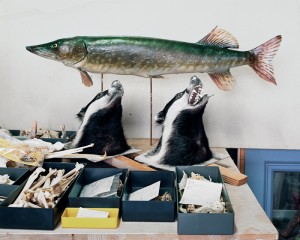
When I first saw pictures from the project “Skeletons in the Closet” by Klaus Pichler, I was overwhelmed. Somebody did something I and certainly many of my colleagues have often thought about: someone should take a picture of THAT. The beautiful and absurd compositions that appear when collections and everyday museum work meet. Cautiously, I asked the photographer from Vienna if we are allowed to post a text and some pictures from the project. The answer was really positive: Not only that this was no problem, he would also write a text about how it was like to work together with the registrars! Enjoy!
More than four years have passed since my first photo appointment for my photo series ‘Skeletons in the Closet’ in the non-public parts of the Natural History Museum in Vienna. Nevertheless, I can remember my first trip to the basements, depots and storage rooms of the museum like it was yesterday.
Some words on my personal history: I grew up on the countryside and whenever my family made a trip to Vienna I insisted in visiting the Natural History Museum. According to that, the fact that I, as a grown-up, was allowed to take pictures in the ‘private’ spaces of the museum has some kind of sentimental value.
Back to topic: the first visit to the backstage area was fascinating. Think of childhood memories of visits to exhibitions, think of the film ‘Night at the Museum’ or Noah’s Ark with its doors just opened. Animals next to animals, shoulder to shoulder, frozen in their actions, dead, but alive nevertheless. And, amidst of that: the registrars, who guided me through the taxidermied herds with great knowledge and were familiar with every corner of the giant storage facilities. Without them, I probably would still be in the basements of the museum, lost in the roomy corridors.
It is still vivid in my imagination, with how much anticipation they unlocked the doors of a room we have not been before, knowing which special sights were waiting behind the doors. I also remember how quick all my questions were answered by them, no matter how detailed my question were, and their enthusiasm about answering my questions. I often got the impression that the registrars had built up a very close relationship with the exhibits and were enjoying the time amidst their ‘family’, sometimes four levels below ground.
I was impressed by the registrars’ pride about a specific exhibit, for example a Blue Buck, which is extinct since a long time and only present as a handful of exhibits worldwide. Or the eagerness of some retired registrars who voluntarily spent their time with refurbishing the herbaria of the botanic department.
All I can say is that my whole photo series would only have half its size when not getting a thousand hints and suggestions from the registrars, where to search for special exhibits or where to find photogenic corners of the museum. And I am now using the opportunity of writing a text addressed to registrars to say a heartfelt ‘thank you!’ to the registrars who have guided me through my project.
Klaus Pichler
Book: ‘Skeletons in the Closet’, photos by Klaus Pichler, texts by Klaus Pichler, Julia Edthofer and Herbert Justnik, english edition, will be released on June 15 2013, limited to 750 copies (numberd by hand), hardcover, hardbound, 112 pages, 63 pictures. Price: € 30,- plus P & P. Can be ordered via the homepage of Klaus Pichler.
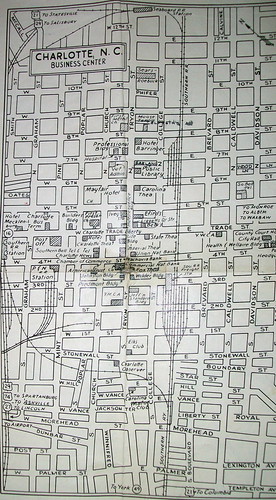
Things have been kinda quiet around here lately. I’ve just about gotten the database updated. Only have about 100 or so digital photographs to rename. We’ve started processing some of the 2000 acquisitions, and we’re almost up to date on the ones that have come in during 2003 1. The problem is, though, that when interesting things come across our tables, it’s impossible just to write them up, slap numbers on them, and stick them on a shelf. You get involved with them. Lately, it’s been maps. Kelly, one of our oh-so-wonderful interns, and I were looking at a bound set of blueprint real estate maps of Charlotte and Mecklenburg County that date from the 1930s. They outline the lots downtown – excuse me, UPtown – and list property owners and assessed values. Property values have changed a bit since then, but Trade and Tryon was the place to be! This sort of documentation is of inestimable value to anyone researching the histories of buildings and businesses in the city. We were given in the same accession a fine Official Lot and Block Atlas of Charlotte, N. C. that is dated 1928. It is printed on heavily coated linen from hand-drawn originals and shows, among other reminders of a vanished past, the trolley lines that used to serve as mass transit for the city.
It is also instructive – and fascinating – to go back forty more years to 1888. The map, donated this year, is of Mecklenburg county. The center city is not detailed, but the names of property owners are written in for outlying areas. Sure enough, there are “our” Alexanders (see http://www.charlottemuseum.org/alexanders.asp for details). On many of these properties, we can see names that are now given to streets, to parks, to buildings and businesses and neighborhoods in the area. Along with this map, we received as museum property an indenture of lease from England, dated 1696. It used to hang in a Charlotte law office and will hang in our library before long. It is hand written on calfskin vellum and hung with three red wax seals at the bottom, and I challenge you to try to read it! Not only is the script archaic, but the language is an opaque legalese that would put any modern writer of fine print to shame. Lee, another collections intern, started trying to transcribe it for me. Fortunately, the donor found a transcription done by another lawyer in 1975. We’ll probably make this available in the library for those who are curious, or are looking for lessons in obfuscatory verbiage!
Well, I better go update the database. And slap on a few numbers.
What initially started “Registrar Trek: The Next Generation” was Fernando and me writing an article about registrar’s work. Without knowing from the other, coming from two different paths, in fact, from two different continents and backgrounds. Fernando published them side by side in the conversemos sobre section of the ILAM website. Now, we have taken again the opportunity to work on a topic from two different sides: Fernando on the registration of contemporary art, Bernd and me on the registration of technological objects. Two paths, one destination: to exchange thoughts and to inspire our colleagues. Registering furniture and appliances: contemporary art (video-sculptures, multimedia, installations) Fernando Almarza Rísquez
With the typical humor of a registrar we could introduce the amusing but serious working hypothesis that registering some contemporary art involves dealing with appliances and furniture. But actually, the artist’s talent has found new ways that transcend the search for originality and pleasure of modern art and modifies them into other, dynamic forms of sensitivity, communication and stimulation of the senses. So let’s reformulate the hypothesis: these artistic approaches are much more than furniture and appliances. Ergo, to register these works is much more than documenting furniture and appliances. Read more… Appliances, furniture and beyond – registering technological objects Angela Kipp, Bernd Kießling
When you work as a registrar you often take for granted that you know what other registrars in other museums do. But when you talk to colleagues from different museum types you often realize that some things are similar and other things are very different. When Fernando told us he was preparing an article on the registration of contemporary art, we accepted the challenge to write one on the registration of technological objects. So, if you are into the arts: let us unfold to you the wonderland of technology. If you are into technology: Look over our shoulders and tell us if we forgot something important. Read more…
With the typical humor of a registrar we could introduce the amusing but serious working hypothesis that registering some contemporary art involves dealing with appliances and furniture. But actually, the artist’s talent has found new ways that transcend the search for originality and pleasure of modern art and modifies them into other, dynamic forms of sensitivity, communication and stimulation of the senses.
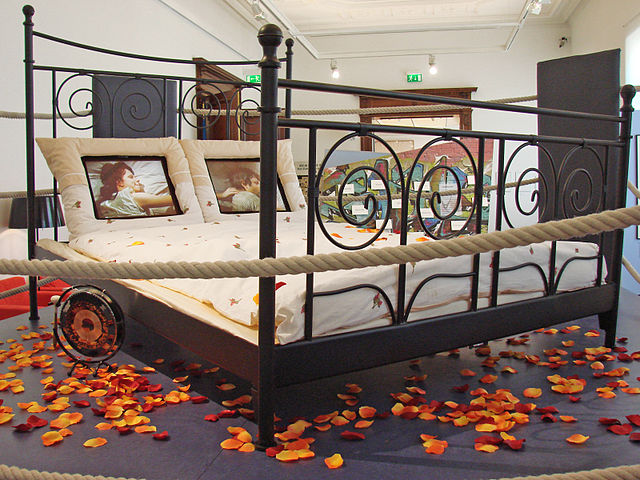
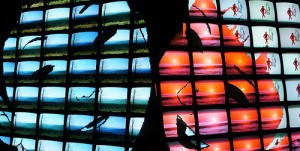
Artistic installation on the communication between a couple (Museum for Communication, Berlin). (picture: dalbera from Paris).
So let’s reformulate the hypothesis: these artistic approaches are much more than furniture and appliances. Ergo, to register these works is much more than documenting furniture and appliances. Once they enter a museum collection, they have other implications for the registrar, as well as the curators and the conservators are faced with new challenges. Actually, the registrar is closely linked to the conservation and curatorial instances.
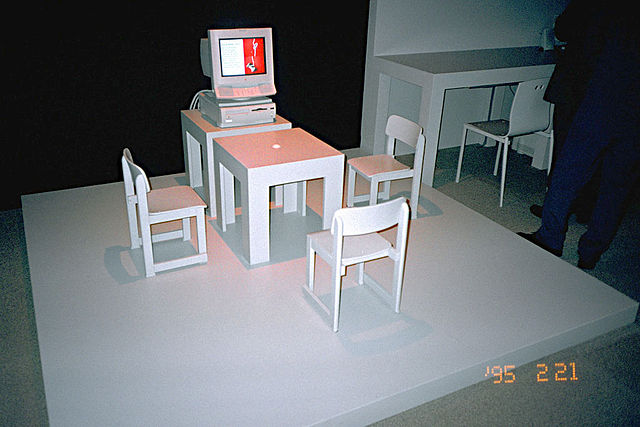
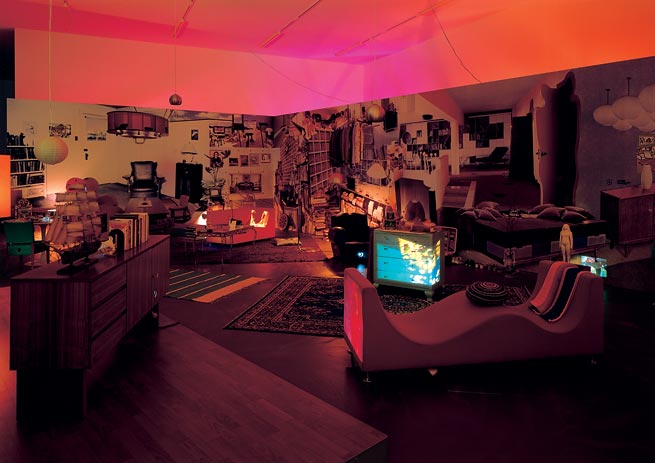
Jean-Louis Boissier. Globus oculi. Interactive video-installation, 1992-1993.Himalaya Goldsteins Stube, (Himalaya Goldstein’s Living Room), 1999 Audio/video installation with 13 video projections, 11 players, orange seat, red sofa, desk lamp, high sideboard, low sideboard, chair, table and bar (all with built in players), lamps, wallpaper mounted on wood, audio system, 4 speakers. (Installation by Pipilotti Rist, view at Kunsthalle Zürich, Zurich; photo by Alexander Tröhler) This work is a registrar’s delight …
To the point: what is contemporary art?
There are artworks stylistically classified as “contemporary art”, and among them I will talk about the installations, sculptures, video, multimedia, space interventions, ephemeral art and performances. Defined by the time of creation (after the 1960’s) and other speeches, communication, (re) signification, spatiality, context, they are different from modern art, and break previous aesthetic codes.
Modern art has particular implications, but contemporary art has more technical and technological implications, aesthetic, and conceptual significance: it must be registered as an object in an expanded context.
The registrar requires additional criteria for proper registration, cataloging, documentation and control of this art when it becomes part of a museum collection. For these works of art, the classical concept of “technical data” is far too limited. Contemporary art has additional issues that have to be detected and incorporated into the process of extended registration and get recognized in the data base: labels (tags) and controlled terminologies, fields for free text to add “non-controlled” definitions, taxonomies and folksonomies, conceptual references, indications and aspirations of the artists, measurement that need more advanced measurement technologies than a folding rule, specific requirements of storage and installation, etc. These additional criteria allow better coverage of the material dimension through its extended technical data, and the abstract dimension through its potential meanings. Manuals have been published for the registration of these goods: in Latin America edited by Dirección de Bibliotecas, Archivos y Museos DIBAM of Chile, and Colombian Ministry of Cultura COLCULTURA of Colombia; in Canada by institutions such as the Canadian Heritage Information Network (CHIN) and in Spain by the Subdirección General de Museos Estatales (State Board of Museums), among others.
A registrar for contemporary art
For years, I referred to the registrar of collections as a pre-curator and re-powered. This is the leading professional that manages paper and digital files, that computerizes linear search records of typed text so they become nonlinear hypertext information which allows extended and better research. This registrar registers the technical data of objects with appropriate criteria, which will incorporate those aspects of extended information plus certain levels of meaning, relationship and contextualization. This breadth of registration is required because such objects are cultural creations, and these elements of meaning-relation are also part of the technical data of an enhanced registration. So, a registrar that is a re-powered pre-curator relates more actively with the curatorial instances, without invading other spaces, but enhancing his own in the museum. This is an important step with which the registrar is no longer just the scriptwriter of technical information, and it encourages him / her to exercise more capabilities and criteria. If you read some “classic” texts on registration, written thirty years ago you will perceive some differences: in the last paragraph of the original Spanish text of Concha Vela entitled “El Departamento de registro del MoMA” [Registration Department of the MoMA] written in the 1980’s, you will read that “the Registrar must deal with the physical aspects of the art, not the aesthetics”. But beware! In contemporary art the aesthetic aspects not simply refer to the “beautiful”, they also refer to the languages of art, their codes, their meanings, their senses. The material and the abstract are inseparable here.
“bfgf” by Nam June Paik. Imagine registering each and every monitor! (picture: Patrick Denker)
The registrar as a pre-curator registers art objects, their meanings and aesthetic, as part of expanded technical data. And for contemporary art, he / she records the televisions, computers, media players, chairs and tables that such installations or settings consist of, as well as their contexts. But the registrar must not register only those materials and technical components of a work of contemporary art. Registering contemporary art (not in the sense of “fine arts”) implies to register objects as “artistic unborn.” He must also register purely virtual art (or born-digital), not material, that “doesn’t exist” if there is no computer, software and a monitor to play it.
So how and what will we register?
In the edition of the 2010 Turner Prize, art critics and artists in the UK have honored Susan Philipsz. The winning work is a video in which she sings traditional Scottish songs, in three scenes, each under a different bridge in the city of London. You can see this video, “Songs of the City“, on Youtube. The video is owned by the Tate Gallery in London.
Now, if that same work arrives at our office in the registrar’s department, how do we proceed and what will register? A video? A musical recording? An installation? A virtual or ephemeral art? A landscape “Bridges in the city” or “The River Thames”? What will be their “image” as a work, one or all photograms? What are the technical requirements for playback? What are the physical dimensions and should these include the three-dimensional space of “installation”? Does the work “include” a DVD player, a monitor or a CD? And how will we formally correct record this masterpiece? Under what category item should we record it in our catalog? What kind of information fields do we need and are appropriate? What kind of conceptual references or tags do we have? Is it a work of art only when it is being played? Hypothesis, please!
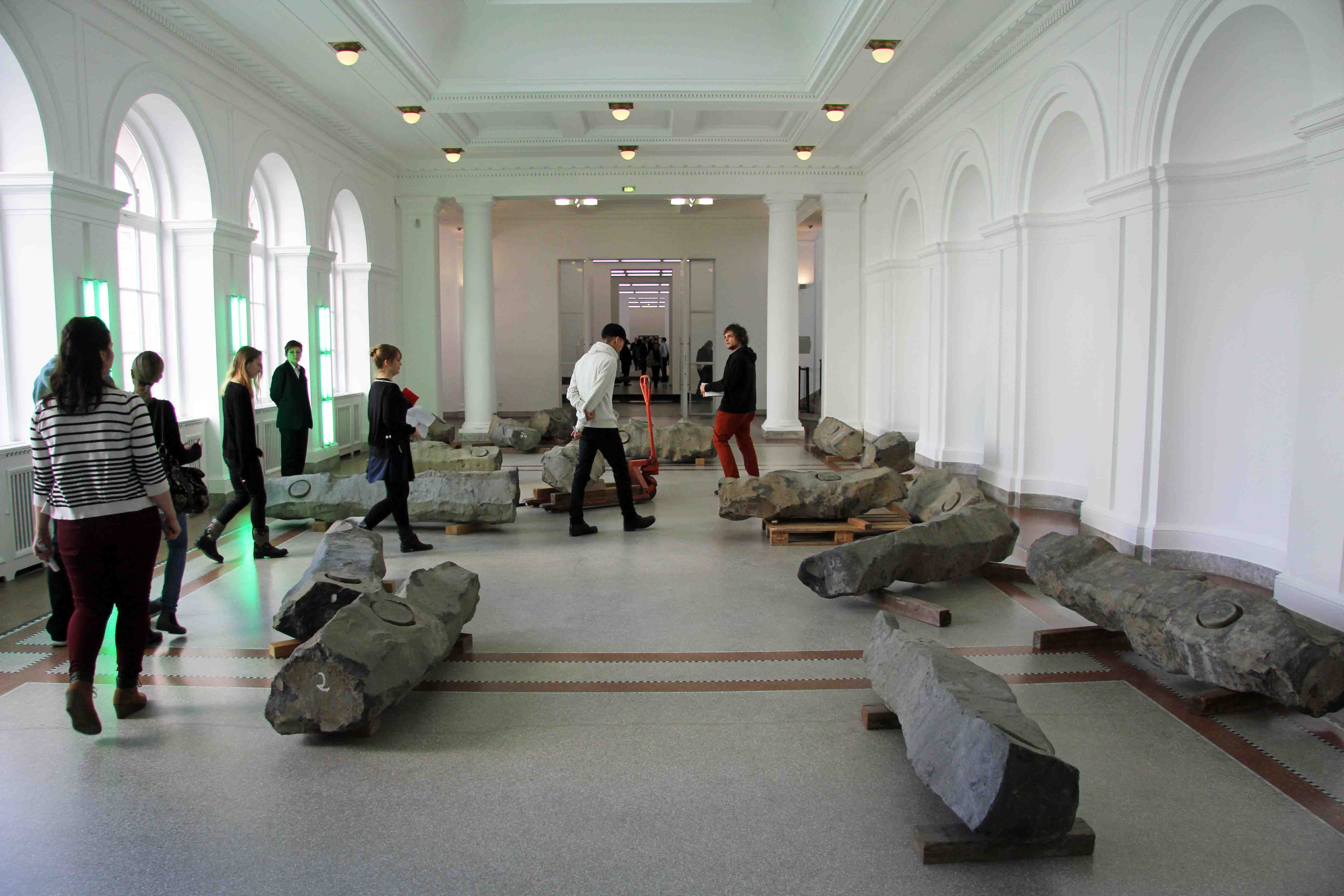
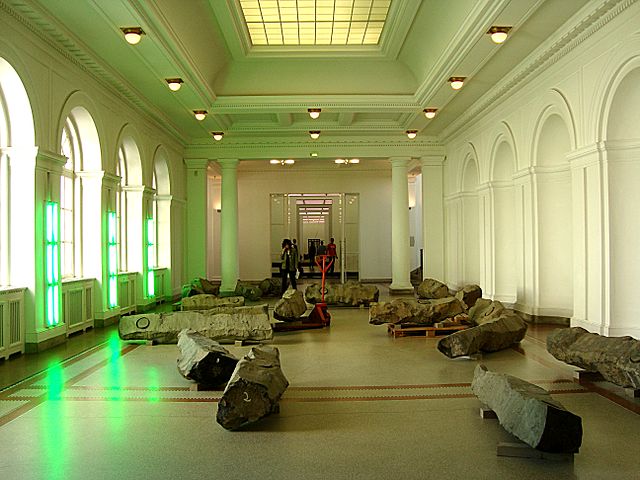
Different, but with additional implications is the installation (which does not consist of televisions, computers, cables, monitors) of Joseph Beuys: The end of the twentieth century, 1982-83, exhibited in the Hamburger Bahnhof, Berlin.
Beuys: The end of the twentieth century. 1982-83 (picture: Velvet)
Let us review the concept of Installation (contemporary art). Wikipedia says: “Installation art can be either temporary or permanent. Installation artworks have been constructed in exhibition spaces such as museums and galleries, as well as public and private spaces. The genre incorporates a broad range of everyday and natural materials, which are often chosen for their ‘evocative’ qualities, as well as new media such as video, sound, performance, immersive virtual reality and the internet. Many installations are site-specific in that they are designed to exist only in the space for which they were created”. This shows that installations have features that must be addressed as a new issue for the conservator-restorer, the curator, and of course the registrar: it is a clash with common ways and procedures established for artworks, may they be modern, ancient or traditional. And they also show the need to update our collections criteria as registrars.
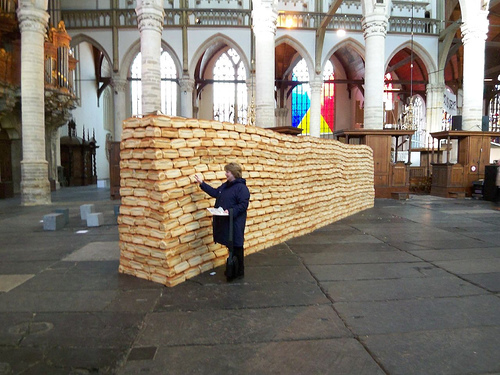
Old church, Amsterdam. Bread wall. Ephemeral art installation (picture: Becky Houtman)
Let us also take a look at video sculpture, multimedia, ephemeral art, installations, conceptual art … Registrars that are pre-curators carry on keeping the paperwork organized, registering the object materials that when combined produce a type of art. We also think about them as cultural-aesthetic objects which makes it necessary to register the senses, aesthetics, communication processes and contexts that are generated from these objects, organized according to the direction given by the artist (that’s what makes art). To do that, we must have professionally updated criteria, without which we simply make “a list” of appliances and furniture materials.
For multimedia art forms (also called mixed media or media art), there is an indispensable site: the Canadian Heritage Information Network (CHIN). One of its materials is entitled “Media Art and Museums: guidelines and case studies”, that is providing a definition of this art and its documentation, conservation and case studies. Also enter http://www.pro.rcip-chin.gc.ca/gestion_collections-collections_management/docam/module_1-module_1-eng.jsp.
There’s only a thin line between some manifestations of contemporary art, many are very close related. What’s in this guideline helps us when we work with video sculpture, video art or installations containing elements common to all. In the case of ephemeral art we have a big problem, because it does not last. It is art that disappears shortly after being created, and brings conceptual challenges for the registrar: register the object, the concept, a photo, the idea? It helps a lot to be a pre-curator registrar who has thought about this long before the first piece of ephemeral art drops on his desk..
Conservation issues of this art that the registrar must know
A registrar who has to deal with contemporary art in his collection should know the InsideInstallations. It is the website associated with the International Network for the Conservation of Contemporary Art (INCCA) and is headquartered in Amsterdam. It is a network of professionals involved in the conservation of modern and contemporary art. Conservators, curators, scientists, registrars, archivists, historians and researchers are among its members, and have access to unpublished information (interviews with artists, condition reports, instructions for installation, etc.) through its data base Artists Archives. Their contributions are invaluable for this kind of art, and there’s a really good teamwork between the instances of the museum curator, the conservator-restorer and the registrar, who are directly involved with art objects and can address alternatives and contextual issues.
“The Inside Installations: Conservation and Preservation Installation Art was a research project of three years (2004-2007) on the care and management of an art form in which the conservation challenges prevail.” There was edited the recent book Theory and practice in the care of complex artwork. Recall that these are complex artworks and we think about them and proceed with equally complex thinking. The registrar pre-curator is a complex registrar, and should know how to register art objects and their contexts – and apply the appropriate terminology. In the book you can see an example from the Inside-Installation, Installation Revolution, a monument for the television revolution, including a specific report of the Registrar. Also, the “Model for registration data” developed by the Foundation for the Conservation of Modern Art (SBMK) from the Netherlands in 1997).
In essence, the approach developed is one that calls performing arts, which “are exercised, are acting” are no longer just an object or a product of the artist’s creativity, but now become an event in which the viewer is involved in the creation of meaning. The co-creation of meaning is part of the work, which is the subject and context, event, abstract and aesthetic sense, and all this is public, and all that should be registered, the extended and technical data should also be cataloged. These updated criteria are required for registration forms or formats that include documentation of all these variables (and providing additional spaces for information and ways unthinkable at the time of registering), including guest artist requirements incorporating his own expectations and sense and technical requirements, including those of the viewer and their interaction. It also requires a software that includes fields like these and chances of hypertext interaction. And, by the way, what to do with performance art in which the artist is part of the work? Do you “register” him / herself? And with regards to the documentation of this art, it will be important to link with the next event in the Performing Documentation in the Conservation of Contemporary Art, to be held in Lisbon from 20 to 21 June 2013.
Of references, labels and a registrar with an elastic mind
As we have seen, the informational dimensions of our works of contemporary arts include references, concepts, controlled vocabulary, taxonomies, semantics, semiotics, and folksonomies, in short, expanded technical data. They provide many starting points for (re)meanings and (re)interpretations, and should be part of the records and technical data of this type of artwork. They are search terms for the artworks and their contexts. There are exact terms, standardized, simple, with just one significance, appropriate for objects, and there are others that open more senses as they occur in the re-interpretation of art, are complex and imply multiple potential re-meanings, creating an open matrix appropriate for contexts.
For these resources, the registrar must exert his/her mental conceptual structure, be elastic and open multiple connections. It is a hypothesis which is confirmed in our work by recording contemporary art.
When you work as a registrar you often take for granted that you know what other registrars in other museums do. But when you talk to colleagues from different museum types you often realize that some things are similar and other things are very different. When Fernando told us he was preparing an article on the registration of contemporary art, we accepted the challenge to write one on the registration of technological objects. So, if you are into the arts: let us unfold to you the wonderland of technology. If you are into technology: Look over our shoulders and tell us if we forgot something important.
Registering technological objects: a look on the surface
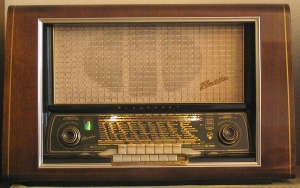
Blaupunkt Florida from 1954/55 (picture: Eckhard Etzold)
When registering a classical artwork, you normally know the artist and the date of the artwork. You can measure the dimensions and register the technology used in the classical way: oil on canvas, watercolor, lithography… Most of these things can be easily seen with one’s eye, given you have the proper knowledge and training in art history and techniques used by artists – and the whole process of accessioning has gone right. Granted, when something went wrong and you don’t know who painted the artwork, things can become tricky. Then you have to get your registrar’s and art historian’s senses together and start to investigate.
When registering technological objects, that’s just the beginning. Let’s take a simple ancient radio. It has a manufacturer and if you are lucky it is written on the device. It might also come with a type label that provides additional information. If you are very lucky, this label shows the year of construction. But that’s not often the case. So you go and look for old radio catalogs and try to find this type of radio. If you have a good library of ancient mail order catalogs and catalogs for radio retailers you have a good chance to find the year, or more likely years of construction.
If you have no manufacturer and no type label, which isn’t uncommon, the catalogs are also a great place to start your research. Of course, you should have a certain idea from which time span a radio is, otherwise you will have to dig through decades of catalogs. That’s where the art sphere comes in. You can vaguely estimate the years of construction by looking at the design of a radio. But this can fool you, too. For example:
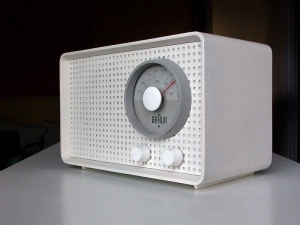
Braun Kleinsuper SK2 built similar from 1955 to 1960 (picture: Nite_Owl)
Manufacturer BRAUN developed an incredible clear and functional design, inspired by the Bauhaus movement and in parts developed by professors and students of the famous Ulm School of Design as early as 1955. If you look at certain radios from this period, you would swear they were made deep in the 1960’s. At the same time manufacturers like Grundig produced radios that look a bit like neo-baroque (although, if you take a look at Braun’s SK61 http://commons.wikimedia.org/wiki/File:Braun-Sk61.jpg and Grundig’s SO271 http://www.radiomuseum.org/r/grundig_so271_barock.html both built in 1961 it’s hard to stay neutral and to suppress the urge to tag the latter under „monstrosity“).
So, what do you enter in the data base? In the first place you enter the manufacturer and then, in some rare case, where you can figure it out, the designer. A little upside down situation to the arts world, where it’s common that you have the artist in the first place and only in some cases an additional manufacturer, most commonly a printer.
Staying with the dates: for our design approach can lead us off the track, it’s safer to stay with technology. It gives us great hints to stay in the right era. Some manufacturing techniques are labor-intensive, and therefore point us to early decades: riveting is more labor-intensive than spot-welding, for example. In times of war, economy of scarcity rules and you will realize that on the used materials: a necessity to use materials you don’t have to import and to use as little as possible of them. Speaking of materials, they also give clues for the date: synthetic materials were developed through the last hundred years and are still improved. So were production processes that you can trace on the object: injection molding will leave marks of the ejector on the formed parts, for example. So, the knowledge of materials and technology will help you a great deal in dating the object.
Next, you want to find out where the radio is made. That will be another research. You will most certainly find the place where the manufacturer has his head office but that’s not necessarily the same place he manufactures the radios. Big companies tend to have production places throughout the nation, if not throughout the world. Some might even produce the same radio in different plants. Some might cooperate with other manufacturers so the radio is built in the plant of one manufacturer but has the name of a second manufacturer on it. Much to register…
Easy going: the dimensions
To reach safe ground again we measure the radio. That’s simple. Height, length, depth. But wait! What’s about the cable? It sticks out of the silhouette. If we just measure the dimensions of the box, every showcase maker will be in trouble, because he didn’t know he has to add space for placing the cable. If we measure the maximal dimension with the cable in every direction, we will get ridiculous vast dimensions. If we just fold the cable behind the box and add the measurement to the measurement of depth? Well… someone might re-measure just the box, coming to the conclusion that this can’t be the radio he searches for, because the data differs.
Best solution to this issue – that drove generations of exhibit designers crazy – is to add an information to every measurement. For example: „box“, „cable length“, „measured when closed“ or „with lids open“.
Technical data: A look inside
What about the technical data? In the field of classical arts you can keep it simple and to the point most of the time. „Oil on canvas“ for example includes every technical information you need. You know what to expect, even without seeing the actual picture. As an experienced registrar you can even give a complete catalog of required storage conditions without actually thinking about it.
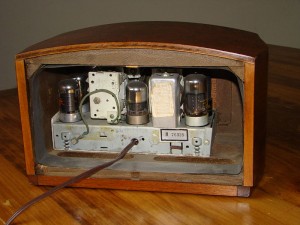
What is the technical data of an ancient radio? The materials used are wood, metal, glass and most certainly plastics. It might have a textile cover over the loudspeakers, too. And that’s just the outside. When you remove the back board you will find tubes, resistors, capacitors, inductors and cables. So the material list is enhanced with paper, lead, tar, wax, glue and certain kinds of synthetic materials you prefer not to think about too deep (Phenol formaldehyde resin, for example). The capacitors are filled with electrolyte, so you have to deal with liquids as well.
Open backside of a Philco PT-44 Transitone from 1940/41. Can you name all the materials you see?
What are the ideal storage conditions for this material mix? Well, the one thing I can tell you is that there are no ideal storage conditions for this. You can just try to keep the climate stable but you will certainly knock off some bars for some materials.
And what about the techniques used? Well, wood will be sawed and joined, glass will be blown, metal can be pierced, bent, rolled, pressed, welded, spot-welded, riveted, soldered, screwed,… Are you still with me?
So, if you are detail-orientated like most registrars are, you will find many, many things to register. Take into account that each component like an electronic tube has its own manufacturer and year of construction, has its own purpose like amplifier tube or rectifier tube and technical data like voltage and power that separates it from the other components that might look similar at first glance. And this is just a simple radio. You don’t have moving parts like little electric motors and drive belts you will find in a tape recorder. And it’s far, far away from the things a car consists of.
Beyond technical data: the context
Human beings use technology to shape their environment. And vice versa technology shapes human beings. Don’t believe us? Just take a look at people waiting at a bus stop today and try to remember how it was ten years ago. While then they were reading newspapers or books or were staring as life went by, nowadays most people stare at their smartphone. So technology shapes our behavior and this is a fact since the first human discovered that he or she could use a stone as a tool.
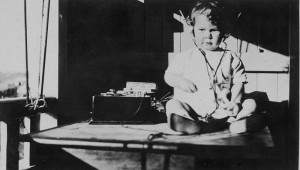
Coming back to our radio, the use of this device changed people’s lives. Before its invention, you got news from the newspapers, about a day after they happened. With the invention of radio broadcasts you had the news only a few minutes or hours after they occurred. When radio came up, it was a sensation. There were only few broadcasts, not the 24/7 broadcasts we are used to today. When something was broadcasted, often the whole family would gather around the radio to listen – in the early days every family member with a headphone.
Young child listening to a radio, 1920-1930 (Item is held by John Oxley Library, State Library of Queensland.)
Manufactured radios were scarce and expensive, so many people started to build radios themselves. It was a tremendous do-it-yourself movement. Manufacturing developed soon and in the 1920’s German manufacturers developed plans to build an affordable radio by sharing costs through standardization. It is often believed that the “Volksempfänger” VE 301 was a development pushed by Hitler, but in fact the plans reach back much further.
After the war the use and role of radio changed. Efforts were made to make the radio a portable device which could be done effectively after the invention of the transistor. When TV came up, it pushed aside radio as the place the family would gather around in the evenings. Listening to the radio became an activity done alongside another, more important activity like cooking, ironing or driving a car. That’s where radio is until now – well, not quite. With internet radio humanity has broken up the limitations of just being able to listen to radio stations within the reach of the own antenna. It was possible to listen to radio stations around the world through short wave even in the earliest radio times, but then it was still necessary to understand the technology involved. The right device, the right length and shape of antenna, propagation conditions… Nowadays you just turn on your little WLAN radio device and flip through a station list that allows you to listen to a country station in the Middle-West, a samba or bossa nova station in Brazil or some traditional music in Mongolia. You don’t need to know how it works, you just need to know how to handle your device (given, some menus are so complicated to understand that you just wish they were as easy and logical as the calculation of a dipole antenna).
How does this help in the registration of our radio? Well, if you have the development history in mind, it’s easier to track down and understand signs you find on the radio.
You might be able to trace the story of a common household appliance: while it might have been the center of family live in the beginning, layers of grease mixed with dust can indicate that it was the kitchen radio after a new and better model or a TV set came to the family. Signs of seams of glasses can indicate it was used frequently to put the drinking glass down, telling you it had a place in the household where one was tempted to do so, maybe the bedroom of a teenager? You might find someone decided to wrap it with self-adherent design foil to give it a fresher outfit in the 1970’s. Or, to the opposite, grounded off the original varnish and painted it over white to make it fit in the modern living room. You might find signs of restoration from the time the model gained collector’s value. Or maybe it is in an incredible good shape, looking just like it came from the plant, because it was held in high esteem over the years.
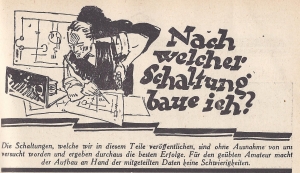
Self-made radios were common in the ealy days of radio, so was the knowledge of the technology involved. Header of the category “Which wiring do I chose to build?” of the popular German monthly journal “Radio Amateur” (taken from the issue 12/1928)
If you open the backside you might find alterations to the original wiring scheme, done to listen to frequencies originally not intended to be received with that radio. Maybe just because the original owner wanted to receive another allowed frequency, but maybe because he wanted to listen to “forbidden” stations (foreign broadcasts in wartime, for example). You might also find alterations done to insert a different type of tube, because the original one was no longer available or others were cheaper.
It is your responsibility as a registrar to be able to read the signs but also to act as a good investigator. Assumptions have to be marked as such. They can be verified by asking the donor about what he or she can remember about the object. If you are lucky, the radio came with documents: the original invoice, the license to use it or a photo of the proud owner. These documents have to be properly filed and referenced in the data base. If you get additional hints and stories from the donor, they have to be documented as well.
The radio is a part of human history. Maybe a small part but as we are keepers of the cultural heritage we are responsible to keep important information together.
How deep is your registering?
Having read so far you surely feel overwhelmed by information and possible things to register. They all seem important, adding context and meaning to this special object as well as to the history of radios in general. Your observations on this object might indeed be helpful to verify or falsify theories of historians.
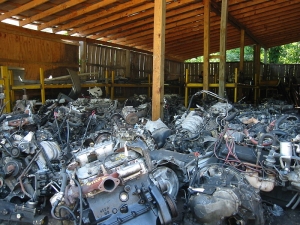
The perfect way to store technological objects? Certainly not! But it’s still how some people think it is in the storage of a science and technology museum… (picture: Philip (flip) Kromer from Austin, TX)
But in reality we don’t have as much time to invest in a single object. We have to make decisions on what to register and what not. Especially, as we registrars in science and technology museums are often carrying a burden from the past: For years, the custom in collecting technical objects was similar to how you run a junk yard: You just collect them and pile them in large industrial halls without documentation. Heck, they are just industrial mass products; you can document them sometime in the future, right? Well, we all know that this was not right, that we lost information because of the carelessness of our ancestors. So part of our work is to research and to give the objects in our collections their history back.
So, we have to limit ourselves in the registering of the single object to get more done in the whole collection. Sometime in the future we will write something about how to conduct a “triage” to protect and document as many objects as possible as primary care.
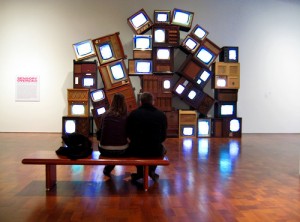
TV storage gone wrong? Nope, we are back in the arts sphere: That’s “Sensory Overload” by Nam Jun Paik (picture: Arti Sandhu)
How deep we go with registering an object is a decision on a by-case basis. For most exhibitions or loans a documentation of basic technical data that can be measured and can be found on a type label is sufficient, along with a rough estimate of the manufacturing time. There are specialized research and exhibition projects that need a more thorough documentation. But then again, that’s where you can use synergistic effects. These projects can have specialized curators and scientists that provide additional data. Or the projects are funded in a way that you can invest more time on detailed registration.
In a way, registering technological objects is squaring the circle: When you register most accurate, you can’t register many objects. If you register not accurate enough you might reach high numbers but produce data base entries that are all but helpful. While “The Night Watch, Rembrandt van Rijn, 1642, oil on canvas” says sufficiently enough, “Radio, BRAUN, 1950-1959, wood” says nearly nothing. So, it’s up to the registrar to find a good middle ground between being too detail-oriented and being too common.
__________________________ Bernd Kießling holds the job title of “Museologe” at the TECHNOSEUM, Landesmuseum für Technik und Arbeit in Mannheim, Germany. His working area can be compared to the work of a registrar. His areas of expertise are the collections of radio, television, radiocommunication, computer technology, office technology, photography and nuclear technology.
This text is also available in Italian translated by Silvia Telmon.
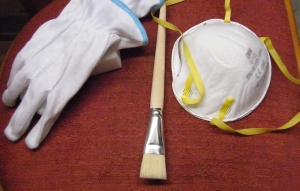
One of the weird things about this job is that you can’t touch any of the stuff you’re working with. Nowhere is this more bizarrely evident than when we are cleaning the house. In we come, armed with our $1400 vacuum cleaner, our white gloves, our specially treated electrostatic dust cloths with no unnatural ingredients, our horsehair dusting brushes, our large pieces of unbleached muslin and our fluffy, all-cotton, washed without dyes or perfumes, dried without fabric softener sheets, white towels and diapers. Yup, the humble cloth diaper is one of the chief weapons in the preservationist’s arsenal!
So we bring all this into the house and lug it up those oh-so-narrow stairs with that railing that is specially designed to catch and hold vacuum-cleaner hoses, and we put everything down. The only trouble is, there isn’t any place to put it down. Except the floor or the windowsills. Can’t put your dusting brush on the dresser, can’t lay your vacuum attachments on the trunk, can’t sit on any of the chairs when you get tired. Ever tried putting together a vacuum cleaner while wearing gloves? Ever tried vacuuming in a house that has exactly two outlets? Ever tried vacuuming in a house where you can’t touch the furniture with any part of the vacuum or with your bare hands? Where you have to vacuum with the grain of the floorboards instead of across? Where, to get behind or under a large piece of furniture, you have to have two people wearing gloves lift it up to move it so you don’t scar the floorboards?
Then there’s the dusting. At home, where everything is smooth and shining, you just spray your spray stuff on your rag and sweep it across that gleaming wood. In the Hez House, all the wood is older than your great great grandmother. It has chips and cracks and uneven finishes and splinters. If you run a dust cloth across it, it ends up wearing bits of the cloth. So you have to use a brush to dust it, then pick up the dust with the vacuum. Even if the wood is smooth enough to dust, you aren’t allowed to spray anything on it, hence the fancy dust cloths. And the diapers. Now, often you have to move an artifact to dust the furniture under it. You have to remember that if it has a rim, you can’t pick it up by that, and if it has a handle, you can’t pick it up by that, and if it’s made of glass or ceramic you can’t use gloves, and if it’s not glass or ceramic you do have to use gloves – by the time you remember what you are and are not allowed to do, seven more layers of dust have been deposited.
I think the hardest thing to remember is not to put anything on the beds. The majority of the coverlets and many of the sheets are historic textiles, so the nasty sharp things you took off the table in the boys’ room can’t be put there unless you remember to put a thick pad of muslin over the bed. The other thing I have trouble with is remembering not to lean on the furniture. It’s so automatic to put your arm on the dresser for support when you’re trying to find the outlet behind it, or to lean against a bed so you can reach the far side of it to tidy up the linens. Well, let me tell you, if you lean on some of those beds, they’ll just keep on leaning over until you and bed are on the floor! So, as you watch your maid whisking about your house making tidy all your little indiscretions, have pity on your poor collections staff, cleaning up after hundreds of children not their own while trying to figure out how not to lay hands on the very things they must clean….
Well, got a little update work to do on the database. TTFN
As I uncovered recently, we registrars, collections managers and curators of collections are a strange breed of animals rarely spotted. As we know from Discovery Channel there’s nothing more interesting than spotting rare animals in their natural habitat. I’m really glad that my colleague Anne T. Lane started a series about the work in the collections departement. So, if you follow this series, next time your kids ask “Mommy, Daddy, what does a collections manager do?” you can come up with much smarter answers than “Well, a collections manager manages collections!”
It’s a different life back here. There are no windows, because light is detrimental to museum objects. We have our own separate climate control system, because heat and high humidity are detrimental to museum objects. So is low humidity. So if you see us blinking owlishly in the light and wearing long sleeves during a 90 degree heat wave, you will know from whence we come.
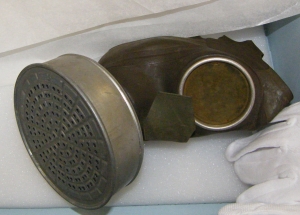
So, you’d like to hear about a typical day in the life of a collections person? Sorry, there’s no such thing. I’m designing a storage mount for a WWII gas mask. I’ve been doing this for about two weeks. I get to work on it, oh, maybe 10 minutes at a time, in between labeling a collection of hairpins, packing some Victorian era women’s clothes with acid-free tissue in acid-free boxes, updating the collections database, doing condition reports on the prints for the upstairs hallway exhibit, visiting a potential donor’s home to look at a collection of WWI-era baby clothes, getting a quote on having some posters framed, updating the database, supervising the volunteer doing data entry from our old catalogue cards, cleaning the Hezekiah Alexander House, washing the gloves we use to handle collections objects (mild detergent, rinse twice, no fabric softener and don’t let the cats sleep in the bag), updating the database, ordering new sleeves and boxes for the postcard collection, attending planning meetings, doing the homework for planning meetings, photographing a beaded jacket and purse, steaming out creases in a quilt, discussing the exhibit calendar for the next three years with Kris, oh, and did I mention updating the collections database?
It’s not a boring job. You get to work with other people; then you get to weasel away by yourself for hours at a time. You get to be creative, you get to build things, you get to handle all the neat stuff, you get to do research, you get to solve problems, you learn new things every day, you get to work with like-minded folks – fellow employees, interns and volunteers. Oh, and did I mention…..oops, wrong paragraph. You have to be precise and detail-oriented to a fault. You have to be organized but also very flexible. And you aren’t allowed to eat lunch at your desk. Ever.
I will be writing here about some of the things, old and new, that reside on shelves or sit in crates in a museum. And about some of the processes and procedures for taking care of them. So many people have no idea what goes on behind the locked doors of a collections departement. You’ll find me trying to build a mount for this poor gas mask; or, updating the collections database.
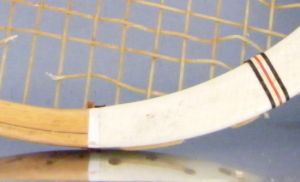
When you think about registrar’s work I bet most of the time you think about fine arts, archaeological findings or fossils. Lesser known and recognized are sports collections and museums. But, hey, sports and museum? Sounds like a win-win to me. I was glad to meet Antony Aristovoulou who has worked for several sports collections. A registrar’s game seems to be always the same: sort, catalog, data base, crate, store. Not much of a surprise, you just play by the rules. But what happened to Antony was nothing like expecting a grass court and discovering it’s a clay court. It’s like expecting a 100-meter sprint and discovering on the day you show up for the match that it’s an Ironman and you are supposed to do it with your flip-flops on.
My work with the Melbourne Cricket Club Museum/National Sports Museum collection relocation/registration/rehouse was coming to an end and I secured new work with Deakin University’s Centre for Leisure Management Research (CLMR) in December 2006. I was told that as of January 2007, Tennis Australia had a tennis heritage collection which needed to be relocated and registered. The whole kit and kaboodle. At this point I was not told that no foundation work had been made (i.e. off site facility, cms, shelving, etc…). Hell, the contract between the University and Tennis Australia (TA) hadn’t even been finalised yet! So, here I was all proud of myself, thinking I’d finish one job, have Xmas holidays, and after New Years, go straight into a new job. How wrong was I!
Things slowly started getting off the ground from March ’07, where I was taken to a shipping container holding facility. Basically the whole collection was contained in this container – direct from California, U.S.A. This was the private collection of a German ex-pat named Rolf Jaeger, who exhibited them in a private museum in California. They were bought by the then President of TA, Mr. Geoff Pollard, in the hope of kick-starting a Tennis Australia heritage collection, for a new tennis museum based at Melbourne Park. This Jaeger Collection was to complement the historical artefacts held in the offices and storerooms of Melbourne Park. Australia was the only Grand Slam nation which did not have a Grand Slam tennis museum. All the artefacts were stuffed into the container and I knew straight away there be some casualties. My jaw was agape and I was wondering what I had just gotten myself into.
Anyway, my job was not just to do all of the above, but I had to source a storage facility, computer hardware, imaging software and cms, photography equipment, advise on security, shelving. etc…
I got all this done, had the shipping container delivered, and over the course of a few months, slowly sorted through the items. Money became scarce after a short while – I got what I wanted with the facility, computer, cms, and photography equipment, but I didn’t get what I wanted with regards to rehousing materials (acid free boxes, etc..) and shelving ( I got some, but not enough to satisfactorily house all items safely). For many items – the hundreds of racquets in particular – I had to store these in large acrylic containers (with cling wrap across the top) which came in the shipping container, each sitting on wooden pallets. :-/
Nevertheless, everything was tagged, registered, catalogued (Vernon CMS), given locations, photographed and image linked, and, of course, rehoused (to the best of my abilities).
I conducted comprehensive damage reports for the unprotected and minimally protected items coming out of the shipping container, and that was pretty much it.
Oh, no, not quite. I also had to (also unbeknownst to me when I began) manage TA’s non collection excess furniture and Australian Open equipment. These took up a huge amount of the storage space, and it took me months to rearrange all this stuff to condense it and maximise space for the collection, AND, manage it in a way so any dirt and dust from this impacted on the collection as little as possible.
Well, that’s it – as far as I can remember at the time of writing. I don’t know what has happened to the majority of the collection since I finished this project in April 2009, but around a year later, I did see that some of the artefacts I worked with had been loaned to the Kooyong Tennis Club (the former home of the Australian Open), and that was good to see. At least some of the gems i worked with were getting some show time! 🙂
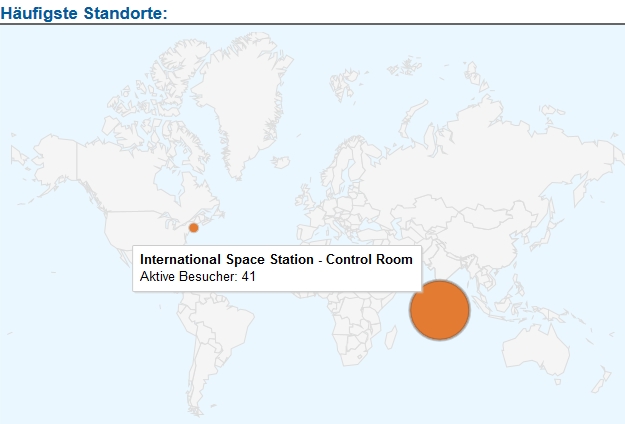
A look on google analytics today revealed an unknown fact: There are registrar’s on the International Space Station (ISS) – or at least people who are watching Registrar Trek! Seems our Blog title isn’t as futuristic as it may seem…
Well, in fact it’s one of googles April Fool’s jokes, but a rather brilliant one, especially as the location moves with the real track of the ISS. Keep watching the stars!
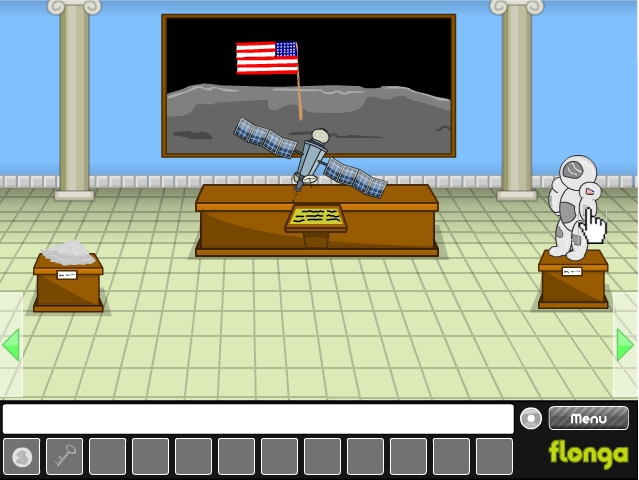
As we are in a nonsense kind of mood today, here is a link to a game called “Must Escape the Museum”. A point and click adventure for the dark side of your registrar personality… you can actually touch those statues, dinosaurs and – to come back to our original topic – space suits. At least the standard mouse pointer is white gloved… Must escape the museum!
As registrars we are all familiar with standards, policies and norms. Recently, I stumbled upon a passage of the German Industrial Norm (DIN) standard DIN EN 15946:2011 for the packing procedures for the transportation of cultural heritage that recommends that the external dimensions of a crate must be smaller than that of the narrowest point which has to be traversed during transport. And that small items should be packaged together if they match and are going to the same destination (you can find the said passage under 5.2.1 “General principles”). My first reaction was an outright: Later on my colleague Anne T. Lane informed me that this might sound like an order from Captain Obvious but is in fact a very wise one:
Since our university museum loading dock is, of course, impossible for a real truck to back into, we often use the neighboring one belonging to the theater department if a full tractor-trailer has to pick up or drop off a shipment. This means we have to haul our crates out through the gallery and through a series of hallways and more doors. Kevin, one of our preparators, was trying to maneuver a crate out of the museum through the double doors but it kept getting stuck. I came over to help and found it was so tight a fit that I had to depress the push bars on the doors on alternate sides. The crate was a fairly standard one of plywood with exterior framing that divided the sides into panels. As the crate went on by the push bars, they snapped back out again once they passed by the framing boards, so I had to keep going back and forth to depress them again until we finally got the thing through. Since my arms aren’t long enough to span the doorway, we had to keep the crate at just enough of an angle to depress one bar while I went over to the other one. If that crate had been 1/2″ larger, we would have had to take it outside and around the building.
All in a day’s fun.
Text: Anne T. Lane
A project to break down language barriers and connect registrars worldwide

 So we bring all this into the house and lug it up those oh-so-narrow stairs with that railing that is specially designed to catch and hold vacuum-cleaner hoses, and we put everything down. The only trouble is, there isn’t any place to put it down. Except the floor or the windowsills. Can’t put your dusting brush on the dresser, can’t lay your vacuum attachments on the trunk, can’t sit on any of the chairs when you get tired. Ever tried putting together a vacuum cleaner while wearing gloves? Ever tried vacuuming in a house that has exactly two outlets? Ever tried vacuuming in a house where you can’t touch the furniture with any part of the vacuum or with your bare hands? Where you have to vacuum with the grain of the floorboards instead of across? Where, to get behind or under a large piece of furniture, you have to have two people wearing gloves lift it up to move it so you don’t scar the floorboards?